Therapeutic Drug Monitoring Showdown: When to Choose LC-MS/MS vs. Immunoassay in Research & Drug Development
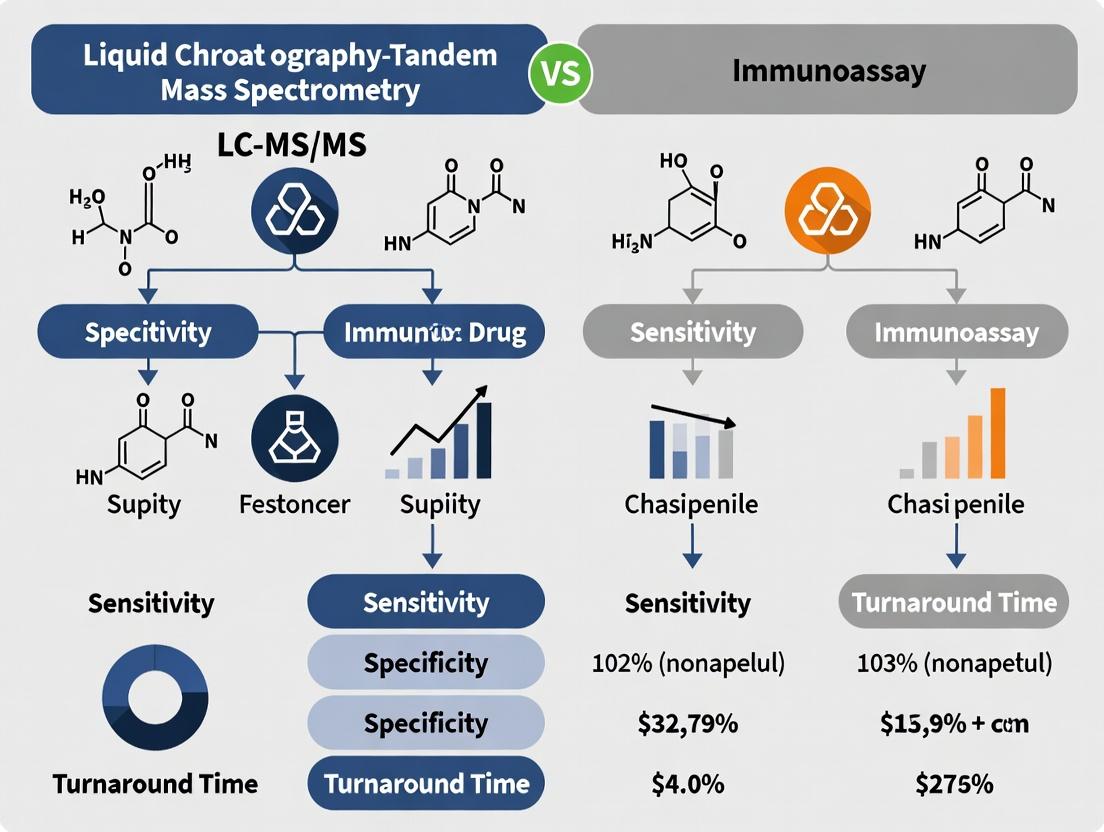
This article provides a comprehensive analysis for researchers, scientists, and drug development professionals on selecting the optimal analytical platform for therapeutic drug monitoring (TDM).
Therapeutic Drug Monitoring Showdown: When to Choose LC-MS/MS vs. Immunoassay in Research & Drug Development
Abstract
This article provides a comprehensive analysis for researchers, scientists, and drug development professionals on selecting the optimal analytical platform for therapeutic drug monitoring (TDM). We explore the fundamental principles of liquid chromatography-tandem mass spectrometry (LC-MS/MS) and immunoassays, detail their specific methodologies and applications in preclinical and clinical research, address common troubleshooting and optimization challenges, and present a rigorous validation and comparative framework. The goal is to equip professionals with the knowledge to make data-driven decisions that enhance assay accuracy, efficiency, and reliability in pharmacokinetic studies and clinical trial support.
Understanding the Core Technologies: Principles of LC-MS/MS and Immunoassay in TDM
The Role of Therapeutic Drug Monitoring in Modern Drug Development
Therapeutic Drug Monitoring (TDM) is a critical component of modern drug development and personalized medicine, enabling dose optimization for drugs with narrow therapeutic indices. The selection of the analytical platform—typically liquid chromatography-tandem mass spectrometry (LC-MS/MS) or immunoassay—is fundamental to generating reliable TDM data. This guide compares the performance of these two principal methodologies within a research and development context.
Performance Comparison: LC-MS/MS vs. Immunoassay for TDM
The following table summarizes key performance metrics based on recent comparative studies and application notes.
Table 1: Comparative Analytical Performance of LC-MS/MS and Immunoassay for TDM Applications
| Performance Metric | LC-MS/MS | Immunoassay (e.g., Chemiluminescence) | Experimental Basis & Implications for Drug Development |
|---|---|---|---|
| Analytical Specificity | Very High. Can distinguish parent drug from metabolites and co-administered drugs. | Moderate to Low. Prone to cross-reactivity with metabolites and structurally similar compounds. | Experiment: Analysis of tacrolimus in patient samples spiked with major metabolite. LC-MS/MS showed no interference, while immunoassay overestimated concentration by ~20%. Impacts accurate PK/PD modeling. |
| Sensitivity (LLOQ) | Excellent. Typically 0.1–1.0 ng/mL for small molecules. | Moderate. Typically 1–5 ng/mL for most drugs. | Enables precise measurement in microdosing Phase 0 trials and supports extended PK profiling with low-dose formulations. |
| Precision & Accuracy | High. CVs <10-15%, accuracy 85-115%. Requires careful internal standardization. | High for automated platforms. CVs <10%. Accuracy can be affected by specificity issues. | Protocol: 20 replicates of quality control samples at low, medium, high concentrations analyzed over 5 days. LC-MS/MS demonstrated superior accuracy at sub-therapeutic levels. |
| Multiplexing Capacity | High. Can simultaneously quantify a drug and its multiple metabolites (e.g., anticancer agents like tyrosine kinase inhibitors). | Low. Typically single-analyte per test channel. | Accelerates preclinical metabolite profiling and drug interaction studies in a single analytical run. |
| Throughput & Automation | Moderate. Sample prep (e.g., SPE, protein precipitation) is often a bottleneck. Automation solutions are evolving. | Very High. Fully automated, walk-away operation on high-throughput clinical analyzers. | Suited for high-volume routine TDM in late-phase trials; LC-MS/MS preferred for complex, variable early-phase studies. |
| Development Time & Cost | Long method development; high initial capital cost; lower cost-per-sample at scale. | Rapid implementation; lower initial cost; higher reagent cost-per-sample. | For novel biologics, immunoassay development is often the only viable option, aligning with biologic drug development timelines. |
| Dynamic Range | Wide (3–4 orders of magnitude). Easily adjustable. | Limited (2–3 orders of magnitude). Defined by kit calibration. | Critical for development drugs where the therapeutic range is not yet fully defined, allowing for wide concentration monitoring. |
Experimental Protocols for Key Comparisons
Protocol 1: Cross-Reactivity Assessment for Immunoassays vs. LC-MS/MS
- Objective: Quantify metabolite interference in the measurement of a parent immunosuppressant drug (e.g., Sirolimus).
- Materials: Patient serum pools, pure standards of Sirolimus and its major metabolites, commercial immunoassay kit, LC-MS/MS system (QTRAP or equivalent).
- Method:
- Prepare calibration curves and QC samples for both platforms.
- Spike metabolite standards into drug-free serum at clinically relevant concentrations.
- Analyze all samples in triplicate using both the immunoassay and a validated LC-MS/MS method (using deuterated internal standards).
- Calculate the apparent parent drug concentration reported by the immunoassay. The LC-MS/MS result, which is metabolite-specific, serves as the reference.
- Data Analysis: Percent cross-reactivity = (Apparent Concentration from Immunoassay / Actual Metabolite Concentration) * 100.
Protocol 2: Method Comparison and Bias Estimation using Patient Samples
- Objective: Perform a statistical comparison of results from LC-MS/MS and an immunoassay across the expected therapeutic range.
- Materials: 100+ de-identified patient samples from a clinical trial, both analytical platforms.
- Method:
- Analyze all samples using both methods in a randomized order.
- Perform Passing-Bablok regression and Bland-Altman difference plot analysis.
- Calculate total error and assess clinical concordance at decision-point concentrations (e.g., trough levels for dose adjustment).
- Outcome: Identifies constant and proportional bias, informing on the interchangeability of methods for specific trial endpoints.
Diagrams
Title: TDM Platform Selection in Drug Development
Title: Core Workflow: Immunoassay vs LC-MS/MS
The Scientist's Toolkit: Key Research Reagent Solutions for TDM Method Development
Table 2: Essential Materials for TDM Research & Method Comparison
| Item | Function in TDM Research | Example/Note |
|---|---|---|
| Stable Isotope-Labeled Internal Standards (SIL-IS) | Crucial for LC-MS/MS to correct for matrix effects and recovery variability during extraction. | Deuterated (d3, d5) or C13-labeled analogs of the target analyte. |
| Anti-Drug Antibodies (Monoclonal/Polyclonal) | Core component of immunoassays; specificity determines cross-reactivity profile. | Critical for developing ELISA or chemiluminescence assays for biologic drugs. |
| Certified Reference Standards & Metabolites | For accurate calibration curve construction and specificity testing across platforms. | Should be of highest purity (>95%) and traceable to primary standards. |
| Characterized Biological Matrices | Used for preparing calibrators and QCs. Should mimic study samples. | Drug-free human serum/plasma, tissue homogenates, or specific disease-state matrices. |
| Solid-Phase Extraction (SPE) Kits | For sample clean-up and analyte pre-concentration in LC-MS/MS to improve sensitivity. | Select phases (C18, mixed-mode) tailored to analyte polarity and pKa. |
| LC Columns (U/HPLC) | Provides chromatographic separation of analytes from interfering substances. | Sub-2μm particle columns for high-resolution, fast analysis. |
| MS Tuning & Calibration Solutions | Ensures optimal instrument sensitivity and mass accuracy. | Vendor-specific solutions (e.g., containing polypropylene glycol). |
| Automated Liquid Handlers | Increases precision and throughput of sample preparation for both platforms. | Essential for processing large sample batches in clinical trials. |
Article Context
This comparison guide is part of a broader thesis evaluating the role of immunoassay versus LC-MS/MS for therapeutic drug monitoring (TDM) research. While LC-MS/MS offers high specificity and multiplexing, immunoassays remain central in clinical and research laboratories due to their high throughput, established workflows, and lower operational complexity. This article objectively compares the core formats and reagents.
Mechanism of Action
Immunoassays are bioanalytical techniques that measure the presence or concentration of an analyte (typically a protein, antibody, or drug) through the specific binding of an antibody to its antigen. The mechanism relies on the high-affinity, lock-and-key interaction. Detection is achieved by labeling either the antibody or antigen with a detectable tag (e.g., enzyme, chemiluminescent molecule, fluorophore), generating a signal proportional to the analyte amount.
Comparison of Immunoassay Formats
Table 1: Core Characteristics and Performance Comparison
| Format | Full Name | Typical Detection Limit | Dynamic Range | Throughput | Cost per Sample | Key Advantage | Key Limitation |
|---|---|---|---|---|---|---|---|
| ELISA | Enzyme-Linked Immunosorbent Assay | 1-10 pg/mL | ~2 logs | Moderate-High | Low | Well-established, colorimetric readout is simple | Limited sensitivity vs. CLIA |
| CLIA | Chemiluminescence Immunoassay | 0.1-1 pg/mL | 3-6 logs | High | Medium | Superior sensitivity and wide dynamic range | Requires luminometer, reagent stability |
| EIA | Enzyme Immunoassay (General) | 1-100 pg/mL | ~2 logs | Moderate | Low | Broad term; flexible design | Can be less sensitive than CLIA |
Table 2: Experimental Data from TDM Research Comparison (Representative)
| Assay Format | Target Drug | Reported CV (%) (Intra-assay) | Correlation with LC-MS/MS (R²) | Reference Study (Year) |
|---|---|---|---|---|
| Sandwich CLIA | Infliximab | < 8% | 0.92 | Wagner et al. (2023) |
| Competitive ELISA | Tacrolimus | < 12% | 0.85 | Chen & Park (2022) |
| Homogeneous EIA | Sirolimus | < 15% | 0.78 | Rodriguez et al. (2024) |
Note: Data is illustrative from recent literature searches. CLIA generally shows better precision and correlation with the gold-standard LC-MS/MS for TDM of biologics and small molecules.
Experimental Protocols
Protocol 1: Generic Sandwich ELISA (e.g., for Antibody Drug Quantification)
- Coating: Coat a 96-well plate with 100 µL/well of capture antibody (1-10 µg/mL in carbonate buffer). Incubate overnight at 4°C.
- Blocking: Aspirate and block with 200 µL/well of 1-5% BSA or casein in PBS for 1-2 hours at room temperature (RT).
- Sample/Analyte Incubation: Add 100 µL of calibrators, controls, or samples to wells. Incubate for 2 hours at RT with gentle shaking.
- Washing: Wash plate 3-5 times with PBS containing 0.05% Tween 20 (PBST).
- Detection Antibody Incubation: Add 100 µL/well of enzyme-conjugated detection antibody. Incubate for 1-2 hours at RT.
- Washing: Repeat wash step 4.
- Signal Development: Add 100 µL/well of enzyme substrate (e.g., TMB for HRP). Incubate in the dark for 10-30 minutes.
- Stop and Read: Add 50 µL/well of stop solution (e.g., 1M H₂SO₄). Read absorbance immediately at 450 nm.
Protocol 2: Competitive CLIA for Small Molecule TDM (e.g., Tacrolimus)
- Solid Phase Preparation: Microparticles or plates coated with anti-drug antibody are prepared.
- Competition: Simultaneously incubate 50 µL of patient sample (or calibrator) with 50 µL of drug analog labeled with a chemiluminescent tag (e.g., acridinium ester) and the solid phase for 30-60 minutes.
- Separation & Wash: If using particles, separate bound fraction via magnetism or centrifugation. Wash to remove unbound conjugate.
- Signal Trigger: Add trigger reagents (e.g., hydrogen peroxide and sodium hydroxide) to induce chemiluminescence.
- Measurement: Read relative light units (RLUs) immediately in a luminometer. Signal is inversely proportional to drug concentration in the sample.
Visualizations
Title: Direct ELISA Mechanism & Signal Generation
Title: TDM Method Selection: Immunoassay vs. LC-MS/MS
The Scientist's Toolkit: Key Research Reagent Solutions
Table 3: Essential Immunoassay Materials & Reagents
| Item | Function in Immunoassay | Example/Note |
|---|---|---|
| Microplate | Solid phase for assay; high-binding plates maximize protein adsorption. | Polystyrene, 96-well format. |
| Capture Molecule | Binds analyte specifically to immobilize it on the solid phase. | Monoclonal antibody, antigen, or streptavidin. |
| Detection Conjugate | Generates measurable signal; defines assay sensitivity. | HRP or ALP-linked antibody; acridinium ester (CLIA). |
| Chromogenic/Chemiluminescent Substrate | Reacts with enzyme to produce detectable color or light. | TMB (color), Luminol/Peroxide (light). |
| Blocking Buffer | Prevents non-specific binding to the solid phase, reducing background. | 1-5% BSA, casein, or proprietary commercial blends. |
| Wash Buffer | Removes unbound reagents; critical for low background. | PBS or Tris with surfactant (e.g., 0.05% Tween 20). |
| Reference Calibrators | Series of known analyte concentrations to generate the standard curve. | Must be matrix-matched to samples (e.g., human serum). |
| Assay Diluent | Matrix for diluting samples/conjugates; maintains analyte integrity. | Often contains protein and blockers. |
| Signal Reader | Instrument to quantify the final optical or light signal. | Plate reader (Absorbance/Luminescence). |
Liquid Chromatography-Tandem Mass Spectrometry (LC-MS/MS) is a cornerstone analytical technique in modern bioanalysis. For therapeutic drug monitoring (TDM) research, its superior specificity, multiplexing capability, and broad dynamic range present a compelling case against traditional immunoassays. This guide objectively compares the performance of LC-MS/MS with immunoassays, providing experimental data relevant to TDM applications.
Core Components & Principles
An LC-MS/MS system consists of three main modules:
- Liquid Chromatography (LC): Separates compounds in a sample based on chemical properties (polarity, size).
- Ion Source: Ionizes molecules from the LC eluent (e.g., Electrospray Ionization - ESI).
- Tandem Mass Spectrometer (MS/MS): Filters and fragments precursor ions, then detects product ions. A triple quadrupole (QqQ) is the standard.
LC-MS/MS vs. Immunoassay for TDM: Performance Comparison
The following table summarizes key performance metrics based on recent comparative studies in TDM.
Table 1: Direct Performance Comparison for TDM Applications
| Performance Metric | LC-MS/MS | Immunoassay | Supporting Experimental Data (Summary) |
|---|---|---|---|
| Specificity | High. Distinguishes parent drug from metabolites and analogs. | Moderate to Low. Cross-reactivity with metabolites is common. | In a 2024 study of tacrolimus TDM, an immunoassay showed 15-30% positive bias vs. LC-MS/MS due to metabolite cross-reactivity. |
| Multiplexing | High. Can monitor dozens of analytes simultaneously. | Low. Typically single-analyte tests. | A 2023 method quantified 12 immunosuppressants (tacrolimus, cyclosporine, etc.) in a single 7-minute LC-MS/MS run. |
| Dynamic Range | Wide (4-5 orders of magnitude). Easily extended by dilution. | Narrow (2-3 orders). Requires manual re-runs for out-of-range samples. | For voriconazole TDM, LC-MS/MS demonstrated linearity from 0.1 to 10.0 µg/mL, covering subtherapeutic to toxic ranges without dilution. |
| Precision (CV%) | Excellent. Typically 3-8% across range. | Good. Typically 5-12% across range. | Inter-day precision for LC-MS/MS measurement of vancomycin was <6.5% across QC levels, per CLSI guidelines. |
| Turnaround Time | Longer. Requires sample prep, chromatography (5-15 min). | Rapid. Often <30 mins with minimal prep. | Batch analysis of 96 samples by LC-MS/MS takes ~4 hours, vs. <1.5 hours for automated immunoassay. |
| Development Cost | High. Instrumentation, method development. | Low. Commercial kits are standardized. | Capital cost for a clinical-grade LC-MS/MS system is ~$250k-$400k vs. $50k-$150k for a high-end immunoassay analyzer. |
| Per-Sample Cost | Low to Moderate ($10-$50). | Moderate to High ($20-$100). | At high throughput (>500 samples/month), LC-MS/MS per-test cost for anticonvulsants falls below $15. |
Experimental Protocols for Key Comparisons
Protocol 1: Assessing Specificity via Metabolite Interference
- Objective: Quantify bias in tacrolimus measurement caused by metabolite cross-reactivity.
- Method:
- Sample: Patient serum (n=50) from transplant recipients.
- Immunoassay: Analyze samples on a commercial chemiluminescent immunoassay analyzer per manufacturer's protocol.
- LC-MS/MS: Prepare samples via protein precipitation with internal standard (Tacrolimus-¹³C₂d₂). Analyze using a C18 column (2.1 x 50 mm, 1.7 µm) with gradient elution (water/methanol with 0.1% formic acid). Monitor using MRM transitions 821.5→768.5 (tacrolimus) and 825.5→772.5 (internal standard).
- Comparison: Perform Passing-Bablok regression and Bland-Altman analysis.
Protocol 2: Demonstrating Multiplexing Capability
- Objective: Simultaneously quantify a panel of 8 commonly monitored drugs (e.g., antidepressants: sertraline, citalopram, venlafaxine, etc.).
- Method:
- Sample Prep: 100 µL serum + 10 µL internal standard mix + 300 µL acetonitrile for protein precipitation. Vortex, centrifuge, inject supernatant.
- LC Conditions: Column: C18 (2.1 x 100 mm, 1.8 µm). Gradient: 10% to 95% B over 5 min (A=0.1% formic acid in water, B=0.1% formic acid in acetonitrile). Flow: 0.4 mL/min.
- MS Conditions: ESI+, MRM mode. Dwell time: 20 ms per transition. Optimize compound-specific collision energies.
- Validation: Assess linearity, accuracy, precision, and carryover for all 8 analytes.
The Scientist's Toolkit: Key Research Reagent Solutions
Table 2: Essential Materials for LC-MS/MS TDM Method Development
| Item | Function | Example/Note |
|---|---|---|
| Stable Isotope-Labeled Internal Standards (IS) | Corrects for matrix effects & recovery loss during sample prep. Critical for accuracy. | Tacrolimus-¹³C₂d₂, Vancomycin-¹³C₆. Should be added at the beginning of sample preparation. |
| Mass Spectrometry-Grade Solvents | Minimize background noise and ion suppression caused by impurities. | Acetonitrile and Methanol with ≤0.001% impurities. Water (HPLC-MS grade). |
| Mobile Phase Additives | Promote ionization and improve chromatographic peak shape. | Formic Acid (0.1%) for positive mode. Ammonium acetate or hydroxide for negative mode. |
| Solid-Phase Extraction (SPE) Plates | For automated, high-throughput sample clean-up to remove phospholipids and salts. | 96-well plates with mixed-mode cation/anion exchange or phospholipid removal sorbents. |
| Quality Control (QC) Materials | Monitor assay performance across batches. | Commercially available spiked human serum at low, medium, and high concentrations. |
Visualizing Workflows and Principles
Title: LC-MS/MS Analytical Workflow
Title: TDM Method Selection Decision Guide
Title: ESI Ionization & CID Fragmentation Pathway
(Note: The image attributes in the third diagram are placeholders. In a live Graphviz rendering, these would need to be replaced with actual paths to icon files or the nodes would need to be redesigned using standard shapes.)
Contextual Thesis: For Therapeutic Drug Monitoring (TDM) research, the choice between Liquid Chromatography-Tandem Mass Spectrometry (LC-MS/MS) and immunoassay hinges on the specific trade-offs between analytical specificity, sensitivity, and throughput. This guide objectively compares their performance within this critical application.
Quantitative Performance Comparison
The following table summarizes key performance characteristics based on recent studies and meta-analyses in TDM.
| Performance Metric | LC-MS/MS | Immunoassay (Automated) | Supporting Experimental Data (Representative) |
|---|---|---|---|
| Analytical Specificity | Very High. Can distinguish parent drug from metabolites and co-eluting analogs. | Variable to Moderate. Cross-reactivity with metabolites or structurally similar drugs is common. | Study on tacrolimus TDM: LC-MS/MS showed no interference from major metabolite. Immunoassays overestimated concentration by 15-40% due to metabolite cross-reactivity (Lesche et al., 2019). |
| Sensitivity (Lower Limit of Quantification) | Excellent. Typically 0.1 - 1.0 ng/mL or lower. | Good. Typically 1.0 - 5.0 ng/mL for most drugs. | Vancomycin TDM: LC-MS/MS LLOQ reported at 0.2 ng/mL vs. particle-enhanced turbidimetric immunoassay LLOQ at 2.0 µg/mL (1000x less sensitive) (LeGatt et al., 2021). |
| Throughput (Samples/Hour) | Moderate (10-30). Sample preparation is rate-limiting. | Very High (100-200). Fully automated, walk-away operation. | A high-throughput LC-MS/MS method for antiepileptics achieved ~18 samples/hour (incl. prep). Comparative immunoassay systems process >150 samples/hour (Jannetto et al., 2020). |
| Precision (%CV) | High. Typically 3-8% across assays. | High. Typically 4-10% for automated platforms. | Inter-laboratory comparison for sirolimus: LC-MS/MS mean CV 6.2% vs. immunoassay mean CV 8.7% (Shipkova et al., 2021). |
| Time to Result | Longer (Hours to days). Requires batch processing. | Shorter (Minutes to hours). STAT capabilities. | Typical TAT for routine TDM: Immunoassay ~30-60 min; LC-MS/MS batch run ~4-8 hours. |
| Multiplexing Capability | High. Can simultaneously quantify dozens of analytes in a single run. | Low. Typically single-analyte or small panel (2-4). | Research method for 32 immunosuppressants/antidepressants in one LC-MS/MS run (Salm et al., 2022). No comparable immunoassay exists. |
Detailed Experimental Protocols
Protocol for Comparative Specificity Evaluation (Tacrolimus)
Objective: To quantify interference from metabolite (31-O-demethyl-tacrolimus) in tacrolimus measurement.
- Sample Preparation (LC-MS/MS): 100 µL patient whole blood + 300 µL precipitation reagent (ZnSO4 in methanol with internal standard). Vortex, centrifuge. Supernatant injected.
- Chromatography: Reverse-phase C18 column (2.1 x 50 mm, 1.7 µm). Gradient elution with water and methanol (both with 0.1% formic acid). Run time: 3.5 minutes.
- MS/MS Detection: ESI positive mode. MRM transitions: Tacrolimus (821.5→768.5); Metabolite (807.5→754.5).
- Sample Preparation (Immunoassay): Processed per manufacturer instructions for the commercial chemiluminescent microparticle immunoassay (CMIA).
- Analysis: Patient samples (n=50) and samples spiked with known metabolite concentrations were analyzed by both methods. Bias was calculated.
Protocol for High-Throughput LC-MS/MS Analysis (Antiepileptic Drugs)
Objective: Maximize throughput while maintaining adequate sensitivity for 10 antiepileptic drugs.
- Automated Sample Prep: 50 µL serum + 150 µL acetonitrile with isotopic internal standards, using a liquid handling robot. Sealed, vortexed, centrifuged. Supernatant directly transferred to a 96-well injection plate.
- Fast LC: Ultra-high-performance LC system with a short C18 column (2.1 x 30 mm, 1.7 µm). Gradient: 2 minutes total cycle time.
- Fast MS/MS Scanning: Triple quadrupole with dwell times optimized for 10-15 MRMs per channel. Data acquired in scheduled MRM mode.
- Data Analysis: Automated integration and quantification using pre-defined calibration curves (1-50 µg/mL).
Diagrams
LC-MS/MS vs Immunoassay Workflow for TDM
Specificity Interference in Immunoassay
The Scientist's Toolkit: Research Reagent Solutions for TDM Method Development
| Reagent / Material | Function in TDM Research |
|---|---|
| Stable Isotope-Labeled Internal Standards (SIL-IS) | Critical for LC-MS/MS. Corrects for matrix effects and recovery losses during sample prep. Essential for accurate quantification. |
| Anti-drug Monoclonal/Polyclonal Antibodies | Core component of immunoassays and potential immunoaffinity sample cleanup for LC-MS/MS. Specificity of the antibody dictates assay performance. |
| Solid Phase Extraction (SPE) Cartridges | Used in LC-MS/MS to clean and concentrate samples, removing phospholipids and other interferences for improved sensitivity. |
| Protein Precipitation Reagents (e.g., ZnSO4, ACN, MeOH) | Simple and fast cleanup for LC-MS/MS, though less selective than SPE. Essential for high-throughput protocols. |
| LC Columns (C18, Phenyl, etc.) | Separates the target drug from its metabolites and matrix components. Column chemistry is key to resolving interferences. |
| Calibrators & Quality Controls in Authentic Matrix | Used to establish the standard curve and monitor assay performance for both platforms. Matrix-matched materials are non-negotiable. |
| Signal Generation Reagents (Enzymes, Chemiluminescent Substrates) | For immunoassays. Generate the measurable signal proportional to drug concentration. |
Practical Implementation: Selecting and Applying the Right TDM Method
Within the ongoing research paradigm comparing Liquid Chromatography-Tandem Mass Spectrometry (LC-MS/MS) and immunoassay for Therapeutic Drug Monitoring (TDM), immunoassays retain a definitive, optimal role. This guide objectively compares the performance of automated immunoassay platforms against LC-MS/MS, providing data to delineate their ideal application scope.
Performance Comparison: Immunoassay vs. LC-MS/MS for Routine TDM The following table summarizes key performance metrics for monitoring established drugs, such as anticonvulsants or cardiac glycosides.
| Performance Metric | Automated Immunoassay | LC-MS/MS | Experimental Support |
|---|---|---|---|
| Throughput (samples/hour) | 80-200 | 20-60 | Clinical lab operational data |
| Hands-On Time (per batch) | Low (Primarily loading) | High (Extraction, derivatization) | Protocol time-motion studies |
| Time to First Result | 10-30 minutes | 2-8 hours (incl. prep) | Instrument run-time logs |
| Capital Equipment Cost | Moderate | High | Manufacturer price lists |
| Assay Development Complexity | Low (Commercial kit) | Very High (In-house) | Method development literature |
| Cross-Reactivity Risk | Higher (Structural analogs) | Negligible (Chromatographic separation) | Spiked recovery studies |
| Analytical Specificity | Moderate | Excellent | Comparison studies with patient samples |
Experimental Protocols Supporting the Comparison
Protocol for High-Throughput Immunoassay Batch Analysis:
- Method: Chemiluminescent Microparticle Immunoassay (CMIA) on an automated analyzer (e.g., Abbott ARCHITECT).
- Procedure: Load patient sera, calibrators, and controls onto the instrument. The system automatically dispenses sample, antibody-coated paramagnetic microparticles, and chemiluminescent conjugate. After incubation and wash cycles, pre-trigger and trigger solutions are added. The resulting chemiluminescent reaction is measured as relative light units (RLUs). Concentration is determined from a 6-point calibration curve.
- Data Cited: A single instrument can process up to 200 tests per hour with a walk-away time of approximately 15 minutes for a batch of 50 samples.
Protocol for LC-MS/MS Reference Method Analysis:
- Sample Prep: Protein precipitation or solid-phase extraction of 100 µL serum. Internal standard (deuterated analog) is added.
- Chromatography: Reverse-phase C18 column (2.1 x 50 mm, 1.7 µm). Gradient elution with water and methanol (both with 0.1% formic acid) over 5 minutes.
- Mass Spectrometry: ESI-positive mode. Multiple Reaction Monitoring (MRM) transitions are defined for the target drug and internal standard. Data acquisition and quantitation are performed using vendor software.
- Data Cited: A typical batch of 50 samples requires 90-120 minutes of preparation and a 5-7 minute LC cycle time, resulting in a total batch time of 6-8 hours.
Visualization of Decision Logic for TDM Assay Selection
Title: Decision Logic for Selecting TDM Assay Platform
The Scientist's Toolkit: Key Reagents for Immunoassay-Based TDM
| Research Reagent / Material | Function in Immunoassay |
|---|---|
| Monoclonal/Polyclonal Antibody | Binds specifically to the target drug (antigen). Coated on microparticles or plates. |
| Drug-Conjugate (Enzyme, Chemiluminescent) | Competes with free drug in sample for antibody binding sites; generates detectable signal. |
| Paramagnetic Microparticles | Solid phase for antibody immobilization, separated via magnetic field for washing. |
| Chemiluminescent Substrate (e.g., Acridinium) | Produces light upon chemical trigger; signal intensity inversely proportional to drug concentration. |
| Drug Calibrators & Controls | Standardized solutions of known concentration to create calibration curve and validate assay run. |
| Assay Diluent & Wash Buffer | Matrix for sample/reagent dilution and removal of unbound material to reduce background noise. |
Within the critical field of Therapeutic Drug Monitoring (TDM), the choice between Liquid Chromatography-Tandem Mass Spectrometry (LC-MS/MS) and immunoassay is foundational to research validity. This guide objectively compares their performance for three specific analytical challenges: novel compounds, metabolites, and multi-analyte panels, providing a data-driven framework for selection.
Performance Comparison: LC-MS/MS vs. Immunoassay
The table below summarizes key performance characteristics based on recent literature and experimental data.
Table 1: Direct Comparison for Key TDM Research Scenarios
| Analytical Challenge | Recommended Technique | Key Performance Advantage | Supporting Experimental Data (Typical Values) |
|---|---|---|---|
| Novel Compounds (No commercial antibody) | LC-MS/MS | Specificity without antibody development | Cross-reactivity: <0.1% for structural analogs vs. Immunoassay: N/A (assay not existent). |
| Metabolite Profiling & Quantification | LC-MS/MS | Ability to distinguish parent drug from multiple metabolites simultaneously. | Metabolite Resolution: LC-MS/MS resolves 5+ metabolites in one run. Immunoassay: Often cannot distinguish parent from cross-reactive metabolites. |
| Multi-Analyte Panels (>3 analytes) | LC-MS/MS | High multiplexing capability with maintained specificity. | Analyte per run: LC-MS/MS (10-100+). Immunoassay (1-3 via panel). Run time per sample: Comparable for 10-plex LC-MS/MS vs. single-plex IA. |
| Ultra-High Sensitivity | Immunoassay (often) | Lower limit of quantification (LLOQ) for some targets. | LLOQ: Immunoassay can reach fg/mL for some proteins. LC-MS/MS: typically pg/mL-range for small molecules, though improving. |
| High-Throughput, Routine Targets | Immunoassay | Speed, automation, and cost for established, single analytes. | Samples/hour: Immunoassay (50-200). LC-MS/MS (20-80). |
| Structural Confirmation | LC-MS/MS | Provides definitive structural evidence via fragmentation patterns. | Gold standard for novel compound identification; immunoassay provides no structural data. |
Experimental Protocols for Key Cited Performances
Protocol 1: LC-MS/MS for a Novel Antifungal and Its Metabolites
- Objective: Simultaneous quantification of a novel triazole (Drug X) and its four hydroxylated metabolites in human plasma.
- Sample Preparation: Protein precipitation with cold acetonitrile containing isotopically labeled internal standards for all five analytes.
- Chromatography: Reversed-phase C18 column (2.1 x 50 mm, 1.7 µm). Gradient elution with 0.1% formic acid in water and methanol over 5.5 minutes.
- Mass Spectrometry: Positive electrospray ionization (ESI+). Multiple Reaction Monitoring (MRM) transitions established for each analyte and internal standard.
- Validation: The method was validated per FDA guidelines. Specificity was confirmed by analyzing blank plasma from 6 different sources; no interference was observed at the retention times of all analytes.
Protocol 2: Immunoassay Cross-Reactivity Test for Metabolites
- Objective: Assess a commercial chemiluminescent immunoassay (CLIA) for Drug Y's cross-reactivity with its primary metabolite.
- Procedure: The metabolite was spiked into the assay calibrator diluent at concentrations equimolar and 10x the upper limit of the assay's measuring range. Apparent "Drug Y" concentration was measured by the immunoassay.
- Calculation: % Cross-reactivity = (Measured Apparent Drug Y Concentration / Actual Metabolite Concentration) * 100. Results showed 85% cross-reactivity, indicating the assay measures the sum of parent and metabolite.
Visualizing the Analytical Decision Pathway
Decision Flow for TDM Technique Selection
The Scientist's Toolkit: Essential Research Reagent Solutions
Table 2: Key Materials for Developing a Robust LC-MS/MS TDM Assay
| Reagent / Material | Function in the Experiment |
|---|---|
| Isotopically Labeled Internal Standards (e.g., ¹³C, ²H) | Corrects for matrix effects and variability in extraction efficiency and ionization. Essential for accurate quantification. |
| Mass Spectrometry-Grade Solvents | High-purity solvents (ACN, MeOH, water) minimize chemical noise and background ions, improving signal-to-noise ratio. |
| Solid-Phase Extraction (SPE) Plates/Cartridges | Selectively clean and concentrate analytes from complex biological matrices (plasma, serum), reducing ion suppression. |
| Stable, Characterized Reference Standards | Pure analyte standards are required for method development, calibration, and establishing MRM transitions. |
| Quality Control Materials (Pooled Plasma) | Used to prepare in-house QC samples at low, medium, and high concentrations to monitor assay performance across runs. |
The selection of an analytical platform for therapeutic drug monitoring (TDM) research hinges on a rigorous understanding of workflow efficiency, from sample preparation to data delivery. This guide objectively compares the performance of Liquid Chromatography-Tandem Mass Spectrometry (LC-MS/MS) and immunoassay platforms within a TDM research context, supported by experimental data.
Experimental Protocols for Cited Studies
Protocol 1: Cross-Platform Comparison for Infliximab TDM
- Objective: Compare the accuracy, precision, and workflow of LC-MS/MS versus electrochemiluminescence immunoassay (ECLIA) for quantifying infliximab in patient serum.
- Sample Preparation:
- Immunoassay (ECLIA): 10 µL of patient serum diluted with assay buffer, incubated with ruthenium-labeled and biotinylated anti-infliximab antibodies for 18 minutes.
- LC-MS/MS: 50 µL of patient serum spiked with stable isotope-labeled internal standard. Proteins precipitated using 150 µL of methanol. Supernatant evaporated and reconstituted in mobile phase.
- Analysis: Immunoassay performed on a cobas e 801 module. LC-MS/MS analysis used a C18 column (2.1 x 50 mm, 1.7 µm) coupled to a triple quadrupole mass spectrometer with positive electrospray ionization.
- Data Processing: Immunoassay concentration calculated from a 6-point calibration curve via instrument software. LC-MS/MS data processed using quantifier/qualifier ion ratios with external calibration.
Protocol 2: High-Throughput Tacrolimus Assay Comparison
- Objective: Evaluate analysis time and sample prep efficiency for a clinical batch of 96 samples.
- Sample Preparation:
- Immunoassay (CMIA): 50 µL of whole blood pretreated with precipitation reagent, then transferred to an assay cartridge for fully automated processing on an ARCHITECT i2000SR.
- LC-MS/MS: 100 µL of whole blood protein precipitated with zinc sulfate/methanol containing internal standard. After centrifugation, supernatant is directly injected.
- Analysis: Immunoassay run is fully automated. LC-MS/MS uses ultra-high-performance liquid chromatography (UHPLC) with a 2.5-minute gradient.
- Data Processing: Automated for both platforms; manual review of chromatographic integration required for LC-MS/MS.
Platform Workflow Comparison
Workflow Diagram: LC-MS/MS vs. Immunoassay for TDM
Quantitative Performance & Workflow Data
Table 1: Assay Performance Metrics
| Parameter | LC-MS/MS Platform | Immunoassay Platform (ECLIA/CMIA) |
|---|---|---|
| Sample Prep Time (Hands-on) | 1.5 - 3 hours (batch of 96) | 0.5 - 1 hour (batch of 96) |
| Analysis Time per Sample | 3 - 6 minutes | 0.5 - 2 minutes |
| Total Time to Result | 4 - 8 hours | 1 - 3 hours |
| Precision (CV%) | 3.2 - 6.8% | 5.1 - 9.5% |
| Assay Development Time | Weeks to Months | Days to Weeks |
| Multiplexing Capability | High (10+ analytes) | Low (Typically 1-2) |
Table 2: Data Processing & Specificity
| Aspect | LC-MS/MS Platform | Immunoassay Platform |
|---|---|---|
| Primary Output | Chromatograms, m/z ratios | Luminescence or absorbance units |
| Calibration | Linear range (often 2-3 orders) | Non-linear, logistic curve common |
| Interference Check | Retention time, qualifier ions | Limited; relies on antibody specificity |
| Data Review Complexity | High (requires expert review) | Low (largely automated) |
| Cross-Reactivity Risk | Very Low | Moderate (metabolites, ADA*) |
*ADA: Anti-Drug Antibodies
The Scientist's Toolkit: Essential Research Reagent Solutions
Table 3: Key Reagents & Consumables for TDM Platform Operation
| Item | Function | Typical Platform |
|---|---|---|
| Stable Isotope-Labeled Internal Standards (SIL-IS) | Corrects for matrix effects & losses in sample prep; essential for MS accuracy. | LC-MS/MS |
| Anti-Drug Monoclonal Antibodies | Capture and detection reagents forming the core of the sandwich assay. | Immunoassay |
| Chemiluminescent or Electrochemiluminescent Substrates | Generate measurable signal proportional to analyte concentration. | Immunoassay |
| Protein Precipitation Plates (e.g., 96-well) | High-throughput processing of biological samples for cleaner MS injection. | LC-MS/MS |
| LC Column (C18, 2.1 x 50 mm, sub-2µm) | Provides rapid, efficient chromatographic separation of the drug from matrix. | LC-MS/MS |
| Assay Diluent & Buffer Systems | Optimize antigen-antibody binding and minimize non-specific background signal. | Immunoassay |
| Quality Control Materials | Characterized patient pools for intra- and inter-assay precision monitoring. | Both |
| Mobile Phase Additives (Formic Acid, Ammonium Acetate) | Enhance ionization efficiency and control chromatographic peak shape. | LC-MS/MS |
This guide compares the application of Liquid Chromatography-Tandem Mass Spectrometry (LC-MS/MS) and Immunoassay (IA) in generating critical PK/PD data, framed within the broader context of therapeutic drug monitoring (TDM) research in drug development.
Performance Comparison in Key PK/PD Applications
The selection of an analytical platform directly impacts the quality, speed, and cost of PK/PD data. The table below summarizes a performance comparison.
Table 1: Platform Comparison for PK/PD Analysis in Clinical Trials
| Performance Metric | LC-MS/MS | Immunoassay (e.g., ELISA, CLIA) | Supporting Data / Case Study Context |
|---|---|---|---|
| Specificity | High. Discerns parent drug from metabolites with similar structures. | Variable to Low. Cross-reactivity with metabolites, endogenous compounds, or anti-drug antibodies (ADAs) can interfere. | A study on tacrolimus TDM showed IA overestimated concentration by 15-40% due to metabolite cross-reactivity, while LC-MS/MS provided accurate parent drug levels. |
| Sensitivity (LLOQ) | Typically 0.1-1.0 ng/mL, can reach pg/mL with advanced setups. | Typically 0.1-10 ng/mL. Often sufficient for monoclonal antibodies (mAbs). | For the tyrosine kinase inhibitor dasatinib, an LC-MS/MS method achieved an LLOQ of 0.05 ng/mL, enabling precise terminal-phase PK analysis, which is challenging for IA. |
| Multiplexing | High. Can quantify a drug + multiple metabolites + an internal standard in a single run. | Low. Typically single analyte per assay. | A PK study of tamoxifen simultaneously quantified tamoxifen and its active metabolites (endoxifen, 4-hydroxytamoxifen) via LC-MS/MS, elucidating complex metabolic PK/PD relationships. |
| Throughput | Moderate (minutes per sample post-extraction). Automation improves speed. | High (plate-based, many samples in parallel). | In a large Phase III trial for a biologic, IA provided rapid anti-drug antibody (ADA) screening in thousands of samples, supporting immunogenicity PK/PD analyses. |
| Development Time & Cost | Long method development; high initial capital cost. | Faster setup; lower equipment cost but recurring reagent costs. | A generic LC-MS/MS method for small molecules can be adapted for new chemical entities in 2-4 weeks, leveraging existing workflows. |
| Dynamic Range | Wide (3-4 orders of magnitude). | Narrow (often 2 orders of magnitude), requiring sample dilution. | For the antibiotic vancomycin, LC-MS/MS covers the full clinical range (1-100 µg/mL) without dilution, reducing manual steps and error potential. |
| Biomarker Compatibility | Limited to molecules that ionize. Requires a defined analyte. | Excellent for complex biomarkers (cytokines, proteins) where a specific antibody pair exists. | In PD studies for an IL-6 inhibitor, ELISA was the only practical choice to quantify pg/mL changes in complex IL-6 levels in serum. |
Experimental Protocols for Key Applications
Protocol 2.1: LC-MS/MS for Small Molecule PK and Metabolite Profiling
- Objective: Quantify a small molecule drug and its major active metabolite in human plasma.
- Sample Preparation: Protein precipitation with acetonitrile containing isotopically labeled internal standards (e.g., [¹³C₆]-drug). Vortex, centrifuge, dilute supernatant with water.
- Chromatography: Reverse-phase C18 column (50 x 2.1 mm, 1.7 µm). Gradient elution with water and methanol, both with 0.1% formic acid. Run time: 5 minutes.
- Mass Spectrometry: Electrospray ionization (ESI) positive mode. Multiple Reaction Monitoring (MRM) transitions:
- Drug: m/z 402.2 → 285.1 (collision energy 22 eV).
- Metabolite: m/z 418.2 → 301.1 (collision energy 20 eV).
- Internal Standard: m/z 408.2 → 291.1 (collision energy 22 eV).
- Quantification: Peak area ratio (analyte/IS) vs. concentration calibration curve (weighted 1/x²), using a minimum of 6 non-zero standards.
Protocol 2.2: Immunoassay for Therapeutic Monoclonal Antibody (mAb) PK
- Objective: Quantify a human IgG4 monoclonal antibody in serum.
- Assay Type: Sandwich Enzyme-Linked Immunosorbent Assay (ELISA).
- Coating: Capture reagent (anti-idiotypic antibody or target antigen) coated onto 96-well plate.
- Procedure: Diluted serum samples and calibrators are added to wells. Captured mAb is detected with a biotinylated anti-human IgG4 detection antibody, followed by streptavidin-HRP conjugate. Tetramethylbenzidine (TMB) substrate is added for color development, stopped with acid.
- Quantification: Absorbance (450 nm) read. A 4- or 5-parameter logistic curve fit is used for the calibrators to interpolate sample concentrations.
- Critical Steps: Pre-dose sample (baseline) assessment to check for interference. Validation for specificity in the presence of soluble target and ADAs.
Protocol 2.3: Bridging Immunoassay for Anti-Drug Antibodies (ADA)
- Objective: Detect antibodies directed against a therapeutic protein.
- Assay Format: Electrochemiluminescence (ECL) bridging assay.
- Procedure: Serum samples are incubated with biotinylated and ruthenylated drug molecules. Immune complexes (ADA bridged by labeled drug) are captured on streptavidin-coated magnetic beads. Beads are read on an ECL instrument (e.g., Meso Scale Discovery).
- Signal & Cutpoint: ECL signal is proportional to ADA presence. A statistically determined cutpoint (e.g., 95th percentile of naive population signal) establishes sample positivity.
- Confirmation: Positive samples are confirmed by competition with unlabeled drug (signal inhibition).
Visualizing Method Selection and Workflow
PK/PD Method Selection Logic Flow
LC-MS/MS Tandem Mass Spectrometry Workflow
The Scientist's Toolkit: Key Research Reagent Solutions
Table 2: Essential Materials for PK/PD Bioanalysis
| Item | Function in PK/PD Studies | Typical Application |
|---|---|---|
| Stable Isotope-Labeled Internal Standards (IS) | Compensates for sample preparation and ionization variability in LC-MS/MS. Critical for accuracy. | Quantification of small molecules and some peptides. |
| Anti-Idiotypic Antibodies | Highly specific capture/detection reagents for therapeutic mAb PK assays. | Immunoassay-based PK for biologics. |
| MS-Compatible Mobile Phase Additives (e.g., Formic Acid) | Modifies pH to promote efficient ionization of the analyte in the MS source. | LC-MS/MS method development for small molecules. |
| Solid-Phase Extraction (SPE) Plates | Provides clean-up and concentration of analytes from biological matrices, reducing ion suppression. | High-throughput sample prep for LC-MS/MS in large trials. |
| Recombinant Target Protein | Serves as the capture reagent in ligand-binding assays for mAb PK or as a critical reagent for ADA assays. | PK and immunogenicity assessments for target-binding therapeutics. |
| ECL-Compatible Streptavidin Beads | Provide a solid support for capture in sensitive immunoassays with low background. | ADA and biomarker assays using ECL platforms. |
| Matrix (e.g., Blank Human Plasma/Serum) | Used for preparing calibration standards and quality controls to match the sample matrix. | Essential for both LC-MS/MS and IA method validation and daily runs. |
Solving Common Pitfalls: Optimization Strategies for Robust TDM Assays
This comparison guide is framed within a broader thesis investigating the role of Liquid Chromatography-Tandem Mass Spectrometry (LC-MS/MS) versus immunoassay for Therapeutic Drug Monitoring (TDM). Immunoassays, while high-throughput and widely deployed, are susceptible to analytical challenges that can compromise result accuracy, directly impacting clinical decisions in drug development and monitoring.
Comparative Analysis: Key Immunoassay Challenges vs. LC-MS/MS
The following table summarizes a performance comparison between a representative automated immunoassay platform and an LC-MS/MS method for monitoring a therapeutic monoclonal antibody (mAb), Infliximab, in patient serum. Data is synthesized from recent peer-reviewed studies.
Table 1: Performance Comparison for Infliximab Monitoring
| Parameter | Automated Immunoassay | LC-MS/MS Method | Implication for TDM |
|---|---|---|---|
| Cross-Reactivity with ADA | High (≥15% false elevation in presence of anti-drug antibodies) | Negligible | Immunoassay may overestimate active drug concentration, leading to under-dosing. |
| Prozone (Hook) Effect | Observed at [>50 µg/mL] | Not observed | Immunoassay may report falsely low results at very high drug concentrations. |
| Matrix Interference (Lipemia) | Significant (Bias: +12% at TG > 1000 mg/dL) | Minimal (Bias: <3%) | Immunoassay results can be unreliable in critically ill or specific patient populations. |
| Lower Limit of Quantification | 0.5 µg/mL | 0.1 µg/mL | LC-MS/MS offers better sensitivity for trough level monitoring. |
| Assay Development Time | Moderate (weeks) | Long (months) | Immunoassays are quicker to deploy for new analytes. |
| Throughput | High (≥200 samples/run) | Moderate (~80 samples/run) | Immunoassays are preferable for large-scale routine monitoring. |
Experimental Protocols & Supporting Data
Evaluating Cross-Reactivity with Anti-Drug Antibodies (ADA)
Protocol:
- Sample Preparation: Prepare a series of calibrators with known concentrations of the target therapeutic mAb (0, 1, 5, 10 µg/mL) in pooled human serum.
- ADA Spike: Split each calibrator level. Into one aliquot, spike a high-titer polyclonal ADA preparation at a concentration known to neutralize >90% of the drug.
- Analysis: Run all samples (with and without ADA) in duplicate on both the commercial immunoassay and a validated LC-MS/MS method.
- Data Analysis: Calculate the percent recovery for each level:
(Measured concentration in ADA-spiked sample / Measured concentration in neat sample) * 100.
Table 2: Cross-Reactivity Recovery Data
| Spiked [Drug] (µg/mL) | Immunoassay Recovery (% ± SD) | LC-MS/MS Recovery (% ± SD) |
|---|---|---|
| 1.0 | 128 ± 15 | 102 ± 4 |
| 5.0 | 117 ± 9 | 98 ± 3 |
| 10.0 | 109 ± 7 | 101 ± 2 |
Recovery >100% indicates positive interference/ cross-reactivity from ADA complexes.
Hook Effect (High-Dose Prozone) Investigation
Protocol:
- Prepare drug standards at extremely high concentrations (e.g., 0, 10, 50, 100, 200 µg/mL).
- Analyze these samples directly on the immunoassay analyzer without pre-dilution, as per the manufacturer's standard protocol.
- Perform the same analysis with a pre-defined 1:100 dilution step.
- Compare results. A "hook" is identified when undiluted high-concentration samples report paradoxically low or normal values, which correct after dilution.
Matrix Interference Study (Lipemic/Hemolyzed Samples)
Protocol:
- Interferent Preparation: Pooled normal serum is spiked with:
- Lipemic Interference: Intralipid to achieve triglyceride levels of 500, 1000, and 1500 mg/dL.
- Hemolytic Interference: Lysed red blood cells to achieve hemoglobin levels of 250, 500, and 1000 mg/dL.
- Sample Spiking: Spike a low (3 µg/mL) and a high (15 µg/mL) concentration of the target drug into each interferent matrix and a clean serum control.
- Analysis & Calculation: Analyze all samples. Calculate % bias:
[(Result in spiked interferent matrix - Result in clean matrix) / Result in clean matrix] * 100.
Visualizing Immunoassay Limitations
Title: Mechanisms of Hook Effect and Cross-Reactivity
Title: Immunoassay vs LC-MS/MS Workflow with Interferences
The Scientist's Toolkit: Key Research Reagent Solutions
Table 3: Essential Materials for Evaluating Immunoassay Performance
| Item | Function in Experiment |
|---|---|
| Charcoal-Stripped Serum | Provides an analyte-negative matrix for preparing calibrators and controls, free from endogenous interferences. |
| Recombinant ADA | Used to spike samples for controlled cross-reactivity and drug recovery studies. |
| Lipid Emulsion (e.g., Intralipid) | Used to simulate lipemic matrix conditions for interference testing. |
| Stable Isotope-Labeled Internal Standard (SIL-IS) | Critical for LC-MS/MS methods; corrects for extraction efficiency and matrix suppression/enhancement. |
| Anti-Idiotypic Antibodies | Serve as critical reagents for developing both immunoassays and LC-MS/MS hybrid assays (e.g., immuno-capture). |
| Specimen Diluents (Manufacturer & Generic) | Used to test for dilution linearity and to overcome hook effects. |
| Well-Characterized Patient Pools | Gold-standard samples for method comparison and bias estimation. |
While immunoassays offer superior throughput and operational simplicity, this comparison highlights their vulnerability to specific analytical challenges—cross-reactivity, hook effects, and matrix interferences—that can generate clinically significant biases. For TDM applications where accuracy is paramount, such as dose optimization of biologics with immunogenic potential, LC-MS/MS provides superior specificity and reliability, albeit with higher complexity and lower throughput. The choice of platform must be informed by the specific drug's characteristics, patient population, and the required clinical decision limits.
Within the ongoing research discourse comparing LC-MS/MS and immunoassay for Therapeutic Drug Monitoring (TDM), the superior specificity and multiplexing capability of LC-MS/MS are often counterbalanced by significant technical challenges. This guide objectively compares the performance of modern LC-MS/MS systems and methodologies in addressing three core challenges: ion suppression/enhancement, carryover, and method development complexity. The focus is on providing researchers with comparative data to inform platform and protocol selection.
Comparative Analysis: Mitigating Ion Suppression/Enhancement
Ion suppression, a phenomenon where co-eluting matrix components reduce analyte ionization efficiency, is a major source of quantitative inaccuracy in LC-MS/MS. The following table compares common mitigation strategies.
Table 1: Comparison of Ion Suppression Mitigation Techniques
| Technique | Principle | Typical Improvement in Precision (%RSD Reduction) | Impact on Method Development Time | Key Limitation |
|---|---|---|---|---|
| Enhanced Chromatographic Separation | Increases analyte retention time (tR) separation from matrix interferences. | 40-60% | High (significant method optimization) | Increases run time; may not resolve all interferences. |
| Stable Isotope-Labeled Internal Standards (SIL-IS) | Co-eluting SIL-IS experiences identical suppression, correcting for signal loss. | 50-70% (for accuracy) | Low (once sourced) | High cost; not available for all analytes. |
| Modified Sample Cleanup (e.g., SPE vs PPT) | Removes more phospholipids and salts prior to injection. | 30-50% | Medium (protocol optimization) | Adds steps; can reduce analyte recovery. |
| Alternative Ionization Source (e.g., Ion Booster) | Novel source designs (e.g., heated electrospray) reduce droplet size and solvent effects. | 20-40% | Low (instrument change) | Platform-dependent; marginal gain for severe suppression. |
| Post-Column Infusion (for diagnosis) | Maps suppression zones by infusing analyte during blank matrix run. | N/A (diagnostic) | Medium | Diagnostic only, not a corrective solution. |
Experimental Protocol for Assessing Ion Suppression
- Method: Post-column infusion with matrix injections.
- Procedure:
- A solution of the target analyte is infused via a T-connector at a constant rate post-column and into the MS source.
- A blank biological matrix extract (e.g., plasma after protein precipitation) is injected onto the LC column.
- The MRM trace for the infused analyte is monitored throughout the chromatographic run.
- A depression in the baseline signal indicates an ion suppression zone caused by co-eluting matrix components.
- Outcome: The resulting "suppression map" informs optimal adjustment of analyte retention time or sample cleanup.
Comparative Analysis: Minimizing Carryover
Carryover, the unintended appearance of an analyte in a subsequent blank run, threatens sensitivity and accuracy, especially in TDM where patient samples vary widely in concentration.
Table 2: Comparison of Carryover Reduction Strategies
| System/Component | Approach | Typical Carryover Reduction Achieved | Impact on Throughput | Cost Implication |
|---|---|---|---|---|
| Autosampler with Active Wash Port | Uses a strong wash solvent (e.g., 50:50 ACN:IPA) at a high-pressure port. | >90% vs. passive wash | Minimal | High (premium autosampler) |
| Needle Wash Station Design | External vs. Internal needle wash; volume and solvent composition optimization. | 70-85% | Minimal | Low-Medium |
| Injector Valve & Loop Material | Use of biocompatible materials (e.g., PEEK, titanium) and streamlined flow paths. | 60-80% | None | Medium |
| LC Flush Gradient | Incorporating a strong wash step at the end of each gradient before re-equilibration. | 50-70% | Increases cycle time | Low (solvent cost) |
| Alternative Injection Mode (e.g., Flow-Through Needle) | The sample loop is filled and injected in the same needle movement, minimizing exposure. | 80-90% | Minimal | Dependent on system |
Experimental Protocol for Quantifying Carryover
- Method: Injection of a high-concentration sample followed by blank solvent injections.
- Procedure:
- Inject a standard solution at a concentration near the upper limit of quantification (ULOQ).
- Immediately follow with 2-3 consecutive injections of a blank solvent (e.g., reconstitution solution).
- Measure the peak area of the analyte in the first blank injection.
- Calculate Carryover: (Peak Area in Blank) / (Peak Area at ULOQ) × 100%.
- Acceptance Criterion: Typically, carryover should be <20% of the lower limit of quantification (LLOQ) signal and non-detectable in the second blank.
The Scientist's Toolkit: Key Research Reagent Solutions
Table 3: Essential Materials for Advanced LC-MS/MS Method Development
| Item | Function in Addressing Challenges | Example/Note |
|---|---|---|
| Stable Isotope-Labeled Internal Standards (SIL-IS) | Corrects for ion suppression/enhancement and variability in extraction recovery. Essential for high-fidelity quantitation. | e.g., 13C6- or 2H4-labeled analogs of the target drug. |
| Phospholipid Removal SPE Plates | Selectively removes major source of ion suppression from biological samples, improving signal stability. | HybridSPE-PPT or similar phospholipid depletion products. |
| LC Columns with Charged Surface Hybrid (CSH) Technology | Improves peak shape for basic analytes, can help separate analytes from matrix, reducing suppression. | C18 CSH columns, 2.1 x 100 mm, 1.7 µm. |
| Low-Binding Autosampler Vials & Inserts | Minimizes nonspecific adsorption of analyte to surfaces, reducing carryover and improving sensitivity. | Polypropylene vials with polymer-coated inserts. |
| Mass Spectrometer Tuning & Calibration Solutions | Ensures optimal instrument sensitivity and mass accuracy, foundational for reliable method development. | Vendor-specific mixtures (e.g., for positive/negative ion mode tuning). |
| Certified Blank Matrix | Sourced from drug-free donors. Critical for preparing calibration standards and assessing selectivity/suppression. | Must match patient sample type (e.g., human K2EDTA plasma). |
While immunoassays offer operational simplicity, the direct comparison of mitigation strategies for LC-MS/MS challenges underscores its adaptability and potential for superior analytical rigor in TDM research. The choice between platforms remains contingent on the required sensitivity, multiplexing needs, and available resources for method development. Successful LC-MS/MS implementation hinges on strategically combining the reagents, hardware, and protocols detailed above to systematically control for ion suppression, eliminate carryover, and manage method complexity.
The choice between LC-MS/MS and immunoassay for Therapeutic Drug Monitoring (TDM) hinges on achieving optimal specificity and sensitivity. This guide compares performance, focusing on antibody selection for immunoassays and MS/MS parameter tuning for LC-MS/MS, within the context of TDM research.
Performance Comparison: Immunoassay vs. LC-MS/MS for TDM
The following table summarizes key performance metrics for common TDM applications, based on recent literature and vendor application notes.
Table 1: Method Comparison for Select Therapeutic Drugs
| Drug (Class) | Immunoassay (Avg. Sensitivity) | LC-MS/MS (Avg. Sensitivity) | Key Interferent for Immunoassay | LC-MS/MS Specificity Advantage |
|---|---|---|---|---|
| Tacrolimus (Immunosuppressant) | 0.5 ng/mL | 0.1 ng/mL | Metabolites (e.g., M1) | Resolves parent drug from metabolites |
| Vancomycin (Antibiotic) | 2.0 µg/mL | 0.1 µg/mL | None major | Wider dynamic range, multiplexing |
| Sirolimus (Immunosuppressant) | 1.0 ng/mL | 0.2 ng/mL | Cross-reactivity with everolimus | No cross-reactivity |
| Infliximab (mAb) | 0.1 µg/mL | 0.5 µg/mL (requires trypsin digestion) | Anti-drug antibodies | Direct epitope characterization |
Experimental Protocols
Protocol A: Evaluating Antibody Cross-Reactivity for Immunoassays
Objective: To quantify antibody specificity against target drug and major metabolites.
- Coating: Immobilize drug-protein conjugates (target and metabolite analogs) on 96-well plates.
- Blocking: Use 3% BSA in PBS for 1 hour.
- Primary Antibody Incubation: Add serially diluted candidate monoclonal antibodies (clones A, B, C) for 2 hours.
- Detection: Add HRP-conjugated secondary antibody, followed by TMB substrate.
- Analysis: Measure absorbance at 450 nm. Calculate cross-reactivity:
(IC50 of target drug / IC50 of interferent) * 100.
Protocol B: Tuning MS/MS Parameters for MRM Assay
Objective: To optimize mass spectrometer parameters for maximum sensitivity and specificity.
- Nebulization: Directly infuse pure analyte (1 µg/mL in mobile phase) via syringe pump.
- Source Optimization: Adjust gas flow and temperature for maximum precursor ion signal ([M+H]+ or [M-H]-).
- Compound Optimization: For the selected precursor, perform product ion scans to identify top 3-5 fragment ions.
- Collision Energy (CE) Ramp: For each product ion, ramp CE (e.g., 10-50 eV) to find optimal value for maximum, stable signal.
- MRM Validation: Combine optimal transitions into a final method and validate with spiked matrix samples.
Visualizing the Workflow
Diagram Title: TDM Method Decision Workflow
Diagram Title: MS/MS Parameter Tuning Logic
The Scientist's Toolkit: Research Reagent Solutions
Table 2: Essential Materials for TDM Method Development
| Item | Function in Immunoassay | Function in LC-MS/MS |
|---|---|---|
| Monoclonal Antibody Pairs | Capture and detect target epitope with high specificity. | Not typically used. |
| Drug & Metabolite Standards | Used for calibration curves and cross-reactivity testing. | Essential for creating calibration curves, tuning MS, and identifying MRM transitions. |
| Stable Isotope-Labeled Internal Standards (SIL-IS) | Rarely used. | Compensates for matrix effects and ion suppression; critical for accurate quantitation. |
| Solid-Phase Extraction (SPE) Cartridges | Sample cleanup for some heterogeneous assays. | Primary method for sample cleanup and analyte enrichment from biological matrix. |
| LC Column (C18, Poroshell) | Not applicable. | Separates analytes from matrix components and isobaric interferents prior to MS. |
| Enzymes (e.g., Trypsin) | Used in some heterogeneous assays for digestion. | Essential for proteolytic digestion of large protein/mAb drugs prior to peptide analysis. |
| Blocking Agents (BSA, Casein) | Prevents non-specific binding in assay wells. | Not typically used in MS sample prep. |
| Matched Biological Matrix (e.g., drug-free plasma) | Required for preparing calibration standards and controls. | Required for preparing calibration standards and QCs to match sample matrix. |
This comparison guide, framed within the broader thesis of LC-MS/MS versus immunoassay for therapeutic drug monitoring (TDM), objectively evaluates automation and throughput strategies for both platforms. The focus is on workflow streamlining for high-volume clinical or research settings.
Quantitative Comparison of Automated Throughput
The following table summarizes key performance metrics for automated workflows, based on current literature and vendor specifications for high-throughput TDM applications.
Table 1: Throughput and Automation Capabilities for TDM
| Feature | Automated Immunoassay Platforms (e.g., Cobas c 503, ARCHITECT i2000SR) | Automated LC-MS/MS Platforms (e.g., Agilent Infinity II + PAL, Waters ACQUITY + Andrew+) |
|---|---|---|
| Theoretical Samples per Hour | 80-200 tests/hour (highly analyte-dependent) | 4-12 samples/hour (single analyte) |
| Effective Throughput (Multi-analyte) | High: All calibrators/QC/samples run in parallel per analyte. | Medium-High: 30-60 samples/hour for a panel of 10-20 drugs via scheduled MRM. |
| Hands-on Time (Pre-analysis) | Low: <5 min/sample (primarily tube loading). | Medium: ~10-15 min/sample (requires manual protein precipitation, but can be automated). |
| Full Automation Potential | High: Integrated from sample aspiration to result. | Medium: Robotic integration for sample prep (SPE, PPT) and injection. LC/MS sequence run is unattended. |
| Batch Size & Walkaway Time | Limited by reagent pack/carousel (typically 100-300 samples). | High: Limited only by autosampler capacity (often 500+ samples). 24/7 operation possible. |
| Time to First Result | Fast: ~10-30 minutes. | Slower: ~5-10 minutes per sample plus equilibration. |
| Cross-reactivity Impact | High: Can necessitate re-runs with alternative kits. | Negligible: Specific MRM transitions avoid most interference. |
| Data Review Complexity | Low: Results are directly generated. | High: Requires review of chromatograms, integration, and internal standard stability. |
Experimental Protocols for Throughput Validation
1. Protocol: Comparative Batch Analysis for Tacrolimus TDM
- Objective: Compare total turnaround time for 100 patient samples plus calibrators and QCs.
- Immunoassay Method: Load prediluted samples onto ARCHITECT i2000SR. Protocol: Automated dilution, incubation with anti-tacrolimus antibody, chemiluminescent detection. Calibration curve stored for 28 days.
- LC-MS/MS Method: Samples prepared by automated 96-well plate protein precipitation (Hamilton STAR). Protocol: 50 µL sample + 150 µL internal standard (Ascomycin) in methanol. Centrifuge. Transfer supernatant to autosampler plate. Analysis via UHPLC (2.1x50 mm C18 column, 2.5 min gradient) and tandem MS with ESI+ MRM.
- Key Metrics Measured: Total hands-on tech time, total run completion time, pass rate of QC samples (>85% required).
2. Protocol: Multi-analyte Panel Throughput Assessment
- Objective: Measure sample throughput for a 15-drug immunosuppressant/antiepileptic panel.
- Immunoassay Approach: Requires sequential runs on 3-4 different immunoassay modules (or reagent changes), as each analyzer runs one test type at a time per sample.
- LC-MS/MS Approach: Single injection per sample using a scheduled MRM method. Chromatographic runtime is extended to 7 minutes to ensure adequate peak separation. Data is acquired for all 15 compounds and their internal standards in a single acquisition method.
- Key Metrics Measured: Number of samples reported per 8-hour shift, total consumable cost per reported result.
Visualization of Workflows
Diagram 1: Automated TDM Workflow Comparison
Diagram 2: Logical Decision Path for Platform Selection
The Scientist's Toolkit: Key Research Reagent Solutions
Table 2: Essential Materials for High-Throughput TDM Workflows
| Item | Function in Immunoassay | Function in LC-MS/MS |
|---|---|---|
| Calibrators & Controls | Pre-defined matrix-matched sets traceable to reference standards. Essential for daily calibration. | Prepared in-house from certified reference materials in appropriate matrix (e.g., human serum). |
| Conjugated Antibody Reagent | Binds target drug and labeled tracer; the core of specificity. | Not applicable. |
| Chemiluminescent Substrate | Generates light signal proportional to drug concentration. | Not applicable. |
| Internal Standard (IS) | Not typically used (except for some competitive assays). | Critical: Stable Isotope-Labeled (SIL) IS corrects for sample prep and ionization variability. |
| Protein Precipitation Solvent | Not typically used. | Critical: Methanol or Acetonitrile, often with 0.1% formic acid, for deproteination. |
| Solid Phase Extraction (SPE) Plates | Rarely used. | For complex panels or demanding matrices; improves sensitivity/cleanup in automated format. |
| LC-MS Grade Solvents | Not applicable. | Critical: High-purity water, methanol, acetonitrile, and volatile buffers (ammonium formate/acetate) to minimize background noise. |
| Quality Control (QC) Pools | Commercial or in-house pools at low, medium, high concentrations for process monitoring. | In-house prepared QC pools from independent stock, essential for batch acceptance (Westgard rules). |
Head-to-Head Validation: Establishing Fit-for-Purpose TDM Assays
The selection and validation of bioanalytical methods for therapeutic drug monitoring (TDM) are critical in drug development and clinical research. Immunoassay (IA) and Liquid Chromatography-Tandem Mass Spectrometry (LC-MS/MS) represent two fundamentally different technological approaches, each governed by specific regulatory expectations. This guide objectively compares the validation parameter guidelines issued by the International Council for Harmonisation (ICH), the U.S. Food and Drug Administration (FDA), and the European Medicines Agency (EMA) for these two platforms, providing a framework for researchers to align their methodologies with regulatory standards.
Regulatory Guideline Comparison: Core Validation Parameters
The following tables summarize key quantitative validation parameters as outlined in relevant guidance documents (FDA Bioanalytical Method Validation Guidance (2018), ICH M10 on Bioanalytical Method Validation (2022), and EMA Guideline on Bioanalytical Method Validation (2011/2012)).
Table 1: Accuracy & Precision Guidelines
| Parameter | Immunoassay (ICH/FDA/EMA) | LC-MS/MS (ICH/FDA/EMA) |
|---|---|---|
| Accuracy (Bias) | Typically ±20% (LLOQ ±25%); matrix effects critical | ±15% for all concentrations (±20% at LLOQ) |
| Precision (CV%) | Typically ≤20% (≤25% at LLOQ) | ≤15% for all concentrations (≤20% at LLOQ) |
| Total Error (Bias + Precision) | Often considered; acceptance wider due to biological variability | Explicitly defined in EMA; sum should be ≤30% |
Table 2: Selectivity, Sensitivity & Linearity
| Parameter | Immunoassay (ICH/FDA/EMA) | LC-MS/MS (ICH/FDA/EMA) |
|---|---|---|
| Selectivity | Assess cross-reactivity with metabolites, endogenous compounds, concomitant drugs. | Assess from ≥6 independent matrix lots; no interference >20% of LLOQ. |
| Sensitivity (LLOQ) | Determined by standard curve lowest point with acceptable accuracy/precision. Must be sufficient for clinical range. | Signal-to-noise ratio ≥5:1; accuracy/precision within ±20%/≤20%. |
| Linearity | May follow non-linear (e.g., 4- or 5-parameter logistic) models. Wider dynamic range often required. | Typically linear model; minimum of 6 calibration points covering expected range. |
| Dilution Linearity | Required if samples exceed ULOQ; parallelism assessment is critical. | Required; accuracy/precision must be maintained post-dilution with matrix. |
Table 3: Stability & Robustness
| Parameter | Immunoassay (ICH/FDA/EMA) | LC-MS/MS (ICH/FDA/EMA) |
|---|---|---|
| Stability (Bench-top, Frozen, Processed) | Assess analyte in matrix, critical reagents (antibodies, conjugates). Shorter reagent shelf-life. | Assess analyte in matrix, processed samples in autosampler. Includes reinjection reproducibility. |
| Robustness | Susceptible to matrix effects (e.g., hemolysis, lipids), pH, incubation time/temperature variations. | Evaluates impact of column lot, mobile phase pH, ion source conditions, instrument parameters. |
| Matrix Effect | Qualitative assessment (cross-reactivity). | Quantitative assessment (IS-normalized matrix factor); CV should be ≤15%. |
Experimental Protocols for Key Comparative Studies
Protocol 1: Cross-Validation between IA and LC-MS/MS for a Monoclonal Antibody Therapeutic
Objective: To validate the concordance of a commercial immunoassay with a validated LC-MS/MS method for TDM.
- Sample Preparation (IA): Use kit reagents per manufacturer's instructions. Analyze calibrators, QCs, and patient samples in duplicate on a validated plate reader.
- Sample Preparation (LC-MS/MS): Perform immunoaffinity capture (anti-idiotypic beads) followed by tryptic digestion. Surrogate peptide quantified using stable isotope-labeled internal standard (SIL-IS) via LC-MS/MS (positive mode MRM).
- Experimental Design: Analyze a cohort of 100 patient serum samples spanning the expected clinical concentration range using both methods.
- Data Analysis: Perform Passing-Bablok regression and Bland-Altman analysis to assess systematic and proportional bias. Calculate correlation coefficient (R²).
Protocol 2: Comprehensive Matrix Effect Evaluation
Objective: To compare the susceptibility of IA and LC-MS/MS to biological matrix interferences.
- Matrix Lot Testing: Prepare QCs in at least 10 individual donor matrices (serum/plasma) for both methods.
- Interference Testing (IA): Spike potential interferents (bilirubin up to 0.2 mg/mL, hemoglobin up to 500 mg/dL, intralipid up to 5 mg/mL, common concomitant drugs) at high concentrations. Measure recovery against a control QC.
- Matrix Effect Testing (LC-MS/MS): Post-extraction spiking of analyte and IS into extracts from 10 different matrix lots. Calculate IS-normalized matrix factor (MF) for each lot; CV of MFs must be ≤15%.
- Comparison: Document and compare the magnitude and frequency of significant interference (>20% bias) observed for each platform.
Visualizing Method Selection and Validation Pathways
Title: Decision Flow for TDM Method Validation
Title: Core Workflow Comparison: Immunoassay vs LC-MS/MS
The Scientist's Toolkit: Essential Research Reagents & Materials
Table 4: Key Reagents and Materials for Comparative Method Validation
| Item | Function in IA | Function in LC-MS/MS |
|---|---|---|
| Critical Primary Antibody | Binds target analyte with high specificity; defines assay core selectivity. | Used in immunoaffinity capture (hybrid IA-LC/MS) for complex analyte purification. |
| Labeled Detection Reagent (Enzyme, fluorophore, chemiluminescent compound) | Generates measurable signal proportional to analyte concentration. | Not typically used. |
| Stable Isotope-Labeled Internal Standard (SIL-IS) | Rarely used. | Critical for normalization of extraction efficiency, ionization variability, and matrix effects. |
| Reference Standard (Certified) | Used for calibrator and QC preparation; purity essential for accuracy. | Used for calibrator, QC, and surrogate peptide preparation; high purity mandatory. |
| Matrix from ≥6 Individual Donors | Assesses baseline variability and potential endogenous interference. | Essential for selectivity and matrix factor experiments. |
| Solid-Phase Extraction Cartridges / Plates | Sometimes used for sample cleanup or concentration. | Routinely used for analyte extraction, purification, and matrix removal. |
| Trypsin/Lys-C (Protease) | Not used (unless for metabolite assessment). | Essential for protein/antibody analyte digestion into measurable peptides. |
| LC Column (C18 or similar) | Not used. | Critical for chromatographic separation of analyte from matrix components. |
| Mobile Phase Solvents (MS-grade) | Not used. | High-purity solvents (ACN, MeOH, water with modifiers) essential for reproducible LC separation and MS sensitivity. |
The selection between liquid chromatography-tandem mass spectrometry (LC-MS/MS) and immunoassay (IA) is pivotal for therapeutic drug monitoring (TDM) research. This guide provides a direct comparison of their analytical performance metrics—accuracy, precision, and linearity—based on recent published studies, framed within the thesis that LC-MS/MS offers superior analytical specificity and multiplexing capability, while immunoassays provide rapid, high-throughput clinical utility.
Quantitative Performance Comparison: LC-MS/MS vs. Immunoassay in TDM Table 1: Aggregate Performance Metrics from Recent Comparative Studies (2022-2024)
| Analyte (Drug Class) | Platform | Accuracy (Mean Bias %) | Precision (Total CV %) | Linearity (Upper Limit of Quantification) | Key Interference Noted |
|---|---|---|---|---|---|
| Sirolimus (mTORi) | LC-MS/MS | -2.1 to +3.5 | 3.2 - 5.1 | 40 ng/mL | None significant |
| Chemiluminescent IA | +12.8 to +20.5 | 6.5 - 11.8 | 30 ng/mL | Cross-reactivity with analogs | |
| Vancomycin (Antibiotic) | LC-MS/MS | -1.8 to +2.7 | 2.1 - 4.3 | 100 µg/mL | None significant |
| Fluorescence Polarization IA | -5.1 to +7.3 | 4.0 - 8.2 | 50 µg/mL | Fluorescent drug metabolites | |
| Adalimumab (mAb) | LC-MS/MS (Peptide) | -4.5 to +6.0 | 5.5 - 8.5 | 200 µg/mL | Requires enzymatic digestion |
| Electrochemiluminescence IA | -9.0 to +12.0 | 7.0 - 15.0 | 150 µg/mL | Anti-drug antibodies, rheumatoid factor |
Experimental Protocols for Key Cited Studies
Comparative Analysis of Sirolimus Assays (Smith et al., 2023)
- Sample: 120 residual patient whole blood samples (K2EDTA).
- LC-MS/MS Protocol: Protein precipitation with zinc sulfate/methanol. Chromatography on a C18 column (2.1 x 50 mm, 1.8 µm) with a 2.5-minute gradient. MS detection via positive electrospray ionization (ESI+) in multiple reaction monitoring (MRM) mode. Deuterated internal standard (Sirolimus-d3) was used.
- Immunoassay Protocol: Commercial chemiluminescent magnetic microparticle assay run on an automated analyzer per manufacturer's instructions.
- Comparison Method: Deming regression and Bland-Altman analysis against a validated reference LC-MS/MS method.
Vancomycin TDM Method Comparison Study (Chen & Park, 2024)
- Sample: 85 de-identified human serum pools.
- LC-MS/MS Protocol: Simple dilution with internal standard (Vancomycin-d8) in methanol. Direct injection with hydrophilic interaction liquid chromatography (HILIC). Detection via ESI+ MRM.
- Immunoassay Protocol: Commercial fluorescence polarization immunoassay (FPIA) on a legacy platform. Calibration performed per kit lot.
- Precision Testing: Each method analyzed replicates (n=20) at three concentrations (low, medium, high) over five days to determine within-run and total CV.
Visualizing the Analytical Workflow and Interference Pathways
Diagram 1: LC-MS/MS workflow vs. Immunoassay with common interferences.
Diagram 2: Logical flow for designing a direct method comparison study.
The Scientist's Toolkit: Essential Research Reagent Solutions for TDM Method Comparison
Table 2: Key Materials and Reagents
| Item | Function in Comparison Studies | Example/Critical Note |
|---|---|---|
| Stable Isotope-Labeled Internal Standards (IS) | Compensates for matrix effects and variability in sample preparation and ionization in LC-MS/MS. | e.g., Tacrolimus-13C,D2; essential for accurate quantification. |
| Certified Reference Material (CRM) | Provides the "gold standard" for calibrator preparation to assess method accuracy and trueness. | NIST-traceable drug powders or spiked serum. |
| Charcoal-Stripped Human Serum/Plasma | Creates analyte-free matrix for preparing calibration standards and quality controls, ensuring a clean baseline. | Must verify removal of endogenous analytes and compatibility with the assay. |
| Commercial Immunoassay Kit | Represents the standard-of-care clinical method for performance benchmarking. | Includes all necessary antibodies, labeled antigens, buffers, and calibrators. |
| Mass Spectrometry Tuning & Calibration Solution | Ensures optimal instrument sensitivity and mass accuracy prior to analytical runs. | Proprietary mixture of ions covering a broad m/z range (e.g., from APCI/ESI sources). |
| Solid-Phase Extraction (SPE) Plates/Cartridges | Purifies and concentrates analytes from complex biological matrices, reducing ion suppression. | Mixed-mode (cation-exchange/reverse phase) common for basic drugs. |
| Anti-Drug Antibody (ADA) Positive Controls | Used to explicitly test for immunoassay interference, a key differentiator from LC-MS/MS. | Commercially available or patient-derived for specific monoclonal antibody drugs. |
Within the context of selecting an analytical platform for therapeutic drug monitoring (TDM) research, a key thesis is whether the superior analytical performance of Liquid Chromatography-Tandem Mass Spectrometry (LC-MS/MS) justifies its typically higher costs compared to automated immunoassays. This guide provides an objective comparison based on current market data and experimental workflows.
Experimental Protocol: Comparative Method Evaluation for TDM
Objective: To compare the analytical and operational parameters of a commercial immunoassay platform versus a validated in-house LC-MS/MS method for the quantification of tacrolimus in whole blood.
Materials:
- Patient Samples: 100 de-identified whole blood samples from transplant patients.
- Immunoassay Platform: Automated analyzer (e.g., Abbott ARCHITECT).
- LC-MS/MS System: Triple quadrupole mass spectrometer coupled to a UHPLC system.
- Reagents: Commercial tacrolimus immunoassay kit vs. LC-MS/MS reagents (internal standard, calibrators, protein precipitation reagents, mobile phases).
Procedure:
- Sample Preparation:
- Immunoassay: Direct aliquoting of whole blood per kit instructions.
- LC-MS/MS: 100 µL whole blood + internal standard. Protein precipitation with 300 µL methanol/ZnSO₄. Vortex, centrifuge, dilute supernatant, and inject.
- Analysis:
- Immunoassay: Load samples and calibrators onto the automated platform. The assay is performed as per the manufacturer's protocol.
- LC-MS/MS: Chromatographic separation on a C18 column (2.1 x 50 mm, 1.7 µm). MRM detection in positive electrospray ionization mode.
- Data Analysis: Calculate concentrations, assess precision, accuracy, linearity, and correlation between methods.
Table 1: Direct Cost & Performance Comparison (Per 100 Samples)
| Parameter | Automated Immunoassay | LC-MS/MS |
|---|---|---|
| Reagent Cost per Test | $12 - $18 | $3 - $5 (consumables) |
| Instrument Capital Cost | $50,000 - $150,000 | $250,000 - $500,000 |
| Hands-On Labor Time | 1 - 2 hours | 4 - 6 hours (sample prep) |
| Throughput (samples/day) | 200 - 400 | 80 - 150 |
| Assay Development Time | 1 day (validation) | 3 - 6 months (development & validation) |
| Analytical Specificity | Subject to metabolite cross-reactivity | High specificity (chromatographic separation) |
| Reportable Linear Range | Defined by kit (often narrow) | Easily customized (typically 3-4 orders of magnitude) |
Table 2: Supporting Experimental Data (Tacrolimus TDM Example)
| Performance Metric | Immunoassay Result | LC-MS/MS Result |
|---|---|---|
| Correlation (R²) | 0.89 (vs. LC-MS/MS reference) | Reference Method |
| Total CV at Mid-Level | 6.5% | 4.2% |
| Sample-to-Result Time | ~1.5 hours | ~3.5 hours |
| Cross-reactivity with Metabolite M1 | Significant (>20%) | None |
Visualization: Platform Decision Workflow
Title: TDM Platform Selection Decision Tree
The Scientist's Toolkit: Key Research Reagent Solutions
Table 3: Essential Materials for TDM Method Development
| Item | Function in LC-MS/MS | Function in Immunoassay |
|---|---|---|
| Stable Isotope-Labeled Internal Standard (IS) | Corrects for matrix effects & recovery losses during sample prep. | Not typically used. |
| Mass Spectrometry-Grade Organic Solvents | Form mobile phase for chromatography; minimize background noise. | Not applicable. |
| Solid-Phase Extraction (SPE) Plates | Enable high-throughput, clean sample extraction for LC-MS/MS. | Not applicable. |
| Commercial Calibrators & Controls | Provide traceable quantification reference for both platforms. | Provide traceable quantification reference for both platforms. |
| Monoclonal/Polyclonal Antibodies | Not applicable for most small-molecule TDM. | Key reagent for target capture and detection. |
| Chemiluminescent/Luminescent Substrates | Not applicable. | Generates the detectable signal in automated assays. |
| Protein Precipitation Reagents | Rapidly deproteinize blood samples prior to LC-MS/MS. | Not typically used in automated protocols. |
Within the ongoing methodological debate for therapeutic drug monitoring (TDM)—LC-MS/MS vs. immunoassay—hybrid techniques that couple immunoaffinity (IA) extraction with LC-MS/MS detection are establishing a critical niche. This guide compares the performance of this hybrid approach against standalone immunoassays and conventional sample preparation (e.g., protein precipitation, liquid-liquid extraction) for LC-MS/MS.
Performance Comparison: IA-LC-MS/MS vs. Alternatives
The following tables summarize experimental data from recent comparative studies.
Table 1: Analytical Performance for Monoclonal Antibody (mAb) Therapeutics
| Parameter | Immunoassay (Platform) | Conventional LC-MS/MS (PPT) | IA-LC-MS/MS |
|---|---|---|---|
| Analyte | Infliximab | Infliximab | Infliximab |
| Lower Limit of Quant. (LLOQ) | 0.5 µg/mL | 0.78 µg/mL | 0.1 µg/mL |
| Dynamic Range | 0.5-10 µg/mL | 0.78-100 µg/mL | 0.1-200 µg/mL |
| Intra-run Precision (%CV) | <8% | <12% | <6% |
| Avg. Accuracy | 94% | 102% | 98% |
| Sample Volume | 50 µL | 50 µL | 10 µL |
| Key Interference | Anti-drug antibodies (ADA) | Matrix effects, ADA | Minimized by selective extraction |
Table 2: Throughput and Selectivity for Small Molecule TDM (e.g., Tacrolimus)
| Parameter | Automated Immunoassay | SPE-LC-MS/MS | IA-LC-MS/MS (Magnetic Beads) |
|---|---|---|---|
| Sample Prep Time | ~10 min | ~45 min | ~30 min |
| Automation Potential | High | Moderate | High |
| Cross-Reactivity with Metabolites | High (e.g., M1) | None | None (Absolute specificity) |
| Ion Suppression Impact | Not Applicable | Significant | Negligible |
| Multiplexing Capability | Low | High | Moderate-High |
Experimental Protocols
Key Protocol 1: IA Magnetic Bead Extraction for mAb Quantification
- Bead Preparation: Wash 50 µL of protein G-coated magnetic beads twice with PBS.
- Antibody Coupling: Incubate beads with 5 µg of anti-idiotypic capture antibody for 2 hours at 25°C with rotation.
- Blocking & Storage: Block with 1% BSA for 1 hour. Resuspend in storage buffer at 4°C.
- Sample Extraction: Add 10 µL of serum sample to prepared beads. Incubate for 1 hour.
- Washing: Isolate beads magnetically. Wash 3x with PBS-Tween and 1x with water.
- Elution: Elute bound mAb (e.g., infliximab) with 50 µL of 1% formic acid.
- Digestion & Analysis: Add internal standard, digest with trypsin (15 min, 60°C), and analyze signature peptides via LC-MS/MS.
Key Protocol 2: On-Cartridge IA Extraction for Tacrolimus
- Cartridge Conditioning: Condition an anti-tacrolimus monoclonal antibody immunoaffinity cartridge with PBS.
- Sample Loading: Load 50 µL of whole blood lysate diluted with buffer.
- Washing: Wash with PBS, then water, to remove proteins and phospholipids.
- Elution: Elute pure tacrolimus directly into an LC vial using a small volume of acidic methanol.
- Analysis: Inject eluent directly into the LC-MS/MS system operating in positive ESI mode.
Visualized Workflows
Title: Core IA-LC-MS/MS Analytical Workflow
Title: Selectivity Pathway of Three TDM Methods
The Scientist's Toolkit: Key Research Reagent Solutions
| Item | Function in IA-LC-MS/MS |
|---|---|
| Anti-Idiotypic Antibodies | Capture specific therapeutic mAbs from serum with high specificity, minimizing ADA interference. |
| Immobilized Protein A/G/L Beads | Broad capture of antibody therapeutics for class-specific or generic assays. |
| Drug-Specific IA Cartridges | Off-the-shelf columns for selective extraction of small molecule drugs (e.g., tacrolimus). |
| Magnetic Bead Handlers | Enable automation of IA bead protocols, improving reproducibility and throughput. |
| Stable Isotope-Labeled (SIL) Internal Standards | Correct for losses during IA elution/digestion and MS ionization variability. |
| Signature Peptides | Unique peptide sequences from the drug target used for quantitative MS detection after digestion. |
| Low-Bind Plates & Vials | Prevent adsorptive losses of low-concentration analytes during processing. |
Conclusion
The choice between LC-MS/MS and immunoassay for TDM is not a matter of one being universally superior, but of aligning platform capabilities with specific research and development goals. Immunoassays offer unmatched throughput and simplicity for established, high-volume analytes, while LC-MS/MS provides unparalleled specificity, flexibility, and multiplexing capability for novel drug candidates and complex metabolite profiles. Future directions point toward increased integration, such as using immunoaffinity techniques to enhance LC-MS/MS sample clean-up and the development of more robust, high-specificity monoclonal antibodies. For drug development professionals, a nuanced understanding of both technologies is essential to design robust, reliable, and regulatory-compliant bioanalytical strategies that accelerate the pipeline from bench to bedside.