LC-MS/MS in Pharmacokinetics: Modern Techniques, Applications, and Method Validation for Drug Development
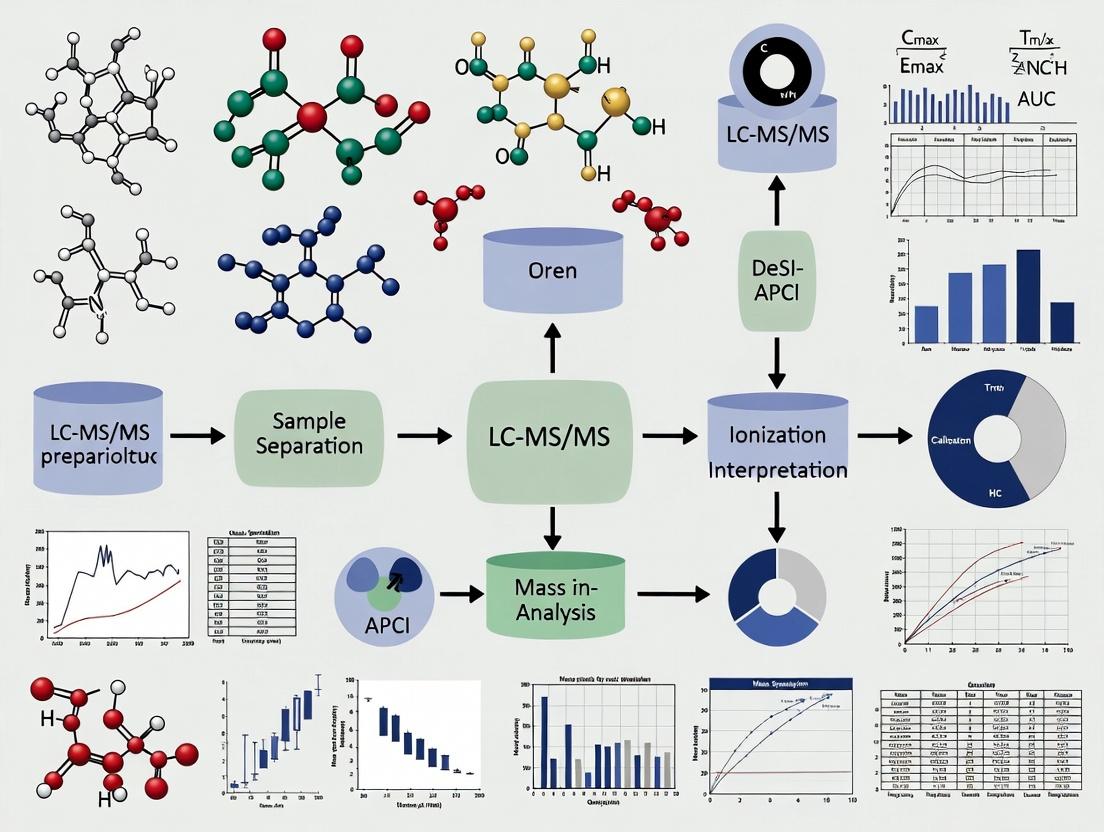
This comprehensive article explores the pivotal role of Liquid Chromatography-Tandem Mass Spectrometry (LC-MS/MS) in modern pharmacokinetic (PK) studies.
LC-MS/MS in Pharmacokinetics: Modern Techniques, Applications, and Method Validation for Drug Development
Abstract
This comprehensive article explores the pivotal role of Liquid Chromatography-Tandem Mass Spectrometry (LC-MS/MS) in modern pharmacokinetic (PK) studies. Aimed at researchers, scientists, and drug development professionals, it provides a foundational understanding of why LC-MS/MS is the gold standard for bioanalysis. The scope covers core PK applications like ADME profiling, key methodological workflows from sample preparation to data analysis, and practical troubleshooting for common assay challenges. It culminates with a detailed discussion on method validation per regulatory guidelines (FDA/EMA) and comparative analysis with alternative techniques, offering a complete resource for developing robust, sensitive, and compliant PK assays.
Why LC-MS/MS is the Gold Standard for PK Analysis: Principles and Core Applications
Pharmacokinetics (PK) describes the quantitative analysis of drug movement within the body, primarily characterized by the processes of Absorption, Distribution, Metabolism, and Excretion (ADME). In modern drug development, understanding these processes is critical for determining the correct dosage, frequency, and route of administration to achieve therapeutic efficacy while minimizing toxicity. Sensitive and specific bioanalysis, particularly using Liquid Chromatography-Tandem Mass Spectrometry (LC-MS/MS), is indispensable for generating high-quality PK data. This application note, framed within a broader thesis on LC-MS/MS applications in PK research, details the ADME framework and provides validated experimental protocols for quantitative drug analysis in biological matrices.
The ADME Framework and Bioanalytical Challenges
ADME defines the lifecycle of a drug in an organism.
- Absorption: The process by which a drug enters systemic circulation from its site of administration (e.g., gut, lung, skin). Key PK parameters include bioavailability (F) and C~max~.
- Distribution: The reversible transfer of drug from systemic circulation to tissues and organs. This is influenced by blood flow, tissue permeability, and plasma protein binding, quantified by the volume of distribution (V~d~).
- Metabolism: The enzymatic conversion of the parent drug into metabolites, primarily in the liver (via cytochrome P450 enzymes). This can lead to inactivation, activation (prodrugs), or formation of toxic species.
- Excretion: The removal of the drug and its metabolites from the body, typically via urine (kidneys) or feces (bile).
Bioanalysis in PK studies faces significant challenges: low drug concentrations (pg/mL to ng/mL) in complex biological matrices (plasma, tissue), the presence of isobaric interferences, and the need for high-throughput analysis. LC-MS/MS has become the gold standard due to its superior sensitivity, specificity, and multiplexing capability.
Table 1: Typical PK Parameters and Their Bioanalytical Implications
| PK Parameter | Symbol | Definition | Bioanalytical Requirement |
|---|---|---|---|
| Area Under the Curve | AUC | Total drug exposure over time | Requires accurate quantification across entire concentration range. |
| Maximum Concentration | C~max~ | Peak plasma concentration | Must capture true peak; dependent on sampling timepoints. |
| Time to C~max~ | T~max~ | Time to reach peak concentration | Dependent on study design and sampling frequency. |
| Half-life | t~1/2~ | Time for plasma concentration to halve | Requires sensitive assay to accurately define elimination phase. |
| Volume of Distribution | V~d~ | Apparent volume to distribute the dose | Relies on accurate initial concentration measurement. |
| Clearance | CL | Volume of plasma cleared of drug per unit time | Dependent on accurate AUC measurement. |
Diagram Title: ADME Pathway of a Drug in the Body
Application Note: Protocol for Quantitative Bioanalysis of a Small Molecule Drug in Plasma via LC-MS/MS
Objective
To quantify a hypothetical small molecule drug (Compound X) and its major metabolite (M1) in rat plasma for a pharmacokinetic study following a single intravenous dose.
The Scientist's Toolkit: Research Reagent Solutions
Table 2: Essential Materials and Reagents for LC-MS/MS Bioanalysis
| Item | Function in Protocol |
|---|---|
| Stable Isotope-Labeled Internal Standard (IS) | Corrects for variability in sample preparation and ionization efficiency (e.g., Compound X-d~4~). |
| Blank Biological Matrix | Drug-free plasma from the same species as study samples for preparing calibration standards and QCs. |
| Protein Precipitation Solvent (Acetonitrile, Methanol) | Denatures and precipitates proteins to release analytes and clarify the sample extract. |
| LC-MS/MS Mobile Phases | A: 0.1% Formic acid in water (aqueous phase). B: 0.1% Formic acid in acetonitrile (organic phase). |
| Reverse-Phase LC Column (C18, 2.1x50 mm, 1.7-1.8 µm) | Provides chromatographic separation of analytes from matrix interferences. |
| Triple Quadrupole Mass Spectrometer | Enables selective and sensitive detection via Multiple Reaction Monitoring (MRM). |
Detailed Protocol
Sample Preparation (Protein Precipitation)
- Thawing: Thaw frozen plasma samples, calibration standards (0.5-500 ng/mL), and quality control (QC) samples (Low, Mid, High) on ice.
- Aliquoting: Transfer 50 µL of each sample, standard, or QC into a 1.5 mL polypropylene microcentrifuge tube.
- Internal Standard Addition: Add 10 µL of the internal standard working solution (100 ng/mL in 50:50 methanol:water) to all tubes except double blanks.
- Protein Precipitation: Add 200 µL of ice-cold acetonitrile containing 0.1% formic acid to each tube.
- Vortex and Centrifuge: Vortex mix vigorously for 2 minutes. Centrifuge at 16,000 × g for 10 minutes at 4°C.
- Collection: Transfer 150 µL of the clear supernatant to a clean autosampler vial containing a low-volume insert. Seal with a crimp cap.
LC-MS/MS Analysis Conditions
- Chromatography System: UHPLC with a binary pump and temperature-controlled autosampler (4°C).
- Column: C18, 2.1 x 50 mm, 1.7 µm particle size. Temperature: 40°C.
- Mobile Phase: A: 0.1% Formic acid in water. B: 0.1% Formic acid in acetonitrile.
- Gradient:
Time (min) Flow (mL/min) %A %B 0.0 0.4 95 5 1.0 0.4 95 5 2.5 0.4 5 95 3.5 0.4 5 95 3.6 0.4 95 5 5.0 0.4 95 5 - Injection Volume: 5 µL.
- Mass Spectrometer: Triple quadrupole operated in positive electrospray ionization (ESI+) mode.
- MRM Transitions & Parameters:
*Quantifier ionAnalyte Precursor Ion (m/z) Product Ion (m/z) Collision Energy (V) Compound X 407.2 175.1 22 407.2 112.0 35 Metabolite M1 423.2 191.1 20 Internal Std (X-d4) 411.2 179.1 22
Data Processing and Acceptance Criteria
- Calibration Curve: Construct a linear regression curve (weighting factor: 1/x^2^) of analyte/IS peak area ratio vs. nominal concentration.
- QC Sample Accuracy & Precision: Mean calculated concentrations for QCs must be within ±15% of nominal (±20% at LLOQ). Coefficient of variation (CV) ≤15% (≤20% at LLOQ).
- Sample Analysis: Interpolate concentrations of unknown study samples from the calibration curve. Re-inject any samples with concentrations above the upper limit of quantification (ULOQ) after dilution.
Diagram Title: Plasma Bioanalysis Workflow for PK Study
Advanced Protocol: Investigating Metabolic Stability Using Microsomal Incubation
Objective
To determine the in vitro intrinsic clearance (CL~int~) of Compound X using rat liver microsomes, informing hepatic metabolism as a component of PK.
Detailed Protocol
- Incubation Mix Preparation: In a 96-well plate on ice, add:
- 395 µL of 0.1 M phosphate buffer (pH 7.4).
- 50 µL of NADPH regenerating system solution.
- 5 µL of rat liver microsomes (0.5 mg/mL final protein concentration).
- Pre-warm: Pre-incubate the plate at 37°C for 5 minutes in a thermostated shaker.
- Initiate Reaction: Add 50 µL of Compound X (final concentration 1 µM in 0.5% DMSO). For "No NADPH" controls, add buffer instead of the NADPH regenerating system.
- Time Course Sampling: At t = 0, 5, 10, 20, and 30 minutes, remove 50 µL of the incubation mixture and immediately quench with 100 µL of ice-cold acetonitrile containing internal standard.
- Analysis: Centrifuge quenched samples (4000 × g, 10 min) and analyze supernatant via the LC-MS/MS method in Section 3.3.2.
- Data Analysis: Plot natural log of remaining parent compound (%) vs. time. The slope (k) is used to calculate in vitro t~1/2~ and scaled CL~int~.
Table 3: Example Metabolic Stability Results for Compound X
| Timepoint (min) | Compound X Remaining (%) | ln(% Remaining) |
|---|---|---|
| 0 | 100.0 | 4.605 |
| 5 | 78.2 | 4.359 |
| 10 | 61.5 | 4.119 |
| 20 | 37.8 | 3.632 |
| 30 | 23.3 | 3.148 |
| In vitro t~1/2~ (min) | 12.7 | |
| In vitro CL~int~ (µL/min/mg) | 54.6 |
Robust and sensitive bioanalysis is the cornerstone of reliable PK/ADME studies. The detailed LC-MS/MS protocols provided here for plasma quantification and metabolic stability assessment enable researchers to generate the high-quality data necessary to understand a drug's fate in vivo. These methodologies are integral to the thesis that LC-MS/MS is a transformative technology, accelerating pharmacokinetic research and rational drug development by providing unparalleled specificity and sensitivity for quantifying drugs and metabolites in biological systems.
Within the thesis on advancing pharmacokinetics (PK) research, the core challenge lies in accurately quantifying drug molecules and their metabolites in complex biological matrices (e.g., plasma, tissue homogenates) against a backdrop of overwhelming endogenous interferences. High-performance liquid chromatography coupled with tandem mass spectrometry (LC-MS/MS) has become the unequivocal gold standard, providing a synergistic combination of chromatographic separation and mass spectrometric detection that delivers unparalleled sensitivity, specificity, and analytical throughput.
The following table quantifies the performance benchmarks of modern LC-MS/MS systems in PK applications, compared to traditional methodologies.
Table 1: Performance Comparison of Bioanalytical Techniques for Pharmacokinetics
| Parameter | LC-MS/MS (Modern Triple Quadrupole) | HPLC-UV | Immunoassays (e.g., ELISA) |
|---|---|---|---|
| Typical Lower Limit of Quantification (LLOQ) | 0.1–10 pg/mL | 1–100 ng/mL | 0.1–1 ng/mL |
| Linear Dynamic Range | 3–4 orders of magnitude (e.g., 1–1000 ng/mL) | 2–3 orders of magnitude | 1.5–2 orders of magnitude |
| Analytical Specificity | Very High (dual mass filters) | Moderate (retention time only) | Low to Moderate (cross-reactivity) |
| Sample Throughput | 2–5 minutes per sample | 10–30 minutes per sample | 1–3 hours per plate |
| Multi-Analyte Capability | Excellent (MRM) | Poor | Poor |
| Matrix Effect Susceptibility | Moderate (mitigated by stable isotope IS) | Low | High |
Detailed Protocol: Quantitative PK Analysis of a Small Molecule Drug in Plasma
This protocol details the determination of drug "X" and its major metabolite in human plasma.
I. Materials and Sample Preparation
- Research Reagent Solutions & Essential Materials:
- Analytical Standard & Stable Isotope-Labeled Internal Standard (IS): Pure drug X, its metabolite, and their 13C/15N-labeled analogs. Function: Ensures accurate quantification by correcting for recovery and ion suppression/enhancement.
- Protein Precipitation (PPT) Solvent: Acetonitrile with 0.1% Formic Acid. Function: Denatures and removes plasma proteins, precipitating analytes into an organic supernatant.
- Mobile Phase A: 0.1% Formic Acid in Water. Function: Aqueous LC phase for analyte retention.
- Mobile Phase B: 0.1% Formic Acid in Acetonitrile. Function: Organic LC phase for analyte elution.
- Solid Phase Extraction (SPE) Cartridges (Optional for cleaner extracts): C18 or Mixed-Mode. Function: Provides selective cleanup for ultra-trace analysis.
II. Experimental Workflow Protocol
- Calibration & QC Preparation: Spike known amounts of drug X and metabolite into blank plasma to create calibration curves (e.g., 1–1000 ng/mL) and Quality Control (QC) samples (Low, Mid, High).
- Sample Aliquoting: Aliquot 50 µL of calibration standards, QCs, and study samples into a 96-well plate.
- Internal Standard Addition: Add 10 µL of working IS solution (e.g., 50 ng/mL in methanol) to all wells except double blanks.
- Protein Precipitation: Add 200 µL of ice-cold PPT solvent. Seal, vortex mix for 5 minutes, and centrifuge at 4,000 x g for 10 minutes.
- Supernatant Transfer: Transfer 150 µL of the clear supernatant to a fresh 96-well plate containing 50 µL of water. Seal for LC-MS/MS analysis.
- LC-MS/MS Analysis:
- Chromatography: Reversed-phase C18 column (50 x 2.1 mm, 1.7 µm). Gradient: 5% B to 95% B over 3.0 minutes. Flow rate: 0.4 mL/min. Temperature: 40°C.
- MS Detection: Positive Electrospray Ionization (ESI+). Multiple Reaction Monitoring (MRM) mode.
- Drug X: Q1 m/z 405.2 → Q3 m/z 243.1 (Collision Energy: 25 eV)
- Metabolite: Q1 m/z 421.2 → Q3 m/z 259.1 (Collision Energy: 22 eV)
- IS (Drug X-13C6): Q1 m/z 411.2 → Q3 m/z 249.1 (Collision Energy: 25 eV)
- Data Processing: Integrate analyte and IS peak areas. Plot calibration curve (analyte/IS area ratio vs. concentration) using a 1/x² weighted linear regression. Back-calculate QC and unknown sample concentrations.
Diagram Title: LC-MS/MS Bioanalysis Workflow for PK Samples
The MRM Advantage: Specificity in Complex Matrices
The core of LC-MS/MS specificity lies in Multiple Reaction Monitoring (MRM). The process filters analytes by both intact mass and a unique fragment, drastically reducing background noise.
Diagram Title: MRM Principle: Dual Filtering for Specificity
The Scientist's Toolkit: Key Reagents & Consumables
Table 2: Essential Research Reagents and Materials for LC-MS/MS PK Assays
| Item | Function & Importance |
|---|---|
| Stable Isotope-Labeled Internal Standards (SIL-IS) | Corrects for matrix effects and variability in sample prep; critical for accuracy and precision. |
| Mass Spectrometry-Grade Solvents (ACN, MeOH, Water) | Minimizes background chemical noise and ion source contamination, ensuring sensitivity. |
| Low-Binding Vials & Microplates | Prevents adsorptive loss of hydrophobic or protein-bound analytes, improving recovery. |
| High-Purity Formic Acid/Acetic Acid | Volatile mobile phase additives for controlling ionization efficiency (pH) in ESI. |
| UPLC/HPLC Columns (e.g., C18, 1.7-2.7 µm) | Provides high-resolution, rapid separation, reducing co-elution and mitigating matrix effects. |
| Certified Reference Standards (Drug & Metabolites) | Ensures the identity and purity of calibration standards, the foundation of all quantitative data. |
As detailed in this application note, the LC-MS/MS advantage is foundational to the thesis of modern pharmacokinetics. Its unmatched sensitivity allows for micro-dosing studies and prolonged terminal-phase characterization. Its specificity deconvolutes complex metabolite profiles in matrices like bile or tissue. Its speed enables high-throughput analysis for large preclinical and clinical trials. Mastery of these protocols and principles is essential for researchers driving innovation in drug development.
Within the broader thesis on the pivotal role of Liquid Chromatography-Tandem Mass Spectrometry (LC-MS/MS) in modern pharmacokinetics (PK) research, this application note details the experimental protocols for quantifying five fundamental PK parameters: Cmax, Tmax, AUC, half-life (t1/2), and clearance (CL). These parameters are the cornerstone for evaluating the absorption, distribution, metabolism, and excretion (ADME) of new chemical entities. LC-MS/MS provides the requisite sensitivity, specificity, and dynamic range for accurate measurement of drug concentrations in complex biological matrices across the entire PK profile.
Table 1: Definition, Calculation, and Significance of Core PK Parameters
| Parameter | Definition | Typical Unit | Calculation Method (from LC-MS/MS data) | Pharmacokinetic Significance |
|---|---|---|---|---|
| Cmax | Maximum observed plasma concentration. | ng/mL or μM | Directly observed from measured concentration-time data. | Indicates the extent of drug absorption; critical for efficacy and safety. |
| Tmax | Time to reach Cmax. | Hours (h) | Directly observed from measured concentration-time data. | Reflects the rate of drug absorption. |
| AUC0-t | Area Under the Curve from time zero to the last measurable time point. | h*ng/mL | Calculated using the linear trapezoidal rule on concentration-time points. | Primary measure of total systemic drug exposure. |
| AUC0-∞ | AUC from time zero extrapolated to infinity. | h*ng/mL | AUC0-t + (Clast / λz), where Clast is the last measured concentration and λz is the terminal rate constant. | Total exposure, accounting for the entire profile. |
| Half-life (t1/2) | Time for plasma concentration to reduce by 50% in the terminal phase. | Hours (h) | ln(2) / λz, where λz is the elimination rate constant from terminal slope. | Governs dosing frequency and time to steady-state. |
| Clearance (CL) | Volume of plasma cleared of drug per unit time. | L/h | Dose / AUC0-∞ (for intravenous administration). | Integrative measure of the body's efficiency in eliminating the drug. |
Detailed Experimental Protocols
Protocol 1: LC-MS/MS Method Development & Validation for PK Assay
Objective: To establish a selective, sensitive, and robust quantitative method for the analyte in plasma. Workflow:
- Sample Preparation (Protein Precipitation): Aliquot 50 μL of plasma. Add 150 μL of acetonitrile containing internal standard (IS, stable-label or structural analog). Vortex for 1 min, centrifuge at 15,000 x g for 10 min (4°C). Transfer 100 μL of supernatant for analysis.
- LC Conditions: Column: C18 (50 x 2.1 mm, 1.7 μm). Mobile Phase A: 0.1% Formic acid in water. B: 0.1% Formic acid in acetonitrile. Gradient: 5% B to 95% B over 2.5 min, hold for 0.5 min. Flow rate: 0.4 mL/min. Column temperature: 40°C.
- MS/MS Conditions: Ion Source: Electrospray Ionization (ESI), positive/negative mode. Multiple Reaction Monitoring (MRM) transitions optimized for analyte and IS. Example: Analyte: m/z 400.2 → 285.1 (Collision Energy: 20 eV); IS: m/z 405.2 → 289.1 (CE: 20 eV). Dwell time: 50 ms per transition.
- Validation: Perform per FDA/EMA guidelines: linearity (r² > 0.99), accuracy (85-115%), precision (CV < 15% at LLOQ, < 20% others), matrix effects, recovery, and stability.
Protocol 2: In Vivo PK Study & Sample Analysis
Objective: To generate the concentration-time profile for PK parameter calculation. Workflow:
- Dosing & Sampling: Administer a single dose (IV/PO) to pre-cannulated animals (e.g., rats, n=6). Collect blood samples (e.g., 100 μL) at pre-dose, 0.083, 0.25, 0.5, 1, 2, 4, 8, 12, and 24h post-dose. Centrifuge immediately to obtain plasma.
- Sample Processing: Process plasma samples as per Protocol 1. Include calibration standards (spiked blank plasma) and quality controls (QCs) in each batch.
- LC-MS/MS Analysis: Inject processed samples using the validated method. Quantify concentrations using a linear regression model (1/x² weighting) of the analyte/IS peak area ratio vs. nominal concentration.
- Data Processing: Generate the mean plasma concentration-time profile.
Protocol 3: Non-Compartmental Analysis (NCA) for PK Parameter Calculation
Objective: To derive PK parameters from the concentration-time data. Workflow:
- Input Data: Tabulate individual animal concentration-time data.
- Cmax & Tmax: Identify the highest measured concentration and its corresponding time.
- AUC Calculation: Calculate AUC0-t using the linear trapezoidal rule. Determine the terminal elimination rate constant (λz) by linear regression of the log-linear terminal phase (≥3 last points). Calculate AUC0-∞.
- Half-life & Clearance: Compute t1/2 = ln(2)/λz. For IV dosing, calculate CL = Dose / AUC0-∞.
- Statistical Analysis: Report parameters as Mean ± SD. Use validated software (e.g., Phoenix WinNonlin) for all calculations.
Visualization: LC-MS/MS PK Study Workflow
Title: Three-Phase Workflow for PK Parameter Determination
The Scientist's Toolkit: Key Research Reagent Solutions
Table 2: Essential Materials for LC-MS/MS-Based PK Studies
| Item / Solution | Function & Rationale |
|---|---|
| Stable Isotope-Labeled Internal Standard (SIL-IS) | Corrects for variability in sample preparation and ionization efficiency; crucial for accuracy and precision. Typically deuterated (²H) or ¹³C-labeled analog of the analyte. |
| Mass Spectrometry-Grade Solvents | High-purity acetonitrile, methanol, and water minimize background noise and ion suppression, ensuring optimal MS sensitivity and reproducibility. |
| Mobile Phase Additives (e.g., Formic Acid) | Enhances analyte ionization in ESI source (positive mode) and improves chromatographic peak shape. |
| Blank (Control) Biological Matrix | Drug-free plasma from the study species. Used to prepare calibration standards and QCs for method validation and sample analysis. |
| Certified Reference Standard | High-purity, well-characterized analyte material for preparing stock solutions, standards, and QCs. |
| Solid-Phase Extraction (SPE) or Protein Precipitation Plates | Enable high-throughput, automated sample clean-up to remove proteins and phospholipids, reducing matrix effects. |
| LC Column: C18, 50-100 x 2.1 mm, sub-2μm | Provides fast, high-resolution separation, critical for complex matrices and short analysis times in high-throughput PK studies. |
Application Notes: LC-MS/MS in Core Pharmacokinetic Explorations
Within the broader thesis of advanced LC-MS/MS applications in pharmacokinetics (PK), three interconnected exploratory pillars are critical for modern drug development: early ADME (Absorption, Distribution, Metabolism, Excretion) profiling, definitive metabolite identification (Met ID), and biomarker analysis for pharmacodynamic (PD) assessment. These applications de-risk late-stage failure by providing a comprehensive molecular understanding of a drug candidate's fate and effects in vivo.
Early ADME Studies: High-throughput, quantitative LC-MS/MS screens are deployed to evaluate key PK parameters and metabolic stability early in discovery. Data from these studies guide lead optimization by highlighting potential issues like rapid clearance or poor bioavailability.
Metabolite Identification: Structural elucidation of biotransformation products via high-resolution accurate-mass (HRAM) LC-MS/MS is essential for assessing metabolic soft spots, reactive metabolite formation, and overall safety profile. It directly informs the design of more stable analogs and is a regulatory requirement.
Biomarker Analysis: Targeted LC-MS/MS assays provide absolute quantification of endogenous biomarkers (e.g., lipids, amino acids, signaling molecules) in biological matrices. Monitoring these biomarkers offers mechanistic insights into drug efficacy, toxicity, and disease state modulation, bridging PK and PD.
The synergy of these applications, enabled by robust LC-MS/MS platforms, creates a feedback loop that accelerates the development of safer and more effective therapeutics.
Table 1: Representative Quantitative Outputs from Early LC-MS/MS ADME Screens
| Assay Type | Key Parameter Measured | Typical LC-MS/MS Readout | Interpretation Guideline |
|---|---|---|---|
| Microsomal Stability | Intrinsic Clearance (CLint) | % Parent Compound Remaining over time | CLint < 10 µL/min/mg: Low clearance. > 50 µL/min/mg: High clearance. |
| Caco-2 Permeability | Apparent Permeability (Papp) | Papp (10⁻⁶ cm/s) | Papp (A-B) > 10: High permeability. < 1: Low permeability. |
| Plasma Protein Binding | Fraction Unbound (fu) | % Compound Bound | fu < 1%: Highly bound. > 20%: Low binding. |
| CYP Inhibition | IC50 | Concentration inhibiting 50% of enzyme activity | IC50 < 1 µM: Strong inhibitor. > 10 µM: Low risk. |
Table 2: Common Biotransformations Identified via HRAM LC-MS/MS
| Biotransformation | Mass Shift (Da) | Typical Site | Implication |
|---|---|---|---|
| Oxidation (Hydroxylation) | +15.9949 | Aromatic rings, aliphatic chains | Often leads to further conjugation; can activate prodrugs. |
| Glucuronidation | +176.0321 | -OH, -COOH, -NH₂ | Major Phase II pathway; can lead to active metabolites or biliary excretion. |
| Dealkylation (N-, O-) | -14.0157 (CH₂), -28.0313 (C₂H₄) | Amines, ethers | Can reveal metabolic soft spots; may produce active metabolites. |
| Sulfation | +79.9568 | -OH | Major Phase II pathway; often inactivates phenols. |
| Glutathione Conjugation | +305.0682 | Electrophilic centers | Indicator of reactive metabolite formation; detoxification pathway. |
Experimental Protocols
Protocol 1: High-Throughput Metabolic Stability Assay in Liver Microsomes
Objective: To determine the in vitro half-life (t1/2) and intrinsic clearance (CLint) of a drug candidate. Materials: Test compound, pooled human liver microsomes (0.5 mg/mL final), NADPH regenerating system, potassium phosphate buffer (100 mM, pH 7.4), stop solution (acetonitrile with internal standard), LC-MS/MS system. Procedure:
- Incubation: Pre-warm microsomal suspension and NADPH system at 37°C. Initiate reaction by adding NADPH to the mixture containing test compound (1 µM) and microsomes. Final volume: 100 µL.
- Time Points: Aliquot 15 µL from the incubation mixture at t = 0, 5, 10, 20, 30, and 60 minutes into a pre-chilled 96-well plate containing 100 µL of stop solution to precipitate proteins.
- Sample Prep: Centrifuge plate at 4000 x g for 15 min at 4°C. Transfer supernatant to a new plate for LC-MS/MS analysis.
- LC-MS/MS Analysis: Use a short, fast-gradient UHPLC (e.g., C18 column, 2.1 x 50 mm, 1.7 µm) coupled to a triple quadrupole MS in MRM mode.
- Data Analysis: Plot Ln(% remaining) vs. time. Calculate slope (k), t1/2 = 0.693/k, and scaled CLint = (0.693/t1/2) * (mL incubation/mg microsomes) * (mg microsomes/g liver) * (g liver/kg body weight).
Protocol 2: Metabolite Identification using HRAM LC-MS/MS
Objective: To characterize major in vitro and in vivo metabolites of a drug candidate. Materials: Test compound, hepatocytes or plasma/urine/bile samples, acetonitrile/methanol, water, formic acid, UHPLC-HRAM-MS system (Q-TOF or Orbitrap). Procedure:
- Sample Generation: Incubate compound (10 µM) with hepatocytes (1 million cells/mL) for 2-4 hours. For in vivo samples, collect plasma, urine, and bile from dosed animals.
- Extraction: Precipitate proteins with 3 volumes of cold acetonitrile. Vortex, centrifuge, and evaporate supernatant under nitrogen. Reconstitute in mobile phase.
- LC-HRAM-MS Analysis:
- Chromatography: Use a BEH C18 column (2.1 x 100 mm, 1.7 µm) with a 15-20 min gradient from water to organic (acetonitrile), both with 0.1% formic acid.
- MS Acquisition: Use data-dependent acquisition (DDA). Full MS scan (m/z 100-1000) at high resolution (≥70,000 FWHM). Trigger MS/MS scans on top N ions using stepped collision energy.
- Data Processing: Use software (e.g., Compound Discoverer, Metabolynx) to find metabolites via mass defect filtering, isotope patterns, and fragment ion matching. Propose structures based on accurate mass shifts and MS/MS fragmentation pathways compared to the parent compound.
Protocol 3: Targeted Quantification of a Biomarker Panel in Plasma
Objective: To absolutely quantify a panel of 10 inflammatory lipids (eicosanoids) in rat plasma. Materials: Plasma samples, deuterated internal standards for each analyte, solid-phase extraction (SPE) cartridges (C18), LC-MS/MS system. Procedure:
- Sample Preparation: Spike 50 µL of plasma with 10 µL of IS mixture. Add 200 µL of ice-cold methanol containing 0.1% BHT, vortex, and centrifuge.
- SPE Clean-up: Condition C18 SPE plate with methanol and water. Load supernatant, wash with water, and elute with methanol. Evaporate and reconstitute in mobile phase.
- LC-MS/MS Analysis:
- Chromatography: Use a Kinetex C18 column (2.1 x 50 mm, 2.6 µm) with gradient elution (water/acetonitrile with 0.1% acetic acid).
- MS Detection: Operate triple quadrupole in negative electrospray MRM mode. Optimize compound-specific parameters (Q1, Q3, CE) for each eicosanoid and its IS.
- Quantification: Build an 8-point calibration curve in surrogate matrix. Use peak area ratios (analyte/IS) vs. concentration with 1/x² weighting for linear regression. Apply the equation to unknown samples.
Visualizations
Title: Integrated Exploratory LC-MS/MS Workflow in Drug Discovery
Title: Biotransformation Pathway & MS Analysis Strategy
The Scientist's Toolkit: Key Research Reagent Solutions
Table 3: Essential Materials for Exploratory LC-MS/MS Applications
| Item | Function & Application | Key Considerations |
|---|---|---|
| Pooled Human Liver Microsomes (HLM) | In vitro system containing CYP450s and other enzymes for metabolic stability and reaction phenotyping. | Lot-to-lot variability; select pools from diverse donors. |
| Cryopreserved Hepatocytes | More physiologically relevant in vitro system containing full suite of Phase I & II enzymes for metabolite ID. | High viability upon thawing is critical for activity. |
| NADPH Regenerating System | Provides essential cofactor (NADPH) for CYP450-mediated oxidation reactions in microsomal incubations. | Use fresh or stable formulations to maintain linear reaction rates. |
| Deuterated Internal Standards (IS) | Stable isotope-labeled analogs of analytes used in quantitative LC-MS/MS to correct for matrix effects and recovery. | Ideal IS is stable, co-elutes with analyte, and mimics its extraction/ionization. |
| Solid-Phase Extraction (SPE) Plates | For clean-up and concentration of analytes from complex biological matrices (plasma, urine) prior to LC-MS. | Choice of sorbent (C18, HLB, ion-exchange) depends on analyte properties. |
| HRAM Mass Spectrometry Calibrant | Solution for daily mass calibration of TOF or Orbitrap systems to ensure sub-ppm mass accuracy for metabolite ID. | Must be compatible with ionization mode (e.g., ESI positive/negative). |
| Stable Isotope-Labeled Drug Compound | (¹³C, ²H) used as a tracer to differentiate drug-derived metabolites from endogenous compounds in complex matrices. | Labeling should be metabolically stable (e.g., on core scaffold). |
Application Note 001: Small Molecule Drug Quantification Thesis Context: Demonstrates the foundational role of LC-MS/MS in traditional small molecule pharmacokinetics, offering high sensitivity and specificity for low molecular weight compounds.
Protocol: Quantitative Analysis of a Small Molecule Kinase Inhibitor in Plasma
- Sample Preparation: Perform protein precipitation. Add 300 µL of cold acetonitrile (containing internal standard) to 100 µL of plasma. Vortex for 1 minute and centrifuge at 15,000 × g for 10 minutes at 4°C.
- LC Conditions:
- Column: C18 (50 x 2.1 mm, 1.7 µm)
- Mobile Phase A: 0.1% Formic acid in water
- Mobile Phase B: 0.1% Formic acid in acetonitrile
- Gradient: 5% B to 95% B over 2.5 minutes
- Flow Rate: 0.4 mL/min
- Injection Volume: 5 µL
- MS/MS Conditions:
- Ionization: ESI positive mode
- MRM Transitions: Analyte: 447.2 → 138.1 (CE: 30 eV); ISTD: 452.2 → 140.1 (CE: 32 eV)
- Source Temp.: 150°C; Desolvation Temp.: 500°C
- Data Analysis: Use a weighted (1/x²) linear regression curve from 1–1000 ng/mL.
Table 1: Performance Data for Small Molecule Assay
| Parameter | Value |
|---|---|
| LLOQ | 1.00 ng/mL |
| Linear Range | 1 - 1000 ng/mL |
| Accuracy (%) | 97.2 - 103.5 |
| Intra-day Precision (%CV) | ≤ 6.2 |
| Inter-day Precision (%CV) | ≤ 7.8 |
| Extraction Recovery (%) | 88.5 |
Application Note 002: Monoclonal Antibody (mAb) Bioanalysis Thesis Context: Highlights the adaptation of LC-MS/MS for large molecule PK through surrogate peptide analysis post-digestion, bridging small and large molecule platforms.
Protocol: Quantification of a Therapeutic mAb via Signature Peptide Analysis
- Immunocapture: Incubate 50 µL of serum with 10 µg of biotinylated anti-idiotype antibody for 1 hour. Add streptavidin magnetic beads and incubate for 30 minutes. Wash beads 3x with PBS.
- Reduction/Alkylation/Digestion: Resuspend beads in 50 µL of 8 M urea. Reduce with 10 mM DTT (30 min, 37°C). Alkylate with 25 mM IAA (30 min, RT in dark). Dilute with 100 µL of 50 mM ammonium bicarbonate. Add 2 µg of trypsin/Lys-C and digest overnight at 37°C. Quench with 1% formic acid.
- LC Conditions:
- Column: C18 (100 x 2.1 mm, 1.8 µm)
- Mobile Phase A: 0.1% Formic acid in water
- Mobile Phase B: 0.1% Formic acid in acetonitrile
- Gradient: 2% B to 40% B over 8 minutes
- Flow Rate: 0.25 mL/min
- MS/MS Conditions:
- Ionization: ESI positive mode
- MRM Transitions: Signature Peptide: 645.8(2+) → 804.4 (CE: 25 eV); SIL Peptide: 650.3(2+) → 810.5 (CE: 25 eV)
- Data Analysis: Use a weighted (1/x²) quadratic regression curve.
Table 2: Performance Data for mAb Surrogate Peptide Assay
| Parameter | Value |
|---|---|
| LLOQ | 0.500 µg/mL |
| Linear Range | 0.5 - 200 µg/mL |
| Accuracy (%) | 94.0 - 106.0 |
| Intra-day Precision (%CV) | ≤ 8.5 |
| Inter-day Precision (%CV) | ≤ 11.2 |
| Digestion Efficiency (%) | > 85 |
Application Note 003: AAV Vector Genome Titering Thesis Context: Illustrates the cutting-edge extension of LC-MS/MS to gene therapy PK by quantifying nucleic acid payloads, moving beyond traditional proteomic analyses.
Protocol: LC-MS/MS Quantification of AAV Vector Genome Copies via gDNA Analysis
- Sample Lysis & DNA Isolation: Treat 50 µL of cell lysate or tissue homogenate with Proteinase K. Isolate total DNA using a magnetic bead-based kit. Elute in 50 µL of nuclease-free water.
- Enzymatic Digestion to Nucleosides: Denature 20 µL of DNA sample at 100°C for 5 min. Cool and digest with 5 U of nuclease P1 in 10 mM NH₄OAc (pH 5.3) for 2h at 50°C. Add 0.5 U of phosphodiesterase I and 0.1 U of alkaline phosphatase in 100 mM NH₄HCO₃ (pH 8.0). Incubate for 2h at 37°C. Quench with 1% formic acid.
- LC Conditions:
- Column: HILIC (150 x 2.1 mm, 3 µm)
- Mobile Phase A: 10 mM ammonium acetate in water, pH 5.3
- Mobile Phase B: Acetonitrile
- Isocratic: 85% B for 7 minutes
- Flow Rate: 0.3 mL/min
- MS/MS Conditions:
- Ionization: ESI positive mode
- MRM Transitions: 2'-Deoxyadenosine: 252.1 → 136.1 (CE: 20 eV); [¹⁵N₅]-2'-Deoxyadenosine: 257.1 → 141.1 (CE: 20 eV)
- Data Analysis: Relate the measured abundance ratio of endogenous vs. vector-specific nucleosides (from a engineered sequence) to a standard curve from a synthetic gDNA template.
Table 3: Performance Data for AAV Genome Titering Assay
| Parameter | Value |
|---|---|
| LLOQ | 1.00 x 10³ vg/µg gDNA |
| Dynamic Range | 1x10³ - 1x10⁶ vg/µg gDNA |
| Accuracy (%) | 92.0 - 108.0 |
| Intra-day Precision (%CV) | ≤ 12.0 |
| Specificity | No interference from host DNA |
The Scientist's Toolkit: Key Research Reagent Solutions
| Item | Function in PK Bioanalysis |
|---|---|
| Stable Isotope Labeled (SIL) Internal Standards | Corrects for variability in ionization efficiency, matrix effects, and sample preparation recovery. Essential for assay precision. |
| Immunocapture Beads (e.g., Streptavidin Magnetic Beads) | Enables specific enrichment of large biologic analytes (e.g., mAbs) from complex matrices, improving sensitivity and specificity. |
| Trypsin/Lys-C Protease | Enzymatically cleaves proteins into predictable peptides for bottom-up LC-MS/MS analysis of large biologics. |
| Nuclease P1 / Phosphodiesterase I / Alkaline Phosphatase Enzyme Cocktail | Digests DNA/RNA into individual nucleosides for LC-MS/MS quantification of gene therapy vector genomes. |
| Hybrid LC Columns (e.g., C18 with small particle size <2µm) | Provides high-resolution separation of small molecules, peptides, and nucleosides, essential for selectivity in complex samples. |
LC-MS/MS PK Workflow Evolution Diagram
Analytical Strategy by Molecule Type Diagram
Building a Robust PK Assay: Step-by-Step LC-MS/MS Method Development and Real-World Applications
Within LC-MS/MS-based pharmacokinetic (PK) research, sample preparation is a critical step to isolate analytes from biological matrices (e.g., plasma, blood) while removing interfering components like proteins, lipids, and salts. The choice of strategy directly impacts method sensitivity, selectivity, reproducibility, and throughput. This article details established and modern techniques, framed within the context of developing robust PK assays for drug candidates.
Protein Precipitation (PPT)
Application Note: PPT is a rapid, straightforward technique for protein removal, often used in high-throughput screening during early drug discovery. It is suitable for compounds with high plasma concentrations or robust LC-MS/MS methods but may suffer from matrix effects due to incomplete removal of phospholipids. Protocol:
- Sample Volume: Transfer 50 µL of plasma sample to a microcentrifuge tube.
- Precipitant Addition: Add 150 µL of ice-cold acetonitrile (containing internal standard) to the plasma. Vortex mix vigorously for 30 seconds.
- Incubation: Allow the mixture to sit at -20°C for 10 minutes to enhance protein denaturation.
- Centrifugation: Centrifuge at 13,000 × g for 10 minutes at 4°C.
- Collection: Transfer the clear supernatant (typically ~150 µL) to a clean vial or 96-well plate.
- Analysis: Evaporate the supernatant to dryness under a gentle nitrogen stream at 40°C. Reconstitute the dried extract in 100 µL of mobile phase (e.g., 10% acetonitrile in water). Vortex and centrifuge before LC-MS/MS injection.
Liquid-Liquid Extraction (LLE)
Application Note: LLE offers superior clean-up by partitioning analytes between immiscible organic and aqueous phases based on polarity. It effectively removes phospholipids, reducing ion suppression and is ideal for lipophilic analytes. Protocol:
- Sample/Alkalinization: Mix 100 µL of plasma with 10 µL of internal standard working solution and 100 µL of 0.1 M ammonium bicarbonate buffer (pH 9.0) in a glass tube.
- Extraction: Add 1 mL of methyl tert-butyl ether (MTBE). Cap and shake mechanically for 10 minutes.
- Phase Separation: Centrifuge at 3,000 × g for 5 minutes to separate layers.
- Collection: Transfer the upper organic layer (~900 µL) to a clean glass tube.
- Evaporation & Reconstitution: Evaporate the organic layer to dryness under nitrogen at 40°C. Reconstitute the residue in 150 µL of reconstitution solvent (e.g., 50:50 methanol/water). Vortex and centrifuge prior to LC-MS/MS analysis.
Solid-Phase Extraction (SPE)
Application Note: SPE provides the highest degree of sample clean-up and analyte concentration. It utilizes cartridge-based sorbents (e.g., reversed-phase, mixed-mode) for selective retention and elution. Essential for low-concentration analytes (e.g., peptides, metabolites) in late-stage PK studies requiring high sensitivity and low matrix effects. Protocol (Mixed-Mode Cation Exchange for Basic Drugs):
- Conditioning: Condition a 30 mg mixed-mode MCX SPE cartridge with 1 mL methanol, followed by 1 mL water.
- Loading: Load 200 µL of acidified plasma (mixed with 200 µL of 2% formic acid in water) onto the cartridge. Allow it to pass through under gentle vacuum (~2 in. Hg).
- Washing: Wash sequentially with 1 mL of 2% formic acid in water and 1 mL of methanol.
- Drying: Dry the cartridge under full vacuum for 5 minutes to remove residual water.
- Elution: Elute the analyte with 1 mL of 5% ammonium hydroxide in methanol. Collect the eluate.
- Post-Processing: Evaporate the eluate to dryness. Reconstitute in 100 µL of mobile phase, vortex, centrifuge, and inject.
Modern Micro-sampling Techniques
Application Note: Dried Blood Spot (DBS) and Volumetric Absorptive Microsampling (VAMS) enable minimally invasive, small-volume collection (10-30 µL), facilitating serial sampling in rodents and remote clinical sampling. They simplify logistics (room-temperature storage/shipping) but require careful method validation for hematocrit effects (DBS) and extraction efficiency. Protocol (Mitra VAMS Handling for PK Analysis):
- Sampling: Touch the VAMS tip to a blood drop (from a finger prick or animal tail vein) until fully saturated, as indicated by a color change. Wait 5 seconds, then retract.
- Drying: Place the sampler in a dedicated rack and dry at ambient temperature for 2 hours.
- Storage: Transfer dried samplers to a sealed bag with desiccant and store at -20°C until analysis.
- Extraction: Place the entire VAMS tip in a microcentrifuge tube. Add 300 µL of extraction solvent (e.g., 70:30 methanol:water with 0.1% formic acid and internal standard).
- Vortex & Soak: Vortex for 30 minutes to ensure complete analyte desorption.
- Processing: Remove the VAMS tip, ensuring liquid is expressed back into the tube. Centrifuge the extract at 13,000 × g for 5 minutes. Transfer supernatant for direct analysis or evaporate/reconstitute for increased sensitivity.
Table 1: Comparison of Key Sample Preparation Techniques for PK LC-MS/MS Assays
| Parameter | Protein Precipitation (PPT) | Liquid-Liquid Extraction (LLE) | Solid-Phase Extraction (SPE) | Micro-sampling (VAMS) |
|---|---|---|---|---|
| Typical Sample Volume | 10-100 µL | 100-500 µL | 100-500 µL | 10-30 µL (whole blood) |
| Clean-up Efficiency | Low | Moderate-High | High | Moderate (matrix-dependent) |
| Recovery (%) | Variable (70-90) | High (80-95) | High & Consistent (85-100) | Must be validated (often >85) |
| Phospholipid Removal | Poor | Excellent | Excellent | Good with optimized extraction |
| Throughput Potential | Very High (96/384-well) | Moderate | High (automation compatible) | High post-extraction |
| Primary Use Case in PK | High-throughput screening | Mid-stage development, lipophilic drugs | Low LLOQ studies, regulated bioanalysis | Pediatric PK, serial sampling |
Workflow Diagrams
Title: Protein Precipitation Protocol Workflow
Title: PK Sample Collection and Processing Decision Tree
The Scientist's Toolkit: Key Reagent Solutions & Materials
Table 2: Essential Materials for Sample Preparation in PK Studies
| Item | Function/Application |
|---|---|
| Acetonitrile (HPLC/MS Grade) | Primary precipitant in PPT; also a strong solvent in SPE elution and LC-MS mobile phases. |
| Methanol (HPLC/MS Grade) | Used in LLE, SPE conditioning/washing/elution, and as a reconstitution solvent. |
| Methyl tert-butyl ether (MTBE) | A preferred organic solvent for LLE due to its low toxicity and efficient phospholipid removal. |
| Mixed-mode SPE Cartridges (e.g., MCX, MAX) | Provide selective retention based on pH and ionic interactions, offering superior clean-up for ionizable analytes. |
| Ammonium Formate/Acetate Buffers | Used to adjust sample pH for optimal retention during SPE or partitioning in LLE. |
| Stable Isotope-Labeled Internal Standards (SIL-IS) | Critical for correcting matrix effects and recovery losses during MS quantification. |
| Mitra or DBS Sampling Devices | Enable standardized, low-volume micro-sample collection for flexible PK study designs. |
| 96-well Protein Precipitation Plates | Facilitate high-throughput PPT processing compatible with automated liquid handlers. |
Within the framework of LC-MS/MS applications in pharmacokinetics (PK) research, the reliable quantification of drugs and their metabolites from biological matrices presents a significant analytical challenge. These analytes often span a wide polarity range. Optimal chromatographic separation is critical to achieve sufficient resolution from endogenous matrix interferences, reduce ion suppression/enhancement, and improve detection sensitivity and reproducibility for accurate PK profiling.
Core Optimization Parameters
Column Selection
The stationary phase is the primary determinant of selectivity. The choice depends on the analyte's physicochemical properties.
Table 1: Guide to Reversed-Phase Column Selection for PK Analytes
| Analyte Property | Recommended Stationary Phase | Key Characteristics | Typical Particle Size | Common Dimensions (mm) |
|---|---|---|---|---|
| Non-polar to moderate polarity (Log P > 2) | Classical C18 (e.g., BEH C18) | High retentivity, robust | 1.7 - 2.7 µm | 50-100 x 2.1-3.0 |
| Polar to moderate polarity (Log P 0-2) | Polar-embedded (e.g., amide, carbamate) or charged surface hybrid (CSH) | Improved retention for polar compounds, different selectivity | 1.7 - 2.7 µm | 50-100 x 2.1-3.0 |
| Very polar/ionic (Log P < 0) | HILIC (e.g., bare silica, amide) or Ion-Pairing RP | Retains highly polar compounds, compatible with high organic MS conditions | 1.7 - 3.5 µm | 50-150 x 2.1-3.0 |
| Broad polarity mixture | Biphenyl or pentafluorophenyl (PFP) | Offers π-π and dipole-dipole interactions, unique selectivity | 1.8 - 3.0 µm | 50-100 x 2.1-3.0 |
Mobile Phase Composition
Mobile phase choice affects ionization efficiency, peak shape, and retention.
Table 2: Mobile Phase Additives for LC-MS/MS in PK
| Additive | Concentration Range | Primary Function | Compatibility Notes |
|---|---|---|---|
| Formic Acid | 0.05 - 0.2% (v/v) | Promotes [M+H]+ ionization in positive ESI, controls pH (~2.7) | Most common; avoid with certain metal-sensitive analytes. |
| Ammonium Formate/Acetate | 2 - 10 mM | Volatile buffer; stabilizes pH (3-5), useful for negative ESI or ionizable compounds | Can suppress signal in positive mode; formate is preferred for MS sensitivity. |
| Ammonium Hydroxide | 0.1 - 0.2% (v/v) | Promotes [M-H]- ionization in negative ESI, increases pH (~10.5) | Not compatible with silica-based columns at high pH for prolonged use. |
| Trifluoroacetic Acid (TFA) | 0.01 - 0.05% (v/v) | Excellent peak shape for bases, strong ion-pairing agent | Can cause significant ion suppression; use with "TFA Fix" kits. |
Gradient Elution Optimization
Gradient elution is essential for separating complex PK samples containing metabolites of varying polarity.
Table 3: Typical Gradient Parameters for PK Method Scouting
| Parameter | Initial Scout Range | Optimization Goal |
|---|---|---|
| Initial %B | 2 - 5% | Retain very polar analytes. |
| Final %B | 95 - 98% | Elute very hydrophobic analytes and clean column. |
| Gradient Time | 3 - 10 minutes (fast) 10 - 20 minutes (comprehensive) | Balance resolution vs. cycle time. |
| Gradient Shape | Linear | Simplicity; curved gradients can optimize middle of run. |
| Flow Rate | 0.3 - 0.6 mL/min (2.1 mm ID) | Optimize for plate height and MS source. |
| Column Temperature | 30 - 50°C | Reduce backpressure, improve reproducibility. |
Experimental Protocol: Systematic Method Development for a New Chemical Entity (NCE)
Protocol Title: Development and Optimization of an LC-MS/MS Method for the Quantification of a New Chemical Entity and its Polar Metabolite in Plasma.
Objective: To establish a robust, sensitive, and selective chromatographic method for the simultaneous analysis of a non-polar parent drug and its polar hydroxylated metabolite in rat plasma.
Materials & Reagents (The Scientist's Toolkit)
Table 4: Essential Research Reagent Solutions
| Item | Function / Purpose | Example / Specification |
|---|---|---|
| Analytical Standards | Quantitative reference | NCE and metabolite (purity >95%) |
| Stable Isotope-Labeled Internal Standards (IS) | Correct for matrix effects & recovery | NCE-d4 and Metabolite-d3 |
| Mass Spectrometry Grade Water | Mobile phase component | Resistivity >18 MΩ·cm |
| Mass Spectrometry Grade Acetonitrile & Methanol | Mobile phase components | Low UV absorbance, low particle count |
| Ammonium Formate, HPLC Grade | Volatile buffer salt | ≥99.0% purity |
| Formic Acid, LC-MS Grade | Ionization modifier | 98-100% purity |
| Blank Biological Matrix | Method calibration | Drug-free rat plasma (K2EDTA) |
| Protein Precipitation Reagent | Sample cleanup | Acetonitrile (1:3 v/v sample:reagent) |
Step-by-Step Procedure
Part A: Sample Preparation
- Thaw frozen plasma samples on ice.
- Aliquot 50 µL of plasma into a 1.5 mL polypropylene microcentrifuge tube.
- Add 10 µL of working internal standard solution (IS in 50:50 methanol:water).
- Vortex mix for 10 seconds.
- Add 150 µL of ice-cold acetonitrile for protein precipitation.
- Vortex vigorously for 2 minutes.
- Centrifuge at 16,000 x g for 10 minutes at 4°C.
- Transfer 100 µL of the clear supernatant to an LC vial with insert.
- Dilute with 100 µL of water, cap, and mix by vortexing briefly.
Part B: Scouting Gradient and Column Screening
- System Setup: Use a UHPLC system coupled to a triple quadrupole MS.
- Mobile Phase:
- Mobile Phase A: 10 mM Ammonium Formate in Water, pH 3.5 (adjusted with formic acid).
- Mobile Phase B: 10 mM Ammonium Formate in 95:5 Acetonitrile:Water, pH 3.5.
- Scouting Gradient: 2% B to 98% B over 6 minutes, hold at 98% B for 1.5 minutes, re-equilibrate at 2% B for 1.5 minutes. Flow: 0.5 mL/min. Temperature: 40°C. Injection: 2 µL.
- Sequential Column Testing: Inject the prepared NCE/metabolite/IS mix (in reconstitution solvent) on the following columns (all 50 x 2.1 mm, sub-2µm): a. C18 (e.g., BEH C18) b. Polar-embedded C18 (e.g., HSS T3 or BEH Shield RP18) c. Biphenyl d. HILIC (e.g., BEH Amide)
- Evaluation: Assess peak shape (asymmetry factor), retention factor (k'), and resolution between the parent and metabolite.
Part C: Fine-Tuning the Optimized Method
- Based on results (likely Polar-embedded or Biphenyl column), adjust gradient steepness.
- If metabolites co-elute: Flatten gradient around elution %B.
- If run time is long: Increase gradient slope.
- Optimize column temperature (±5°C from 40°C) to improve resolution/peak shape.
- Optimize flow rate (0.4 - 0.6 mL/min) for best backpressure/peak width compromise.
- Finalize method and perform a calibration curve (1-1000 ng/mL) to assess linearity.
Visualization of Method Development Workflow
Diagram Title: LC-MS/MS Method Development Workflow for PK
Diagram Title: Factors Determining Chromatographic Outcome
Critical Considerations for PK Applications
- Matrix Effects: Always use stable isotope-labeled IS and evaluate matrix effects via post-column infusion experiments.
- Carryover: Include strong wash solvents (e.g., high organic) in the needle wash protocol and monitor carryover in blank injections after high-concentration samples.
- System Suitability: Establish criteria for retention time stability, peak width, and signal-to-noise before each batch run.
- Gradient Re-equilibration: Ensure sufficient time (typically 5-10 column volumes) for consistent retention times, especially when using buffered mobile phases.
Within the framework of pharmacokinetics (PK) research, the quantification of drugs and metabolites in biological matrices demands robust, sensitive, and specific analytical methods. Liquid chromatography coupled with tandem mass spectrometry (LC-MS/MS) operating in multiple reaction monitoring (MRM) mode is the gold standard. This application note details a systematic protocol for optimizing MRM transitions, source parameters, and collision energy (CE) to achieve maximum sensitivity, directly supporting the objectives of a thesis focused on advancing bioanalytical methodologies for PK studies.
In drug development, PK studies characterize the absorption, distribution, metabolism, and excretion (ADME) of candidate compounds. LC-MS/MS provides the requisite sensitivity and selectivity for quantifying analytes at low concentrations in complex samples like plasma. The MRM experiment, which monitors a specific precursor-to-product ion transition, is central to this. Its sensitivity is governed by three interdependent pillars: MRM Transition Selection, Ion Source Parameters, and Collision Cell Energies. This protocol outlines a step-by-step optimization workflow.
Experimental Protocols & Optimization Workflow
Protocol 2.1: Precursor and Product Ion Selection
Objective: To identify the most intense precursor ion and its optimal product ion for MRM. Materials: Standard solution of analyte (≥ 1 µg/mL in methanol/water 50:50). Method:
- Full Scan MS: Directly infuse the standard solution (5-10 µL/min) and acquire a full Q1 scan (e.g., m/z 150-1000). Identify the predominant precursor ion ([M+H]⁺ for positive mode; [M-H]⁻ for negative mode).
- Product Ion Scan: Using the identified precursor ion, perform a product ion scan with a moderate collision energy (e.g., 20-35 eV). The mass spectrometer fragments the precursor and scans Q3 to capture all product ions.
- MRM Candidate Selection: Select the 2-3 most intense product ions. Prefer high mass ions for specificity, but the most intense ion is often the primary choice for maximum sensitivity.
Protocol 2.2: Collision Energy (CE) Optimization
Objective: To determine the CE that yields the maximum signal for each chosen MRM transition. Method:
- CE Ramp: For each precursor-product ion pair, create an MRM experiment where the CE is ramped incrementally (e.g., from 5 to 50 eV in 2-5 eV steps).
- Data Acquisition: Directly infuse the standard solution while acquiring data across the CE ramp.
- Optimal CE Determination: Plot the peak area or intensity of the product ion against the CE. The CE corresponding to the peak maximum is optimal.
Protocol 2.3: Ion Source and Compound-Dependent Parameter Optimization
Objective: To optimize voltages and gas flows that influence ion generation, transmission, and desolvation. Materials: Standard solution introduced via LC flow (typical for your method, e.g., 0.3 mL/min). Method:
- Define a Baseline MRM: Use the optimal transition and CE from Protocols 2.1 & 2.2.
- Parameter Ramping: Using the instrument's automated optimization tool or manual sequences, ramp key parameters while monitoring MRM response.
- Capillary Voltage/Electrospray Voltage: Ramp in 500V increments.
- Source Temperature: Ramp in 50°C increments.
- Desolvation/Gas Flow (N₂): Ramp in 50 L/hr increments.
- Cone Voltage/Declustering Potential (DP): Ramp in 5-10V increments to optimize precursor ion transmission into Q1.
- Iterative Refinement: After an initial sweep, perform a finer optimization around the best-performing values.
Data Presentation: Typical Optimal Value Ranges
Table 1: Typical Optimal Ranges for Key MS/MS Parameters in ESI+ PK Assays
| Parameter | Typical Optimal Range | Function | Impact on Sensitivity |
|---|---|---|---|
| Capillary Voltage | 0.8 - 3.5 kV | Electrospray potential | Insufficient: poor ionization. Excessive: increased background. |
| Source Temperature | 300 - 500°C | Desolvation of droplets | Higher temp improves desolvation; too high may cause thermal degradation. |
| Desolvation Gas Flow | 600 - 1000 L/hr (N₂) | Aids droplet desolvation | Critical for signal intensity; must be balanced with temperature. |
| Cone Voltage / DP | 10 - 80 V | Ion declustering & focusing | Optimizes transmission of precursor ion into Q1. |
| Collision Energy (CE) | 10 - 45 eV* | Fragmentation in collision cell | Compound-specific; must be optimized for each MRM. |
*Compound-dependent. Small molecules often 15-35 eV.
Table 2: Example Optimization Results for a Hypothetical PK Drug (MW: 350 Da)
| Parameter | Tested Range | Optimal Value | Signal Gain vs. Default |
|---|---|---|---|
| Precursor Ion | [M+H]⁺, [M+Na]⁺ | m/z 351.2 ([M+H]⁺) | 10x vs. [M+Na]⁺ |
| Product Ion | m/z 351.2 → * | m/z 189.1 | Primary (most intense) |
| Collision Energy | 5 - 50 eV | 22 eV | 3.5x vs. 15 eV default |
| Declustering Potential | 10 - 100 V | 65 V | 2.1x vs. 40 V default |
| Ion Spray Voltage | 1500 - 5500 V | 4500 V | 1.8x vs. 2500 V default |
| Source Temp. | 200 - 600°C | 475°C | 1.5x vs. 350°C default |
Visualized Workflows
Diagram Title: MRM Optimization Protocol Workflow
Diagram Title: Three Pillars of MRM Sensitivity
The Scientist's Toolkit: Key Research Reagent Solutions
Table 3: Essential Materials for LC-MS/MS Method Development in PK
| Item | Function & Rationale |
|---|---|
| Analyte Standard (High Purity) | Primary reference for optimization. Must be >95% pure to avoid misinterpretation of MS signals. |
| Stable Isotope-Labeled Internal Standard (SIL-IS) | Corrects for matrix effects and variability in extraction/ionization; crucial for accurate PK quantification. |
| Control Biofluid Matrix | Drug-free plasma/serum from the species of interest. Required for assessing matrix effects and preparing calibration standards. |
| LC-MS Grade Solvents | Acetonitrile, Methanol, Water. Minimize background noise and system contamination. |
| Volatile Buffers/Additives | e.g., Ammonium Formate, Formic Acid (0.1%). Enhance ionization efficiency and control LC separation. |
| Solid Phase Extraction (SPE) Plates/Cartridges | For sample cleanup to reduce matrix complexity and ion suppression, improving sensitivity and robustness. |
| Infusion Syringe & Pump | For direct introduction of standard solutions during initial MS parameter optimization. |
Within LC-MS/MS-based pharmacokinetics (PK) research, robust quantitative data analysis is paramount for determining drug concentrations in biological matrices. This protocol details the application of calibration curves, stable isotope-labeled internal standards (SIL-IS), and contemporary software tools to ensure accurate, precise, and reproducible PK parameters. These methodologies form the computational backbone for bioavailability, half-life, and clearance studies.
The Role of Calibration Curves & Internal Standards
Principles
A calibration curve establishes the relationship between the instrument response (analyte peak area / IS peak area) and the known concentration of the analyte. In bioanalysis, matrix-matched calibration standards are essential to account for matrix effects. SIL-IS are the gold standard for internal calibration because their chemical and physicochemical properties are nearly identical to the analyte, but they are distinguished by mass. They correct for:
- Sample preparation losses.
- Ion suppression/enhancement in the ESI source.
- Instrumental variability.
Key Quantitative Data & Acceptance Criteria
The following table summarizes standard criteria for a validation batch in PK assays.
Table 1: Standard Calibration Curve and QC Acceptance Criteria for PK Assays
| Parameter | Description | Typical Acceptance Criteria |
|---|---|---|
| Calibration Range | Lowest (LLOQ) to Highest (ULOQ) calibrator. | Must encompass all expected sample concentrations. |
| Linearity | Fit of the curve (e.g., weighted linear/quadratic regression). | Correlation coefficient (r) ≥ 0.99. |
| Accuracy (Calibrators) | (Mean observed conc. / Nominal conc.) x 100%. | ±15% of nominal (±20% at LLOQ). |
| Precision (Calibrators) | Relative Standard Deviation (%RSD). | ≤15% RSD (≤20% at LLOQ). |
| Quality Controls (QCs) | Low, Mid, High concentration samples. | Accuracy: ±15% of nominal, Precision: ≤15% RSD. |
| Internal Standard Response | Consistency of IS peak area across all samples. | %RSD typically ≤20-25%. |
Detailed Experimental Protocol: LC-MS/MS Bioanalysis for PK Studies
Materials & Reagent Solutions
Table 2: Research Reagent Solutions & Essential Materials
| Item | Function / Description |
|---|---|
| Analyte (Drug Candidate) Standard | Pure reference standard for preparing calibration and QC solutions. |
| Stable Isotope-Labeled IS (e.g., ^13C, ^15N, ^2H) | Corrects for variability; ideally elutes simultaneously with the analyte. |
| Blank Biological Matrix | Drug-free plasma, serum, or tissue homogenate from the study species. |
| Protein Precipitation Solvent | Acetonitrile or Methanol, often with 0.1% Formic Acid. Precipitates proteins to extract analyte and IS. |
| Mobile Phase A | Aqueous phase (e.g., Water with 0.1% Formic Acid). For LC separation. |
| Mobile Phase B | Organic phase (e.g., Acetonitrile with 0.1% Formic Acid). For LC separation. |
| Calibration & QC Working Solutions | Serial dilutions of analyte in appropriate solvent (e.g., methanol-water). |
| IS Working Solution | SIL-IS diluted in appropriate solvent to desired concentration. |
Protocol: Sample Preparation & Analysis
Workflow: Spiking → Extraction → LC-MS/MS Analysis → Data Processing.
Diagram 1: LC-MS/MS PK Sample Analysis Workflow (100 chars)
Step-by-Step Method:
- Preparation of Calibrators and QCs: In duplicate, spike appropriate volumes of analyte working solutions into blank matrix to create calibration standards (e.g., 8 levels) and QC samples (Low, Mid, High).
- Internal Standard Addition: Add a fixed volume of SIL-IS working solution to all samples (calibrators, QCs, study samples, and blanks).
- Protein Precipitation Extraction:
- Vortex all samples thoroughly.
- Add a 3x volume of ice-cold acetonitrile (with 0.1% formic acid).
- Vortex mix vigorously for 2-5 minutes.
- Centrifuge at >13,000 x g for 10 minutes at 4°C.
- Transfer the clean supernatant to a fresh plate or vial.
- Evaporate under nitrogen/air if necessary, and reconstitute in initial mobile phase.
- LC-MS/MS Analysis:
- Chromatography: Reverse-phase C18 column. Gradient elution from 5% to 95% Mobile Phase B over 3-7 minutes.
- MS Detection: Positive/Negative ESI. Use Multiple Reaction Monitoring (MRM). Acquire signals for analyte and SIL-IS transitions.
- Data Processing: See Section 3.
Software Tools for Quantitative Analysis
Modern software automates calibration, quantification, and review.
Table 3: Common Software Tools for LC-MS/MS Quantification
| Software Platform | Primary Use | Key Features for PK Analysis |
|---|---|---|
| SCIEX OS / Analyst | Instrument control & data processing (SCIEX systems). | MRM peak integration, quantitation methods, batch reprocessing. |
| MassHunter Quant | Data processing (Agilent systems). | Customizable calibration curves, QC flagging, PK calculations. |
| TargetLynx / UNIFI | Data processing (Waters systems). | High-throughput screening, metabolite profiling alongside quantitation. |
| Skyline | Open-source targeted MS data analysis. | Advanced MRM method development, peak integration validation. |
| Watson LIMS | Laboratory Information Management. | Full study management, sample tracking, automated reporting. |
| Phoenix WinNonlin | PK/PD modeling. | Non-compartmental analysis (NCA), compartmental modeling, curve fitting. |
Protocol: Data Processing in Quantitative Software (e.g., SCIEX OS):
- Create a Processing Method: Define analyte and IS names, expected RT, MRM transitions.
- Set Integration Parameters: Specify peak detection, smoothing, and baseline subtraction.
- Define Calibration Curve: Select curve type (Linear, Quadratic), weighting (1/x, 1/x²), and define calibrator levels.
- Batch Processing: Apply the method to the entire batch (samples, calibrators, QCs).
- Review & Acceptance: Manually review integration for all samples. Verify calibrators and QCs meet acceptance criteria in Table 1. Accept the batch.
- Export Data: Export concentration values for PK analysis in tools like WinNonlin.
Diagram 2: Quantitative Data Processing Workflow (85 chars)
The integration of matrix-matched calibration curves with SIL-IS, followed by rigorous analysis using specialized software, provides the foundation for reliable LC-MS/MS quantification in pharmacokinetics. This protocol ensures the generation of high-quality concentration-time data, which is critical for deriving accurate PK parameters and informing drug development decisions.
This article presents detailed application notes and protocols, framed within the broader thesis of Liquid Chromatography-Tandem Mass Spectrometry (LC-MS/MS) as the cornerstone technology for quantitative bioanalysis in modern pharmacokinetics research.
Case Study 1: Preclinical Pharmacokinetics of a Novel Oncology Candidate (ZX-1234)
Objective: To characterize the plasma pharmacokinetics of a novel small-molecule kinase inhibitor, ZX-1234, in Sprague-Dawley rats following a single intravenous (IV) and oral (PO) dose.
Research Reagent Solutions:
| Item | Function |
|---|---|
| ZX-1234 (Analyte) | Novel kinase inhibitor, the drug candidate under investigation. |
| ZX-1234-d8 (Internal Standard) | Stable isotopically labeled analog of ZX-1234; corrects for variability in extraction and ionization. |
| Blank Rat Plasma | Matrix for preparing calibration standards and quality control samples. |
| Protein Precipitation Solution (Acetonitrile with 0.1% Formic Acid) | Denatures and precipitates plasma proteins to extract the analyte. |
| Mobile Phase A (0.1% Formic Acid in Water) | Aqueous component of LC mobile phase for analyte separation. |
| Mobile Phase B (0.1% Formic Acid in Acetonitrile) | Organic component of LC mobile phase for gradient elution. |
| C18 Reversed-Phase LC Column | Stationary phase for chromatographic separation of analyte from matrix components. |
Experimental Protocol:
- Dosing & Sampling: Rats (n=6/route) received ZX-1234 at 2 mg/kg IV and 10 mg/kg PO. Blood samples were collected serially over 48 hours into K2EDTA tubes.
- Sample Preparation: 50 µL of plasma was mixed with 10 µL of internal standard working solution. Proteins were precipitated with 200 µL of ice-cold acetonitrile (0.1% FA). After vortexing and centrifugation (15,000 x g, 10 min, 4°C), the supernatant was diluted with water and injected onto the LC-MS/MS system.
- LC-MS/MS Analysis:
- LC: Gemini C18 column (50 x 2.1 mm, 3 µm). Gradient: 10% B to 95% B over 3.5 min. Flow: 0.4 mL/min.
- MS/MS: ESI positive mode. MRM transitions: m/z 478.2→321.1 (ZX-1234) and 486.2→329.1 (IS). Optimized collision energies.
- Data Analysis: Non-compartmental analysis (NCA) was performed using Phoenix WinNonlin to determine PK parameters.
Key Data: Table 1: Summary of Preclinical PK Parameters for ZX-1234 in Rats (Mean ± SD).
| PK Parameter | IV (2 mg/kg) | PO (10 mg/kg) |
|---|---|---|
| C~max~ (ng/mL) | 1250 ± 210 | 450 ± 85 |
| AUC~0-∞~ (h·ng/mL) | 3200 ± 450 | 2200 ± 400 |
| t~1/2~ (h) | 6.5 ± 1.2 | 7.8 ± 1.5 |
| V~d~ (L/kg) | 2.1 ± 0.4 | - |
| CL (mL/min/kg) | 10.4 ± 1.5 | - |
| Absolute Bioavailability (F%) | - | 34.4 ± 5.1 |
Visualization: Preclinical PK Study Workflow.
Diagram 1: Preclinical PK Study Workflow.
Case Study 2: Clinical Bioavailability/Bioequivalence Study for Generic Metformin
Objective: To demonstrate the bioequivalence of a generic 500 mg metformin HCl tablet (Test) versus the reference listed drug (RLD) in healthy volunteers under fasting conditions.
Experimental Protocol:
- Study Design: Randomized, single-dose, two-period, two-sequence crossover study with a 7-day washout. 28 healthy adults enrolled.
- Dosing & Sampling: Subjects received a single 500 mg tablet of Test or RLD with 240 mL water after an overnight fast. Blood samples were collected pre-dose and serially up to 36 hours post-dose.
- Bioanalysis:
- Sample Prep: 50 µL of human plasma + internal standard (metformin-d6). Deproteinization via solid-phase extraction (Waters Oasis MCX cartridge).
- LC-MS/MS: HILIC column (e.g., Atlantis HILIC Silica). Mobile phase: 10mM ammonium formate (pH 3.0) in ACN/H2O. ESI positive mode. MRM: m/z 130→60 (metformin), 136→66 (IS).
- Statistical Analysis: AUC~0-t~, AUC~0-∞~, and C~max~ were log-transformed. Bioequivalence was concluded if the 90% confidence intervals (CIs) for the geometric mean ratio (Test/Reference) fell within 80.00-125.00%.
Key Data: Table 2: Statistical Summary of Key BE Parameters for Metformin.
| Parameter | Geometric Least Squares Mean (Test) | Geometric Least Squares Mean (Ref) | Ratio (Test/Ref %) | 90% CI (%) |
|---|---|---|---|---|
| C~max~ (ng/mL) | 1150 | 1120 | 102.7 | 98.2 - 107.4 |
| AUC~0-t~ (h·ng/mL) | 8550 | 8320 | 102.8 | 100.1 - 105.6 |
| AUC~0-∞~ (h·ng/mL) | 8750 | 8500 | 102.9 | 100.3 - 105.7 |
Conclusion: The 90% CIs for C~max~, AUC~0-t~, and AUC~0-∞~ were within the 80-125% range. Bioequivalence was demonstrated.
Visualization: Clinical BA/BE Study Logic & Outcomes.
Diagram 2: Clinical BE Study Decision Logic.
Case Study 3: Therapeutic Drug Monitoring for Vancomycin
Objective: To implement a robust LC-MS/MS protocol for quantifying vancomycin in human serum to guide dosing in patients with severe MRSA infections, aiming for a target trough concentration of 10-20 mg/L.
Research Reagent Solutions:
| Item | Function |
|---|---|
| Vancomycin (Analyte) | Glycopeptide antibiotic, target of TDM. |
| Ristocetin A (Internal Standard) | Structurally similar glycopeptide; acts as a suitable process control. |
| Blank Human Serum | Matrix for calibration standards. |
| Precipitation Solvent (Methanol:ACN 50:50) | Efficiently precipitates serum proteins for a clean extract. |
| Zwitterionic HILIC Column (e.g., ZIC-cHILIC) | Provides retention and separation for polar vancomycin. |
| Mass Spectrometric Grade Solvents | Ensures low background noise and reproducible ionization. |
Experimental Protocol:
- Sample Collection: Trough serum samples drawn just before the next scheduled dose.
- Sample Preparation: 20 µL of patient serum + 20 µL of IS working solution. Add 200 µL of cold precipitation solvent. Vortex, centrifuge (15,000 x g, 10 min). Transfer supernatant for analysis.
- LC-MS/MS Analysis:
- LC: ZIC-cHILIC column (100 x 2.1 mm, 3.5 µm). Isocratic elution: 70% B (90% ACN, 10mM Amm. Acetate). Flow: 0.3 mL/min.
- MS/MS: ESI positive mode. MRM: m/z 725.8→144.2 (vancomycin), 654.8→112.1 (ristocetin A).
- Reporting & Clinical Action: Concentration is reported to the clinical team. Dosing adjustments are recommended based on validated pharmacokinetic models (e.g., Bayesian forecasting) if outside the therapeutic range.
Key Data: Table 3: Example TDM Report and Clinical Interpretation for Vancomycin.
| Patient ID | Trough Conc. (mg/L) | Target Range (mg/L) | Clinical Interpretation | Recommended Action |
|---|---|---|---|---|
| PT-101 | 8.2 | 10-20 | Subtherapeutic | Increase dose per protocol |
| PT-102 | 15.5 | 10-20 | Therapeutic | Maintain current regimen |
| PT-103 | 28.7 | 10-20 | Supratherapeutic | Hold next dose, re-check level, consider renal function |
Visualization: TDM-Informed Dosing Feedback Loop.
Diagram 3: TDM Clinical Feedback Loop.
Solving Common LC-MS/MS Challenges in PK Assays: Matrix Effects, Sensitivity, and Throughput
Matrix effects (ME), manifesting primarily as ion suppression or enhancement, constitute a critical challenge in quantitative LC-MS/MS bioanalysis, directly impacting the accuracy, precision, and reproducibility of pharmacokinetic (PK) data. Within PK research, where quantifying drug and metabolite concentrations in complex biological matrices (e.g., plasma, serum, tissue) is paramount, unmitigated ME can lead to erroneous PK parameter estimates, jeopardizing drug development decisions. This application note details the identification, quantification, and mitigation of ME through robust sample cleanup protocols, framed within the context of ensuring data integrity for LC-MS/MS-based PK studies.
Quantifying Matrix Effects: Key Metrics and Data
Matrix effects are quantitatively assessed using the matrix factor (MF). The impact of different sample preparation techniques on ME for a model drug in human plasma is summarized below.
Table 1: Matrix Factor and Process Efficiency for a Model Drug with Different Sample Prep Methods
| Sample Preparation Method | Matrix Factor (MF) | Process Efficiency (PE, %) | Key Observation |
|---|---|---|---|
| Protein Precipitation (PPT) | 0.65 (35% suppression) | 58% | Significant ion suppression; high matrix co-elution. |
| Liquid-Liquid Extraction (LLE) | 0.92 (8% suppression) | 85% | Effective removal of phospholipids, reduces ME. |
| Solid-Phase Extraction (SPE, Mixed-mode) | 0.98 (2% suppression) | 95% | Selective cleanup; near-complete ME mitigation. |
| Supported Liquid Extraction (SLE) | 0.95 (5% suppression) | 91% | Consistent, high recovery with low ME. |
| Dilution and Shoot | 0.70 (30% suppression) | 65% | Simple but ME remains high; limited utility. |
Table 2: Impact of Matrix Effect on Pharmacokinetic Parameters (Simulated Data)
| ME Level | Calculated C~max~ (ng/mL) | True C~max~ (ng/mL) | Error (%) | Impact on AUC~0-∞~ |
|---|---|---|---|---|
| Severe Suppression (MF=0.6) | 120 | 200 | -40% | Gross underestimation |
| Moderate Suppression (MF=0.8) | 160 | 200 | -20% | Significant underestimation |
| No Effect (MF=1.0) | 200 | 200 | 0% | Accurate estimation |
| Enhancement (MF=1.3) | 260 | 200 | +30% | Gross overestimation |
Experimental Protocols for Assessing and Mitigating Matrix Effects
Protocol 3.1: Post-Column Infusion Experiment for Visualizing Ion Suppression Zones
Purpose: To identify chromatographic regions where co-eluting matrix components cause ion suppression/enhancement. Materials: LC-MS/MS system, syringe pump, analyte standard, blank matrix extract. Procedure:
- Prepare a solution of the analyte of interest at a constant concentration (e.g., 100 ng/mL in mobile phase).
- Inject a processed sample of blank biological matrix (e.g., 10 µL of extracted plasma).
- At the moment of injection, initiate a post-column infusion of the analyte solution via a T-connector at a constant flow rate (e.g., 10 µL/min).
- Acquire a selected reaction monitoring (SRM) chromatogram for the analyte over the entire run time.
- Analysis: A flat baseline indicates no ME. Dips in the baseline indicate ion suppression; peaks indicate ion enhancement. Note the retention times of these zones.
Protocol 3.2: Calculation of Matrix Factor and Process Efficiency
Purpose: To quantitatively measure the impact of ME and overall method efficiency. Materials: LC-MS/MS system. Six sets of samples in triplicate. Procedure:
- Set A (Neat Solution): Analyte in reconstitution solution/mobile phase.
- Set B (Post-Extraction Spiked): Blank matrix extracted, then analyte spiked into the extract.
- Set C (Pre-Extraction Spiked): Analyte spiked into blank matrix, then carried through entire extraction and analysis.
- Analyze all sets in the same batch.
- Calculations:
- Matrix Factor (MF) = Mean Peak Area of Set B / Mean Peak Area of Set A.
- Process Efficiency (PE) = Mean Peak Area of Set C / Mean Peak Area of Set A.
- Extraction Recovery (ER) = PE / MF = Mean Peak Area of Set C / Mean Peak Area of Set B. An MF of 1.0 indicates no ME; <1.0 indicates suppression; >1.0 indicates enhancement.
Protocol 3.3: Selective SPE for Phospholipid Removal to Mitigate ME
Purpose: To reduce ion suppression caused by phospholipids, a major contributor to ME in plasma analysis. Materials: Mixed-mode cation-exchange SPE cartridge (e.g., MCX), plasma samples, suitable solvents (water, methanol, acetonitrile, ammoniated methanol). Procedure:
- Condition the SPE cartridge with methanol followed by water or buffer.
- Load acidified plasma sample (e.g., with 1% formic acid).
- Wash with 2% formic acid in water, followed by methanol to remove neutral interferences and some phospholipids.
- Elute the analyte with a basic organic solvent (e.g., 5% ammonium hydroxide in methanol).
- Evaporate the eluent and reconstitute in initial mobile phase for LC-MS/MS analysis.
- Validation: Compare MF and chromatographic baseline to a PPT method. Monitor phospholipids using specific precursor ion scans (m/z 184 in positive mode).
Diagrams
Workflow for Managing Matrix Effects in PK LC-MS/MS
Mechanistic Pathways of Ion Suppression and Enhancement
The Scientist's Toolkit: Key Research Reagent Solutions
Table 3: Essential Materials for Mitigating Matrix Effects in PK LC-MS/MS
| Item | Function in ME Mitigation | Example/Notes |
|---|---|---|
| Mixed-Mode SPE Cartridges (MCX, MAX, WAX) | Selective retention of analytes vs. phospholipids and salts. Cation/anion exchange reduces ionic interferences. | Oasis MCX for basic drugs. Essential for comprehensive cleanup. |
| Phospholipid Removal SPE Plates (e.g., HybridSPE-PPT) | Specifically designed to capture phospholipids via zirconia-coated silica, prior to analyte elution. | Dramatically reduces main source of suppression in plasma. |
| Supported Liquid Extraction (SLE) Plates | Liquid-liquid extraction on a diatomaceous earth support; efficient and consistent with low ME. | Alternative to LLE, automatable, minimal emulsion issues. |
| Stable Isotope-Labeled Internal Standards (SIL-IS) | Correct for variability in ionization efficiency due to ME; co-elutes with analyte, identical chemistry. | Deuterated or 13C-labeled analogs. Crucial for quantitative accuracy. |
| LC Columns with Selective Chemistry (e.g., HILIC, PFP) | Alter retention of problematic matrix components (phospholipids) away from analyte. | Kinetex HILIC for polar analytes; shifts phospholipids. |
| Post-Column Infusion T-connector | Enables the post-column infusion experiment for visualizing suppression zones. | PEEK or stainless steel, low dead volume. |
| Ammonium Formate/Acetate Buffers | Provide consistent ionic strength in mobile phase, improving chromatography and source stability. | Preferable to non-volatile salts (e.g., phosphate). |
Abstract Within pharmacokinetics (PK) research, quantifying low-dose therapeutics and metabolites in biological matrices presents a persistent challenge, often limited by LC-MS/MS sensitivity. This application note details an integrated analytical strategy combining microflow LC, advanced ion sources, and novel MS technologies to achieve enhanced sensitivity. The protocols herein are designed for researchers quantifying drugs with sub-ng/mL plasma concentrations, directly supporting the broader thesis that technological innovation in LC-MS/MS is critical for advancing modern PK studies, especially for low-bioavailability compounds.
Quantitative Performance Comparison of LC-MS/MS Setups
The following table summarizes key performance metrics for different configurations when analyzing a model low-dose tyrosine kinase inhibitor (TKI) in human plasma.
Table 1: Sensitivity and Performance Metrics for Low-Dose TKI Analysis (n=6)
| Configuration | Column ID (mm) | Flow Rate (µL/min) | Ion Source | LLOQ (pg/mL) | Signal-to-Noise (at LLOQ) | Matrix Effect (%) |
|---|---|---|---|---|---|---|
| Conventional HPLC | 2.1 x 50 | 300 | ESI (Heated) | 500 | 12 | -15.2 |
| Micro-LC | 1.0 x 100 | 40 | ESI (Jet Stream) | 100 | 25 | -8.5 |
| Micro-LC + New Tech | 0.3 x 150 | 5 | cVSMIS* | 10 | 48 | -3.1 |
*Captive Vacuum Sonic Spray Ionization
Experimental Protocols
Protocol 1: Micro-LC/MSMS Method for Plasma PK Analysis of Low-Dose Compounds
I. Sample Preparation (SPE-based)
- Materials: 96-well Oasis HLB µElution Plate (10 mg), internal standard working solution (ISTD, 1 ng/mL in methanol), reconstitution solution (5% methanol, 0.1% formic acid in water).
- Steps:
- Aliquot 100 µL of plasma (calibrators, QCs, or study samples) into a 1.2 mL polypropylene well.
- Add 10 µL of ISTD working solution and 300 µL of 1% formic acid in water. Vortex for 2 min.
- Load the entire mixture onto the Oasis HLB µElution plate pre-conditioned with 200 µL methanol followed by 200 µL water.
- Wash with 200 µL of 5% methanol in water. Dry under full vacuum for 5 min.
- Elute analytes with 2 x 25 µL of 90:10 methanol:acetonitrile into a 300 µL collection plate.
- Evaporate to dryness under a gentle nitrogen stream at 40°C.
- Reconstitute in 30 µL of reconstitution solution, vortex for 5 min, and centrifuge at 4000 rpm for 5 min before transfer to a micro-insert vial.
II. Micro-LC Conditions
- System: Dedicated micro-LC or UHPLC system with a micro-flow capable pump and a low-dead-volume flow path.
- Column: ACE Excel C18-AR, 0.3 x 150 mm, 1.7 µm.
- Column Temp: 50°C.
- Flow Rate: 5 µL/min.
- Mobile Phase: A: 0.1% Formic Acid in Water; B: 0.1% Formic Acid in Acetonitrile.
- Gradient:
- 0-2 min: 5% B
- 2-8 min: 5% B → 40% B
- 8-10 min: 40% B → 95% B
- 10-12 min: Hold at 95% B
- 12-12.1 min: 95% B → 5% B
- 12.1-17 min: Re-equilibrate at 5% B.
- Injection Volume: 5 µL (using a partial-loop injection with needle wash).
III. MS/MS Detection with Advanced Ion Source
- System: Triple quadrupole mass spectrometer equipped with a captive spray ionization source (e.g., cVSMIS, Sonction) or a microflow-optimized ESI source (e.g., Jet Stream).
- Source Parameters (cVSMIS example):
- Drying Gas Temp: 150°C
- Drying Gas Flow: 3 L/min (Nitrogen)
- Nozzle Voltage: 500 V
- Nebulizer Pressure: 0.8 bar
- Vaporizer Temp: 300°C
- Data Acquisition: MRM mode in positive polarity. Dwell time ≥ 50 ms. Use scheduled MRM for >20 analytes.
Protocol 2: Evaluating Ion Source Efficiency for Microflow Applications This protocol compares sensitivity and robustness between standard ESI, heated-ESI, and a new sonic spray source under microflow conditions.
- Infuse a 100 pg/µL solution of analyte directly via a syringe pump at 5 µL/min.
- For each source, optimize the following in sequence for maximum precursor ion signal:
- Capillary/Nozzle Voltage (range: 500-4000 V)
- Source Temperature (range: 150-600°C)
- Nebulizing/Gas Pressure
- Acquire signal for 2 min. Record the average intensity (counts per second, CPS).
- Calculate the Ionization Efficiency Factor (IEF) = (Average CPS / Flow rate in µL/min). Tabulate results.
- Perform a 48-hour continuous infusion to monitor signal stability (%RSD).
Visualization of Workflows and Relationships
Diagram 1: Integrated Micro-LC/MS Workflow for PK
Diagram 2: Tech-Driven Sensitivity Enhancement Pathway
The Scientist's Toolkit: Essential Research Reagent Solutions
Table 2: Key Materials for High-Sensitivity LC-MS/MS PK Studies
| Item Name | Supplier/Example | Function in Protocol |
|---|---|---|
| Oasis HLB µElution Plate | Waters Corp. | Micro-elution SPE for concentrated elution (≤50 µL) from small plasma volumes. |
| HybridSPE-Precipitation Plate | Sigma-Aldrich | Phospholipid removal to reduce matrix effects prior to micro-LC. |
| Stable Isotope Labeled ISTD | Cambridge Isotopes | Corrects for variability in ionization efficiency and recovery during sample prep. |
| Low-Bind Microcentrifuge Tubes & Vials | Eppendorf LoBind | Minimizes analyte adsorption to plastic surfaces, critical for low-concentration samples. |
| Dedicated Micro-LC Column (0.3mm ID) | Column manufacturers (e.g., ACE, Phenomenex) | Enables operation at ~5 µL/min flow for increased ionization efficiency. |
| ESI/Spray Optimization Solution | Agilent/MS vendor | A standardized mixture (e.g., caffeine, MRFA) for tuning and calibrating the MS source at micro-flows. |
| MS-Compatible Mobile Phase Additives | e.g., Optima LC/MS Grade | High-purity solvents and additives (e.g., FA, AA) to minimize background chemical noise. |
Within pharmacokinetics (PK) research utilizing LC-MS/MS, chromatographic resolution is paramount for the accurate quantification of drugs and metabolites. Peak tailing, carryover, and co-eluting interferences directly compromise data integrity, leading to inaccurate PK parameters such as AUC, C~max~, and t~1/2~. This document provides targeted application notes and protocols to mitigate these challenges, ensuring robust bioanalytical method performance in support of drug development.
Table 1: Impact of Common Chromatographic Issues on PK Data Quality
| Issue | Typical Effect on Quantification | Potential Impact on PK Parameter (e.g., AUC) | Acceptability Threshold (Common Guideline) |
|---|---|---|---|
| Carryover | False elevation of subsequent sample concentration. | Overestimation, especially near LLOQ. | ≤20% of LLOQ in blank sample after ULOQ. |
| Peak Tailing (Asymmetry Factor, A~s~) | Inaccurate integration, reduced sensitivity. | Increased CV%, unreliable concentration. | A~s~ 0.8 - 1.8 (Ideally 1.0 ± 0.2). |
| Co-eluting Interference | Ion suppression/enhancement, inaccurate peak area. | Biased concentration, false metabolite identification. | Signal suppression/enhancement ≤ ±15%. |
Table 2: Efficacy of Mitigation Strategies
| Strategy | Target Issue | Typical Improvement Achieved | Key Experimental Parameter Monitored |
|---|---|---|---|
| Needle Wash Optimization | Carryover | Reduction by 70-95% | Peak area in blank post-ULOQ. |
| Guard Column Use | Peak Tailing / Matrix Effects | Column lifetime 2-3x increase; A~s~ improvement ~30% | Backpressure, peak shape over batch. |
| Gradient Optimization | Co-elution / Resolution | Resolution (Rs) increase from <1.5 to >2.0 | Resolution (Rs), peak capacity. |
| Mobile Phase pH Modifiers | Peak Tailing (for ionizable analytes) | A~s~ improvement from 2.5 to 1.2 | Asymmetry Factor (A~s~). |
Detailed Experimental Protocols
Protocol 3.1: Comprehensive Carryover Assessment and Mitigation
Objective: To quantify and minimize carryover in an LC-MS/MS PK assay. Materials: LC-MS/MS system, autosampler with wash ports, analytical column, drug stock solution at ULOQ, matrix-matched blank plasma.
- Preparation: Prepare a calibration standard at the upper limit of quantification (ULOQ) and a double blank plasma sample (no analyte, no IS).
- Injection Sequence: Inject the ULOQ standard in triplicate, followed by the double blank sample. Repeat this sequence (ULOQ x3, blank) 3 times.
- Data Analysis: Measure the peak area in the blank injections at the retention time of the analyte. Calculate carryover as:
%Carryover = (Mean Peak Area in Blank / Mean Peak Area of ULOQ) * 100. - Mitigation Steps:
- Wash Solvent Optimization: Test different wash solvent compositions (e.g., higher organic content, different pH) in the autosampler's needle wash cycle.
- Wash Volume and Duration: Incrementally increase the wash volume (e.g., from 500 µL to 1500 µL) and duration.
- Injection Port Flush: Incorporate a strong wash step at the injection port/seal.
- Validation: Re-run the assessment sequence with optimized wash conditions. Confirm carryover is ≤20% of the LLOQ response.
Protocol 3.2: Systematic Diagnosis and Correction of Peak Tailing
Objective: To identify the source of peak tailing and implement corrective actions. Materials: LC-MS/MS system, analytical column, guard column (optional), test analyte, mobile phases (A: aqueous, B: organic), various vials/liners.
- Baseline Assessment: Inject the analyte under initial method conditions. Calculate the Asymmetry Factor (A~s~) at 10% peak height.
- Source Diagnosis:
- Extra-column Effects: Shorten all connection tubing to the minimum practical length and use small internal diameter (e.g., 0.005").
- Vial/Septum Interaction: Test different vial types (e.g., polymer vs. glass) and septa. Include a vial blank run.
- Guard Column: Install a matching guard column. Re-inject and compare A~s~.
- Mobile Phase pH: For ionizable analytes, adjust mobile phase pH to be ≥2 pH units away from the analyte's pK~a~ to ensure complete ionization or suppression.
- Column Health: Replace with a new column of the same type. Significant improvement indicates column degradation (e.g., voiding, contamination).
- Optimization: Implement the change from step 2 that yielded the greatest improvement. Fine-tune the primary parameter (e.g., exact pH, organic modifier).
- Verification: Perform 6 replicate injections of a mid-level QC. Ensure %RSD of peak area is <15% and mean A~s~ is within 0.8-1.8.
Protocol 3.3: Resolution of Co-eluting Interferences via Gradient Optimization
Objective: To separate an analyte from a co-eluting isobaric interference or matrix component. Materials: LC-MS/MS system, analytical column, analyte spiked in biological matrix, suspected interfering substance (if available).
- Initial Resolution Test: Inject the matrix sample under original gradient conditions. Note the resolution (R~s~) between the analyte and interference peaks. Calculate R~s~ using the formula:
R_s = (2*(t_R2 - t_R1))/(W1 + W2), where t~R~ is retention time and W is peak width at baseline. - Scouting Run: Perform a fast, broad gradient (e.g., 5-95% B in 15 min) to determine the analyte's general elution window.
- Shallow Gradient Design: Design a new gradient where the %B change per minute is reduced around the analyte's elution window (e.g., from 3%/min to 0.5%/min).
- Temperature Variation: Increase column temperature in 5°C increments (from 30°C to 60°C) to potentially alter selectivity.
- Mobile Phase Modifier Change: Switch from formic acid to ammonium acetate or ammonium formate (or vice versa) to alter ionic interactions.
- Iterative Optimization: Combine the most promising conditions (shallow gradient, optimal temperature, modifier). Use Design of Experiment (DoE) software if available.
- Final Validation: Inject a set of calibration standards and QCs. Ensure R~s~ > 2.0 between all critical peak pairs and that matrix factor assessments meet validation criteria.
Visualization
Title: Carryover Diagnosis and Mitigation Workflow
Title: Systematic Root-Cause Analysis for Peak Tailing
The Scientist's Toolkit: Research Reagent Solutions
Table 3: Essential Materials for LC-MS/MS Method Troubleshooting in PK
| Item | Function & Rationale |
|---|---|
| Low-Adsorption Autosampler Vials & Caps | Minimizes nonspecific binding of analytes to container surfaces, reducing carryover and peak tailing. |
| Needle Wash Solvent (e.g., 50:50 Methanol:Water with 0.1% Formic Acid) | Strong wash solvent tailored to analyte solubility; effectively removes residual sample from autosampler needle and injection port. |
| In-Line Filter or Guard Column | Protects the analytical column from particulate matter and strongly retained matrix components, preserving peak shape and column lifetime. |
| LC-MS Grade Solvents & Additives | Ensures low baseline noise, prevents ion source contamination, and provides consistent mobile phase pH for reproducible retention. |
| Surface-Deactivated Liner Inserts for Vials | Polymeric inserts reduce interaction of analyte with glass, critical for low-level PK samples. |
| pH Buffers (Ammonium Formate, Ammonium Acetate) | Provides consistent pH control for ionizable analytes, improving peak shape and enabling method transfer. |
| Specialized Stationary Phases (e.g., charged surface hybrid) | Offers alternative selectivity to resolve co-eluting interferences and manage challenging analytes. |
The demand for increased throughput in Liquid Chromatography-Tandem Mass Spectrometry (LC-MS/MS) bioanalysis is a direct response to the escalating pace of modern drug discovery and development. Within the context of pharmacokinetics (PK) research, the ability to rapidly generate robust, high-quality data on drug and metabolite concentrations in biological matrices is paramount. This application note details a synergistic strategy combining three core technological advancements—rapid gradients, column switching, and automated sample preparation—to achieve a 3-5 fold increase in sample throughput without compromising data integrity, directly supporting high-throughput PK studies for lead optimization and preclinical development.
Core Methodologies & Protocols
Automated Sample Preparation Protocol: 96-Well Protein Precipitation with On-Deck Dilution
Objective: To provide a robust, high-throughput method for plasma sample cleanup prior to LC-MS/MS analysis.
Materials & Reagents:
- Research Reagent Solutions: See Table 1.
- Equipment: Automated liquid handler (e.g., Hamilton STAR, Tecan Fluent), 96-well polypropylene plates, sealing mats, centrifuge with 96-well plate rotor, positive pressure or vacuum manifold.
Protocol:
- Aliquot & Internal Standard Addition: Using the liquid handler, transfer 50 µL of calibration standards, quality controls (QCs), and study samples into a 96-well collection plate.
- IS Addition: Add 25 µL of internal standard (IS) working solution in methanol:water (50:50, v/v) to all wells except double blanks. To double blanks, add 25 µL of methanol:water (50:50, v/v).
- Protein Precipitation: Add 200 µL of chilled precipitation solvent (Acetonitrile with 1% Formic Acid) to all wells using the automated dispenser.
- Seal & Mix: Seal the plate and vortex mix for 5 minutes.
- Centrifugation: Centrifuge the plate at 4,000 × g for 15 minutes at 4°C to pellet precipitated proteins.
- On-Deck Dilution: Using the liquid handler, transfer a precise aliquot (e.g., 100 µL) of the supernatant from the precipitation plate to a new 96-well injection plate containing a pre-dispensed volume of diluent (Water with 0.1% Formic Acid, e.g., 100 µL). Mix by aspiration-dispersion 5 times.
- Seal & Analyze: Seal the injection plate and place it in the LC autosampler maintained at 10°C for analysis.
Column-Switching and Rapid Gradient LC-MS/MS Method
Objective: To perform online sample cleanup, concentration, and ultra-fast chromatographic separation.
Materials: Two binary pumps, a switching valve, a thermostated autosampler, an analytical column, a trapping/guard column, and a tandem mass spectrometer.
Protocol:
- System Configuration: Configure a 2D-LC system with a 10-port or 6-port switching valve.
- Pump A (Load Pump): Delivers weak aqueous loading solvent (e.g., 0.1% FA in Water) at 0.5 mL/min.
- Pump B (Elute/Analytical Pump): Delivers a rapid binary gradient from a weak to strong organic solvent (e.g., Water/ACN + 0.1% FA) at 0.6 mL/min.
- Position 1 (Load/Trap): Valve directs flow from the autosampler to the trapping column (e.g., 2.1 x 20 mm, C18, 5 µm). Analytes are retained while undesired matrix components are washed to waste. The analytical column is equilibrated by the elute pump.
- Position 2 (Elute/Analyze): Valve switches the trapping column in-line with the analytical column (e.g., 2.1 x 50 mm, C18, 1.7 µm). The gradient from Pump B elutes and separates analytes onto the MS.
Timed Events:
- t=0.00 min: Inject 10 µL of prepared sample onto the trapping column with Pump A. Valve in Position 1. MS waste.
- t=0.50 min: Switch valve to Position 2. Start rapid gradient on Pump B.
- t=0.50-1.70 min: Gradient: 5% B to 95% B.
- t=1.70-1.90 min: Hold at 95% B.
- t=1.90-1.91 min: Switch to 5% B.
- t=1.91-2.20 min: Re-equilibrate at 5% B. At t=1.91 min, valve switches back to Position 1 to re-condition the trapping column.
- Total Cycle Time: 2.2 minutes/injection.
MS Detection: Operate the MS in scheduled MRM mode with positive/negative electrospray ionization. Dwell times should be optimized to ensure ≥12-15 points per peak.
Data Presentation
Table 1: Key Research Reagent Solutions for High-Throughput LC-MS/MS PK Analysis
| Reagent/Material | Function in Protocol | Example/Notes |
|---|---|---|
| Acetonitrile (with 1% FA) | Protein precipitation solvent. Denatures and precipitates plasma proteins, releasing analytes into supernatant. | LC-MS grade. Acidification improves recovery of basic analytes. |
| Internal Standard Solution | Corrects for variability in sample prep and ionization. | Stable Labeled Isotope (SLI) analogs of the analyte(s) are gold standard. |
| Diluent (Water with 0.1% FA) | On-deck dilution post-PPT. Reduces organic strength to match loading conditions, improving trapping efficiency. | Critical for column-switching methods to prevent analyte breakthrough. |
| Mobile Phase A (Water/0.1% FA) | Aqueous component of analytical gradient. Weak solvent for loading on trapping column. | LC-MS grade. Formic acid aids protonation in ESI+. |
| Mobile Phase B (ACN/0.1% FA) | Organic component of analytical gradient. Strong solvent for eluting analytes. | LC-MS grade. Methanol can be used as an alternative. |
| Trapping Column | Online SPE cartridge. Captures analytes during loading, removes salts and polar matrix. | e.g., 2.1 x 20 mm, C18 or mixed-mode. Requires low backpressure. |
| Analytical Column | Core separation medium. Provides fast, efficient separation of analytes from each other and isobaric interferences. | e.g., 2.1 x 50 mm, sub-2 µm C18 particles. Short length enables rapid gradients. |
Table 2: Performance Metrics of Optimized vs. Conventional Method
| Parameter | Conventional Method (PPT, Long Column) | Optimized High-Throughput Method | Improvement Factor |
|---|---|---|---|
| Sample Prep Time per Plate | ~180 minutes | ~60 minutes | 3x |
| LC Cycle Time | 6.0 minutes | 2.2 minutes | 2.7x |
| Samples per 24h | 240 | ~650 | 2.7x |
| Peak Width (FWHH) | ~12 seconds | ~3-4 seconds | - |
| Carryover | <0.5% | <0.2% | - |
| Matrix Effect (CV%) | 5-8% | 4-6% | - |
| LLOQ (for typical API) | 1.0 ng/mL | 0.5-1.0 ng/mL | Comparable |
Visualization: Workflow and System Diagrams
Diagram Title: High-Throughput PK Bioanalysis Workflow
Diagram Title: 2D-LC Column Switching Valve Configuration
Application Notes for LC-MS/MS in Pharmacokinetics Research
Within the critical field of pharmacokinetics (PK) research, robust and reproducible Liquid Chromatography-Tandem Mass Spectrometry (LC-MS/MS) data is non-negotiable. Signal instability, poor analyte recovery, and system contamination are primary obstacles that compromise data integrity, leading to inaccurate PK parameters such as clearance, volume of distribution, and half-life. This guide details protocols to diagnose, mitigate, and resolve these common issues, ensuring reliable bioanalytical results for regulatory submissions.
Table 1: Manifestations and Impact of Common LC-MS/MS Issues in PK Assays
| Issue Category | Typical Symptom | Quantitative Impact on PK Data | Common Root Cause in PK Samples |
|---|---|---|---|
| Signal Instability | >15% RSD in QC samples; drifting internal standard (IS) response. | Incorrect calculation of AUC and Cmax, affecting bioavailability assessments. | Unstable electrospray due to matrix; mobile phase degradation; pump seal wear. |
| Poor Recovery | Low absolute signal vs. neat standards; inconsistent calibration curve. | Underestimation of drug concentration, skewing clearance (CL) and volume (Vd) calculations. | Non-specific binding to labware; inefficient protein precipitation (PPT) or solid-phase extraction (SPE); analyte adsorption. |
| System Contamination | High baseline; carryover >20%; ghost peaks in blanks. | Inability to quantify low [ ] samples (LLOQ failure), invalidating terminal phase half-life estimates. | Incomplete washout of high-concentration PK samples; matrix components accumulating on column/ion source. |
Table 2: Benchmark Tolerances for PK Bioanalytical Methods
| Parameter | Acceptance Criterion | Typical Value for Robust PK Method |
|---|---|---|
| Signal Stability (RSD of IS) | ≤15% | ≤8% |
| Absolute Matrix Effect (ME%) | 85-115% | 90-105% |
| Processed Sample Recovery | Consistent & >50% | >70% (small molecules) |
| Carryover in Blank after ULOQ | <20% of LLOQ | <5% of LLOQ |
| Column Backpressure Change | <10% over 100 injections | <5% over 100 injections |
Experimental Protocols for Diagnosis and Mitigation
Protocol 1: Comprehensive System Suitability and Contamination Check
Purpose: To diagnose source contamination and chromatographic issues prior to PK sample batch analysis. Materials: LC-MS/MS system, analytical column, mobile phases A (aqueous) and B (organic), needle wash solution (e.g., 50/50/0.1 Water/MeOH/Formic acid), blank matrix (plasma), system suitability mix. Procedure:
- Equilibrate System: Flush column with starting mobile phase conditions for 20 min.
- Inject Blank Solvent: Perform 3 injections of reconstitution solvent (e.g., 50/50 Water/ACN). Note baseline and ghost peaks.
- Inject Blank Matrix: Perform 3 injections of processed blank plasma. Note ion suppression/enhancement regions and any endogenous interference peaks.
- Inject System Suitability Mix: Inject a solution containing compounds covering a range of hydrophobicity. Evaluate peak shape (asymmetry factor 0.8-1.2), retention time stability (<0.1 min shift), and S/N.
- Carryover Test: Inject a high-concentration standard (e.g., ULOQ), followed immediately by a blank solvent injection. Calculate % carryover.
- Source Inspection: Visually check ion source for salt/crust buildup. Document condition.
Protocol 2: Determination of Absolute Matrix Effect and Recovery for PK Assay Validation
Purpose: To quantitatively assess signal suppression/enhancement and extraction efficiency for a drug and its internal standard in the biological matrix. Materials: Stock solutions of analyte and stable-label IS, control blank plasma from at least 6 lots, low and high QC concentrations, extraction equipment (PPT plates, SPE manifolds). Procedure (Post-Extraction Spiking):
- Set A (Neat Standards): Prepare analyte/IS in mobile phase at low and high QC levels (n=5).
- Set B (Post-Extraction Spike): Process 6 lots of blank plasma through the entire extraction protocol. After evaporation and reconstitution, spike the analyte/IS into the reconstituted matrix extract at low and high levels (n=5 per lot).
- Set C (Pre-Extraction Spike): Spike analyte/IS into 6 lots of blank plasma before extraction and process through the full protocol (n=5 per lot).
- Analysis: Analyze all sets in a single batch. Calculate:
- Absolute Matrix Effect (ME%) = (Mean Peak Area of Set B / Mean Peak Area of Set A) x 100.
- Processed Sample Recovery (Rec%) = (Mean Peak Area of Set C / Mean Peak Area of Set B) x 100.
- IS-Normalized Matrix Factor = (ME% of Analyte / ME% of IS).
- Acceptance: IS-normalized MF should be 85-115% with RSD ≤15%.
Diagrams
Title: LC-MS/MS Troubleshooting Decision Workflow
Title: Matrix Effect and Recovery Experiment Design
The Scientist's Toolkit: Research Reagent Solutions
Table 3: Essential Materials for Troubleshooting PK LC-MS/MS Assays
| Item | Function & Application | Example Use in PK Context |
|---|---|---|
| Stable Isotope-Labeled Internal Standard (SIL-IS) | Corrects for variability in ionization efficiency and sample preparation losses. Essential for robust quantification. | Use d3- or 13C-labeled analog of the drug to co-elute and track analyte precisely. |
| Polypropylene Lo-Bind Tubes/Plates | Minimizes non-specific adsorption of analytes, especially lipophilic drugs, to container walls. | Use for all sample handling steps (stock solutions, aliquoting plasma, extraction) to improve recovery. |
| HybridSPE-Precipitation Plates | Integrated phospholipid removal and protein precipitation. Reduces matrix effects and source contamination. | Process plasma samples to achieve cleaner extracts, improving signal stability for low-volume PK samples. |
| Needle Wash Solvent (e.g., 50:50 MeOH:Water with 0.1% FA) | Aggressively washes autosampler needle and injection port to prevent cross-contamination (carryover). | Critical wash step after injecting high-concentration PK samples (e.g., Cmax or dose samples). |
| PFA LC Line & Seal Wash Kit | Flushes seals and piston wash lines to prevent buffer crystallization and salt buildup from PBS-dosed PK samples. | Mitigates pump seal failure and mobile phase delivery issues during long batch runs. |
| In-Line Filter or Guard Column | Traps particulate matter from precipitated biological samples, protecting the expensive analytical column. | Placed between mixer and injector; replaced every 200-500 injections to maintain pressure and peak shape. |
| Source Cleaning Tools & Solvents | For manual removal of accumulated matrix debris from MS ion source components (capillary, cones, sprayer). | Scheduled maintenance after every 100-150 biological sample injections to restore sensitivity. |
Ensuring Data Integrity: LC-MS/MS Method Validation, Regulatory Compliance, and Comparative Analysis
Within the framework of a broader thesis on Liquid Chromatography-Tandem Mass Spectrometry (LC-MS/MS) applications in pharmacokinetics (PK) research, the rigorous validation of bioanalytical methods is paramount. Accurate quantification of drugs and metabolites in biological matrices (e.g., plasma, serum) is foundational for deriving reliable PK parameters such as AUC, C~max~, and t~1/2~. This document outlines detailed application notes and protocols for establishing four essential validation parameters—Selectivity, Sensitivity (as Lower Limit of Quantification, LLOQ), Accuracy, and Precision—in alignment with current FDA (2018), EMA (2011/2022), and ICH M10 (2022) guidelines.
Selectivity
Selectivity is the ability of the method to unequivocally differentiate and quantify the analyte in the presence of other components, including matrix interferences, metabolites, and co-administered drugs.
Protocol for Selectivity Assessment:
- Sample Preparation: Prepare and analyze a minimum of six individual sources of the appropriate biological matrix (e.g., human plasma from six different donors).
- Test Samples:
- Blank Sample: Matrix without analyte and without internal standard (IS).
- Zero Sample: Matrix with IS but without analyte.
- LLOQ Sample: Matrix spiked with analyte at the LLOQ concentration and IS.
- Analysis: Inject and analyze all samples using the proposed LC-MS/MS method.
- Acceptance Criteria: The response of interfering peaks at the retention times of the analyte and IS in blank and zero samples should be <20% of the analyte response at the LLOQ and <5% of the IS response.
Table 1: Representative Selectivity Data for Hypothetical Drug X in Human Plasma
| Donor Source | Interference at Analyte RT (% of LLOQ) | Interference at IS RT (% of IS Response) | Meets Criteria? |
|---|---|---|---|
| Donor 1 | 1.2% | 0.8% | Yes |
| Donor 2 | 0.8% | 1.1% | Yes |
| Donor 3 | 15.5% | 2.3% | Yes |
| Donor 4 | 2.1% | 0.5% | Yes |
| Donor 5 | 18.2% | 3.8% | Yes |
| Donor 6 | 1.5% | 1.0% | Yes |
Workflow: Assessment of Bioanalytical Method Selectivity
Sensitivity (LLOQ)
The Lower Limit of Quantification (LLOQ) is the lowest concentration of an analyte that can be quantified with acceptable accuracy and precision (≤20% bias and CV). It defines the sensitivity of the method.
Protocol for LLOQ Determination:
- Preparation: Prepare a minimum of five LLOQ samples independently from stock solutions, using the intended biological matrix.
- Analysis: Analyze the LLOQ samples in a single batch alongside a calibration curve.
- Calculation: Determine the calculated concentration for each LLOQ replicate from the calibration curve.
- Acceptance Criteria: The mean accuracy must be within 80–120% of the nominal concentration, and the coefficient of variation (CV) must be ≤20%.
Table 2: Example LLOQ Determination for Drug X (Nominal LLOQ: 0.1 ng/mL)
| Replicate | Calculated Conc. (ng/mL) | Accuracy (%) | CV (%) | Meets Criteria? |
|---|---|---|---|---|
| 1 | 0.098 | 98.0 | ||
| 2 | 0.104 | 104.0 | ||
| 3 | 0.092 | 92.0 | ||
| 4 | 0.113 | 113.0 | 9.8 | Yes |
| 5 | 0.095 | 95.0 | ||
| Mean | 0.1004 | 100.4 |
Accuracy and Precision
Accuracy describes the closeness of the measured value to the true value. Precision describes the closeness of repeated individual measures. Both are assessed at multiple concentration levels (LLOQ, Low, Medium, High QC) within-run (intra-assay) and between-run (inter-assay).
Protocol for Intra- and Inter-Assay Accuracy & Precision:
- QC Preparation: Prepare quality control (QC) samples at four concentrations: LLOQ, Low (3x LLOQ), Medium (mid-range of curve), and High (high range, e.g., 75-85% of ULOQ). Prepare a minimum of five replicates per level.
- Intra-Assay (Within-Run): Analyze all replicates (n=5) of each QC level in a single analytical run.
- Inter-Assay (Between-Run): Analyze five replicates of each QC level in three separate runs on different days.
- Calculation: For each run and each QC level, calculate mean accuracy (% bias) and coefficient of variation (CV, %).
- Acceptance Criteria: Accuracy must be within ±15% of nominal (±20% at LLOQ). Precision (CV) must be ≤15% (≤20% at LLOQ).
Table 3: Intra-Assay Accuracy & Precision for Drug X
| QC Level | Nominal (ng/mL) | Mean Found (ng/mL) | Accuracy (%) | CV (%) | Meets Criteria? |
|---|---|---|---|---|---|
| LLOQ | 0.1 | 0.097 | 97.0 | 8.2 | Yes |
| Low | 0.3 | 0.312 | 104.0 | 5.5 | Yes |
| Medium | 25.0 | 24.7 | 98.8 | 3.1 | Yes |
| High | 80.0 | 82.1 | 102.6 | 2.8 | Yes |
Table 4: Inter-Assay Accuracy & Precision for Drug X (n=15 over 3 runs)
| QC Level | Nominal (ng/mL) | Mean Found (ng/mL) | Accuracy (%) | CV (%) | Meets Criteria? |
|---|---|---|---|---|---|
| LLOQ | 0.1 | 0.099 | 99.0 | 9.5 | Yes |
| Low | 0.3 | 0.305 | 101.7 | 6.8 | Yes |
| Medium | 25.0 | 24.5 | 98.0 | 4.2 | Yes |
| High | 80.0 | 81.4 | 101.8 | 3.5 | Yes |
Visualization: Validation Parameter Relationships in PK Bioanalysis
The Scientist's Toolkit: Key Research Reagent Solutions
Table 5: Essential Materials for LC-MS/MS Bioanalytical Method Validation
| Item | Function in Validation |
|---|---|
| Certified Reference Standard (Analyte) | Provides known purity and identity for preparing calibration standards and QCs; essential for accuracy. |
| Stable Isotope-Labeled Internal Standard (e.g., ^13^C, ^2^H) | Corrects for variability in sample preparation, matrix effects, and instrument response; critical for precision and accuracy. |
| Control (Blank) Biological Matrix | Must be from the same species and type (e.g., K2EDTA human plasma) as study samples; used for preparing standards/QCs and assessing selectivity. |
| Matrix from ≥6 Individual Donors | Used to demonstrate selectivity and assess potential interferences from individual biological variation. |
| LC-MS/MS Grade Solvents & Reagents | High-purity solvents (water, methanol, acetonitrile) and additives (formic acid, ammonium acetate) minimize background noise and ion suppression. |
| SPE or LLE Plates/Cartridges | For automated solid-phase extraction (SPE) or liquid-liquid extraction (LLE); ensures reproducible sample clean-up and high recovery. |
| Quality Control (QC) Materials | Independently prepared from separate weighings of reference standard; used to monitor assay performance during validation and study runs. |
Application Notes: Validation Parameters for PK Bioanalysis
In the context of LC-MS/MS applications in pharmacokinetics (PK) research, the reliability of quantitative data is paramount for making critical decisions in drug development. The assessment of linearity, recovery, matrix effect, and stability forms the cornerstone of a robust bioanalytical method validation, ensuring that reported drug and metabolite concentrations accurately reflect in vivo exposure. This protocol details the experimental workflows and acceptance criteria for these key parameters, framed within the broader thesis that rigorous validation directly translates to credible PK/PD relationships and therapeutic efficacy predictions.
Linearity and Calibration Curve
Protocol: A minimum of six non-zero calibration standards, prepared in the same biological matrix as study samples (e.g., human plasma), are analyzed across the anticipated concentration range. The standard curve is constructed by plotting the peak area ratio (analyte/internal standard) against the nominal concentration. Linearity is typically assessed using a weighted (e.g., 1/x or 1/x²) least-squares regression model.
Acceptance Criteria: The correlation coefficient (r) should be ≥ 0.995. Back-calculated standard concentrations must be within ±15% of nominal (±20% at the Lower Limit of Quantification, LLOQ). At least 75% of standards, including the LLOQ, must meet this criterion.
Table 1: Representative Calibration Curve Data for Compound X in Human Plasma
| Nominal Conc. (ng/mL) | Mean Peak Area Ratio (n=3) | Back-Calculated Conc. (ng/mL) | % Deviation |
|---|---|---|---|
| 1.00 (LLOQ) | 0.0152 | 0.98 | -2.0% |
| 3.00 | 0.0458 | 3.05 | +1.7% |
| 10.00 | 0.1521 | 9.89 | -1.1% |
| 50.00 | 0.7583 | 49.5 | -1.0% |
| 200.00 | 3.1025 | 205.3 | +2.7% |
| 500.00 | 7.4521 | 488.7 | -2.3% |
| 800.00 (ULOQ) | 11.9234 | 812.4 | +1.6% |
Regression: y = 0.01485x + 0.0005, r = 0.9987, Weighting: 1/x²
Recovery and Matrix Effect
Protocol:
- Recovery: Compare the mean peak response of analyte spiked into matrix prior to extraction (Pre-extraction) with the mean response of analyte spiked into post-extracted blank matrix (Post-extraction) at three concentrations (Low, Mid, High). Recovery of the Internal Standard (IS) is also assessed.
- Matrix Effect (ME): Compare the mean peak response of analyte spiked into post-extracted blank matrix from at least 6 individual lots (including hemolyzed and lipemic) with the mean response of the same standard in neat solution (matrix-free). The Matrix Factor (MF) is calculated as (Peak Area in Presence of Matrix / Peak Area in Neat Solution). The IS-normalized MF is also calculated.
Acceptance Criteria: Recovery need not be 100%, but should be consistent, precise, and reproducible (typically %CV < 15%). For matrix effect, the IS-normalized MF should have a %CV ≤ 15% across different matrix lots.
Table 2: Recovery and Matrix Effect Assessment for Compound X
| Parameter | Low QC (3 ng/mL) | Mid QC (250 ng/mL) | High QC (750 ng/mL) | Internal Standard |
|---|---|---|---|---|
| Mean Recovery (%) | 95.2 | 97.8 | 96.5 | 98.1 |
| %CV (Recovery) | 3.1 | 2.5 | 2.8 | 4.2 |
| Matrix Factor (MF) | 0.88 - 1.12 | 0.89 - 1.15 | 0.90 - 1.10 | 0.92 - 1.08 |
| IS-Normalized MF | 0.95 - 1.05 | 0.96 - 1.04 | 0.97 - 1.03 | N/A |
| %CV (IS-Norm MF) | 4.5 | 3.8 | 3.2 | N/A |
Stability Experiments
Protocol:
- Benchtop Stability: QC samples are kept at room temperature for the duration of typical sample processing (e.g., 24 hours) and then analyzed against freshly prepared calibration standards.
- Freeze-Thaw Stability: QC samples undergo at least three complete freeze (-70°C to -80°C) and thaw (room temperature) cycles before analysis.
- Long-Term Stability: QC samples are stored at the intended storage temperature (e.g., ≤ -70°C) for the duration of the study sample storage period (e.g., 6, 12, 24 months) and analyzed against freshly prepared standards.
- Processed Sample Stability (Autosampler): Extracted samples are stored in the autosampler (e.g., at 10°C) for the maximum expected run time (e.g., 72 hours) and re-injected.
Acceptance Criteria: The mean concentration at each level must be within ±15% of the nominal concentration.
Table 3: Stability Assessment Summary for Compound X in Plasma
| Stability Type | Conditions | Low QC (% of Nominal) | High QC (% of Nominal) |
|---|---|---|---|
| Benchtop | 24h at RT | 102.5% | 98.7% |
| Freeze-Thaw | 3 Cycles (-80°C ⇌ RT) | 101.2% | 97.8% |
| Autosampler | 72h at 10°C (post-extraction) | 99.3% | 101.1% |
| Long-Term | 12 months at -80°C | 96.8% | 103.5% |
All results met the ±15% acceptance criterion.
Experimental Protocols
Detailed Protocol for Matrix Effect & Recovery (Post-column Infusion Method Alternative):
- Infusion Setup: A neat solution of the analyte and IS is continuously infused via a post-column T-connector into the MS at a constant rate.
- LC Injection: Inject extracted blank matrix from at least 6 individual sources.
- Data Acquisition: Monitor the ion channels for the analyte and IS throughout the chromatographic run. A stable baseline indicates no matrix effect. Suppression or enhancement appears as a dip or peak in the baseline at the retention time of interfering matrix components.
- Analysis: Plot the response signal vs. time. The region around the analyte's retention time is examined for signal perturbation. This qualitative method is excellent for pinpointing the exact chromatographic region of matrix effects.
Detailed Protocol for Freeze-Thaw Stability:
- Prepare a bulk batch of Low and High QC samples in matrix. Aliquot into individual vials.
- Store all vials at the designated long-term storage temperature (e.g., -80°C) for a minimum of 12 hours to ensure complete freezing.
- Cycle 1: Thaw the first set of QC vials at room temperature for 1-2 hours. Once completely thawed, refreeze at -80°C for 12-24 hours.
- Cycle 2 & 3: Repeat the thaw/freeze process for two more complete cycles.
- After the third thaw, process and analyze the stability QC samples alongside a freshly prepared calibration curve and freshly spiked QC samples (for comparison).
- Calculate the mean concentration of the stability QCs. Percent stability = (Mean Calculated Conc. / Nominal Conc.) * 100.
Visualizations
Diagram 1: Bioanalytical Method Validation Workflow (52 chars)
Diagram 2: Stability in the PK Sample Journey (44 chars)
The Scientist's Toolkit: Key Research Reagent Solutions
| Item | Function in LC-MS/MS PK Validation |
|---|---|
| Stable Isotope-Labeled Internal Standard (SIL-IS) | Corrects for variability in extraction efficiency, matrix effects, and ionization; essential for accurate quantification. |
| Matrix from Multiple Individual Donors | Assesses the consistency and specificity of the method across population variability, including hemolyzed and lipemic samples. |
| Certified Reference Standard (Analyte) | Provides the known, high-purity material for preparing calibration standards, defining the quantitative scale of the assay. |
| Quality Control (QC) Sample Materials | Prepared in bulk from a different weighing than standards; monitor the performance and accuracy of each analytical run. |
| Appropriate Solvents & Buffers (LC-MS Grade) | Minimize background noise, maintain chromatographic performance, and prevent ion source contamination. |
| Solid Phase Extraction (SPE) Plates or Liquid-Liquid Extraction Kits | Provide efficient, reproducible, and high-throughput sample clean-up to reduce matrix complexity and ion suppression. |
Within the framework of a thesis investigating the expanding role of LC-MS/MS in modern pharmacokinetics (PK), this application note provides a detailed comparative analysis of three cornerstone analytical platforms: Liquid Chromatography-Tandem Mass Spectrometry (LC-MS/MS), Immunoassays (exemplified by ELISA), and traditional High-Performance Liquid Chromatography with Ultraviolet detection (HPLC-UV). The focus is on their application in quantifying drugs and metabolites in biological matrices for PK studies.
Quantitative Comparison of Analytical Platforms
Table 1: Key Performance Metrics for PK Assays
| Parameter | LC-MS/MS | Immunoassay (ELISA) | Traditional HPLC-UV |
|---|---|---|---|
| Typical Sensitivity (LLOQ) | 0.1-1 pg/mL | 0.01-0.1 ng/mL | 1-10 ng/mL |
| Dynamic Range | 3-4 orders of magnitude | 2-3 orders of magnitude | 2-3 orders of magnitude |
| Specificity | Very High (mass spec identification) | Moderate (cross-reactivity possible) | Moderate (co-elution interference) |
| Multiplexing Capacity | High (MRM panels) | Moderate (multiplex ELISA) | Low (single analyte) |
| Sample Throughput | High (short run times) | Very High (plate-based) | Low (long run times) |
| Assay Development Time | Long (method optimization) | Moderate (kit availability) | Moderate |
| Cost per Sample | Moderate to High | Low to Moderate | Low |
| Key Strength | Sensitivity, specificity, multiplexing | High throughput for simple matrices | Wide availability, simplicity |
| Primary Limitation | High capital cost, complexity | Specificity issues, reagent dependence | Poor sensitivity for complex matrices |
Detailed Experimental Protocols
Protocol 1: LC-MS/MS for a Small Molecule Drug in Plasma
- Objective: Quantify Drug X and its primary metabolite in rat plasma.
- Sample Preparation (Protein Precipitation):
- Aliquot 50 µL of plasma sample (calibrators, QCs, unknowns) into a microcentrifuge tube.
- Add 10 µL of internal standard (ISTD) working solution (stable isotope-labeled analog).
- Vortex for 30 seconds.
- Add 150 µL of ice-cold acetonitrile for protein precipitation.
- Vortex vigorously for 2 minutes, then centrifuge at 14,000 x g for 10 minutes at 4°C.
- Transfer 100 µL of the clear supernatant to an autosampler vial for analysis.
- LC Conditions:
- Column: C18, 2.1 x 50 mm, 1.7 µm.
- Mobile Phase A: 0.1% Formic acid in water.
- Mobile Phase B: 0.1% Formic acid in acetonitrile.
- Gradient: 5% B to 95% B over 3.5 minutes, hold for 1 minute.
- Flow Rate: 0.4 mL/min.
- Injection Volume: 5 µL.
- MS/MS Conditions:
- Ion Source: Electrospray Ionization (ESI), positive mode.
- Data Acquisition: Multiple Reaction Monitoring (MRM).
- Transitions: Drug X: 405.2 -> 287.1 (quantifier), 405.2 -> 165.0 (qualifier). Metabolite: 421.2 -> 303.1. ISTD: 410.2 -> 292.1.
- Dwell Time: 50 msec per transition.
Protocol 2: Competitive ELISA for a Therapeutic Monoclonal Antibody
- Objective: Quantify therapeutic mAb Y in human serum.
- Materials: Pre-coated anti-drug antibody plate, biotinylated drug conjugate, streptavidin-HRP, TMB substrate, stop solution.
- Procedure:
- Dilute serum samples 1:100 in assay diluent.
- Add 100 µL of standards, QCs, and diluted samples to appropriate wells.
- Immediately add 50 µL of biotinylated drug conjugate to each well.
- Incubate plate for 2 hours at room temperature on a plate shaker.
- Wash plate 5x with wash buffer.
- Add 100 µL of streptavidin-HRP solution to each well. Incubate for 30 minutes.
- Wash plate 5x.
- Add 100 µL of TMB substrate. Incubate for 15 minutes in the dark.
- Add 100 µL of stop solution (acid).
- Read absorbance at 450 nm with a reference at 620-650 nm within 30 minutes.
- Generate a 4-parameter logistic (4PL) standard curve for quantification.
Protocol 3: HPLC-UV for a Drug with Native Chromophore
- Objective: Quantify Drug Z in buffer formulation.
- Sample Prep: Dilute sample 1:10 with mobile phase, filter through a 0.22 µm PVDF syringe filter.
- HPLC-UV Conditions:
- Column: C8, 4.6 x 150 mm, 5 µm.
- Mobile Phase: 45:55 (v/v) Acetonitrile: 20 mM Potassium Phosphate Buffer, pH 3.5.
- Flow Rate: 1.0 mL/min.
- Detection: UV at 254 nm.
- Injection Volume: 20 µL.
- Run Time: 12 minutes.
- Retention Time: ~6.8 minutes.
Visualization of Method Selection and Workflow
Diagram Title: PK Bioanalytical Method Selection Logic Flow
Diagram Title: LC-MS/MS Bioanalysis Core Workflow
The Scientist's Toolkit: Key Research Reagent Solutions
Table 2: Essential Materials for Featured LC-MS/MS PK Protocol
| Item | Function in Experiment | Key Considerations |
|---|---|---|
| Stable Isotope-Labeled Internal Standard (SIL-IS) | Corrects for variability in sample prep, ionization efficiency, and matrix effects. | Should be as structurally identical as possible to the analyte (e.g., ^13C, ^15N, ^2H). |
| Mass Spectrometry-Grade Solvents (ACN, MeOH, Water) | Used in mobile phases and sample prep. Minimizes background noise and ion suppression. | Low volatile organic impurity levels are critical for baseline signal stability. |
| Solid Phase Extraction (SPE) Cartridges | Provides selective cleanup and concentration of analyte from complex biological fluids. | Choice of sorbent (C18, mixed-mode, HLB) is analyte-dependent. |
| LC Column (e.g., C18, 1.7-2.7 µm) | Separates analyte from matrix components to reduce ion suppression and isobaric interference. | Sub-2 µm particles enable faster, higher-resolution separations. |
| Matrix Matched Calibrators & QCs | Prepared in the same biological matrix as study samples to ensure accurate quantification. | Essential for compensating for matrix effects; should use pooled, analyte-free matrix. |
| Mass Tune & Calibration Solution | Calibrates the mass accuracy and sensitivity of the mass spectrometer. | Specific to instrument manufacturer (e.g., sodium formate for TOF, polytyrosine for Q-TOF). |
Within pharmacokinetics (PK) research, Liquid Chromatography-Tandem Mass Spectrometry (LC-MS/MS) has become the cornerstone analytical platform for quantifying drugs and metabolites in biological matrices. Its integration is critical for determining key PK parameters such as bioavailability, half-life, clearance, and volume of distribution. This application note delineates the core advantages and inherent limitations of LC-MS/MS in PK studies, focusing on cost, time, multiplexing, and infrastructure. Understanding this balance is essential for optimizing resource allocation and experimental design in drug development.
Comparative Analysis: Advantages vs. Limitations
Table 1: Quantitative Comparison of LC-MS/MS Attributes in PK Research
| Attribute | Advantages | Limitations | Quantitative Context (Typical Range in PK) |
|---|---|---|---|
| Cost | High selectivity reduces need for extensive sample cleanup; long-term efficiency for high-volume labs. | High initial capital investment; significant ongoing maintenance and reagent costs. | Instrument Capital: \$300,000 - \$600,000. Annual Maintenance: 10-15% of capital cost. Cost per sample (high-plex): \$50 - \$200. |
| Time | Fast analysis times per sample; high throughput with automated sample preparation and UHPLC. | Method development and validation are time-intensive; column equilibration adds to run times. | Sample Run Time: 2-8 minutes. Total Method Dev/Val: 2-8 weeks. Daily Throughput: 100-500 samples. |
| Multiplexing Capability | Excellent for targeted panels; can quantify dozens of analytes (drug + metabolites) simultaneously in a single run. | Signal interference/cross-talk increases with plex; dynamic range challenges for co-eluting analytes. | Typical Multiplex: 5-50 analytes per method. Upper Practical Limit: ~100-200 compounds with careful optimization. |
| Infrastructure Requirements | Provides unparalleled sensitivity and specificity in a single platform. | Requires specialized lab space, skilled personnel, stable power/utilities, and rigorous data management systems. | Lab Space: 100-150 sq. ft. per system. Personnel: PhD/MS-level expertise. Data Output: 10-100 GB per study. |
Detailed Experimental Protocols
Protocol 1: Development and Validation of a Multiplexed LC-MS/MS Method for Small Molecule PK Objective: To develop and validate a bioanalytical method for the simultaneous quantification of a drug candidate and its three primary metabolites in human plasma.
- Solution Preparation: Prepare stock solutions (1 mg/mL) of each analyte and corresponding stable-isotope labeled internal standards (SIL-IS) in appropriate solvents. Prepare separate calibration standards (e.g., 1-1000 ng/mL) and quality control (QC) samples in blank plasma.
- Sample Preparation (Protein Precipitation): Aliquot 50 µL of plasma sample into a 96-well plate. Add 150 µL of acetonitrile containing SIL-IS. Vortex mix for 5 minutes, then centrifuge at 4,000 x g for 15 minutes at 4°C. Transfer 100 µL of supernatant to a new plate, dilute with 100 µL of water, and seal for analysis.
- LC Conditions:
- Column: C18 (2.1 x 50 mm, 1.7 µm).
- Mobile Phase A: 0.1% Formic acid in water.
- Mobile Phase B: 0.1% Formic acid in acetonitrile.
- Gradient: 5% B to 95% B over 3.5 minutes, hold for 1 minute.
- Flow Rate: 0.4 mL/min. Temperature: 40°C.
- Injection Volume: 5 µL.
- MS/MS Conditions (ESI+):
- Source: Electrospray Ionization (ESI), positive mode.
- Gas Temp: 300°C. Nebulizer: 45 psi.
- Capillary Voltage: 3500 V.
- Detection: Multiple Reaction Monitoring (MRM). Optimize compound-specific precursor > product ion transitions, collision energies, and fragmentor voltages for each analyte and IS.
- Validation: Assess linearity, accuracy (85-115%), precision (<15% RSD), recovery, matrix effects, and stability according to FDA/EMA bioanalytical method validation guidelines.
Protocol 2: Dried Blood Spot (DBS) Analysis for Microsampling in Preclinical PK Objective: To utilize microsampling via DBS to reduce animal usage and enable serial sampling in rodent PK studies.
- Sample Collection: Apply a small volume (e.g., 15 µL) of whole blood from a tail vein onto a pre-treated DBS card. Dry at ambient temperature for a minimum of 2 hours.
- Sample Extraction: Punch a 3 mm disc from the center of the DBS spot into a 96-well plate. Add 100 µL of extraction solvent (e.g., methanol:water 80:20 with IS). Seal, vortex for 30 minutes, then centrifuge.
- LC-MS/MS Analysis: Directly inject a portion of the extract using an LC-MS/MS method with sensitivity 2-5x higher than equivalent plasma methods to account for the smaller sample volume.
- Data Analysis: Correlate DBS concentrations to plasma concentrations using a pre-established hematocrit correction factor if necessary.
Visualizations
Title: LC-MS/MS Workflow for PK Bioanalysis
Title: Decision Logic for LC-MS/MS Use in PK
The Scientist's Toolkit: Key Research Reagent Solutions
Table 2: Essential Materials for LC-MS/MS PK Assays
| Item | Function in PK Research | Key Consideration |
|---|---|---|
| Stable Isotope-Labeled Internal Standards (SIL-IS) | Corrects for variability in sample preparation, ionization efficiency, and matrix effects. Critical for accuracy. | Use isotope labels (e.g., ²H, ¹³C) that do not chromatographically separate from the native analyte. |
| Mass Spectrometry-Grade Solvents | Minimize chemical noise and ion suppression, ensuring high signal-to-noise ratio and assay sensitivity. | Use low UV-absorbance, high-purity acetonitrile, methanol, and water with 0.1% formic/acidic modifiers. |
| Solid Phase Extraction (SPE) Plates | Provide selective clean-up of complex biological matrices (plasma, tissue homogenate), reducing ion suppression. | Choose sorbent chemistry (C18, mixed-mode) based on analyte polarity and pKa for optimal recovery. |
| Dried Blood Spot (DBS) Cards | Enable microsampling for serial bleeds in rodents, reducing animal use, and simplifying sample storage/transport. | Pre-treated with additives to stabilize analytes and control hematocrit effects on spot morphology. |
| Certified Blank Biological Matrices | Used to prepare calibration standards and QCs. Essential for method validation and ensuring absence of interference. | Must be sourced from the same species and be free of target analytes and interfering substances. |
Application Note: LC-MS/MS Bioanalysis within GLP/GCP Frameworks
This application note details the integration of sensitive and specific LC-MS/MS methodologies for pharmacokinetic (PK) studies with the rigorous documentation and quality standards mandated by Good Laboratory Practice (GLP) and Good Clinical Practice (GCP).
1. Introduction LC-MS/MS is the cornerstone of modern bioanalysis in PK research, enabling the quantitation of drugs and metabolites in biological matrices at trace levels. The reliability of this data directly impacts critical decisions in drug development. Therefore, embedding LC-MS/MS workflows within a GLP/GCP-compliant quality system is non-negotiable for regulatory submissions to agencies like the FDA and EMA.
2. Documentation: The Foundation of Regulatory Compliance All activities must be traceable through a defined documentation ecosystem.
- Study Plan/Protocol: The master document defining objectives, design, methodology (including bioanalytical method), statistical considerations, and roles.
- Analytical Method Validation Report: Evidence that the LC-MS/MS method meets pre-defined criteria for selectivity, sensitivity, linearity, accuracy, precision, matrix effects, and stability per FDA/EMA bioanalytical method validation guidelines.
- Standard Operating Procedures (SOPs): Detailed, step-by-step instructions for every critical process (e.g., "SOP for LC-MS/MS System Operation," "SOP for Sample Preparation," "SOP for Data Processing").
- Raw Data and Metadata: Includes all chromatograms, mass spectra, calibration curves, sample run sequences, instrument log files, and audit trails. Metadata (e.g., column lot number, mobile phase pH) must be complete.
- Final Report: A comprehensive, accurate representation of the study results, including deviations and their impact assessment.
3. Quality Control (QC) in LC-MS/MS Bioanalysis QC measures ensure the ongoing reliability of generated data.
- In-Study QC Samples: Prepared at low, medium, and high concentrations from a separate weighing of reference standard than the calibration standards. They are interspersed among unknown study samples.
- Acceptance Criteria: Typically, ≥67% (e.g., 4 out of 6) of QC samples must be within ±15% (±20% at LLOQ) of their nominal value. The run is invalid if this criterion is not met.
- System Suitability Test (SST): Performed prior to each analytical batch to verify instrument performance (e.g., sensitivity, retention time stability, peak shape).
Table 1: Summary of Key QC Elements and Acceptance Criteria for a Typical PK Study Batch
| QC Element | Description | Frequency | Typical Acceptance Criteria |
|---|---|---|---|
| Calibration Standards | Series of known concentrations to create standard curve. | Start and end of batch (as needed). | ≥75% of standards, including LLOQ and ULOQ, within ±15% (±20% at LLOQ) of nominal. |
| In-Study QC Samples | Independent QCs at Low, Mid, High concentrations. | Minimum of 5% of unknown samples, distributed throughout batch. | ≥67% of total QCs within ±15% of nominal; ≥50% at each concentration. |
| System Suitability | Test of instrument readiness. | Before each analytical batch. | Signal/Noise, retention time consistency, peak shape (asymmetry factor) per SOP. |
| Reinjection Reproducibility | Re-injection of a subset of samples from a prior accepted batch. | As defined in validation or study plan. | Calculated concentrations within ±20% of original value. |
4. Auditing Best Practices Audits (internal and external) verify compliance with protocols, SOPs, and regulations.
- Focus Areas for LC-MS/MS: Audit trails for electronic data, sample chain of custody, method validation documentation, calibration and maintenance logs, training records of analysts, and investigation reports for failed batches or outliers.
- Data Integrity is Paramount: The ALCOA+ principles (Attributable, Legible, Contemporaneous, Original, Accurate, plus Complete, Consistent, Enduring, Available) must be demonstrable for all chromatographic and meta data.
5. Detailed Experimental Protocol: LC-MS/MS Bioanalytical Run for PK Samples under GLP
Title: Protocol for the Quantitative Analysis of [Compound X] in Human Plasma using LC-MS/MS.
1. Scope: To quantify [Compound X] and its major metabolite [Metabolite Y] in K2EDTA human plasma samples from a Phase I clinical trial.
2. Prerequisites: Validated bioanalytical method. Analyst trained on relevant SOPs.
3. Materials & Reagents:
- Research Reagent Solutions Table:
Item Function Stable Isotope Internal Standard (IS) ([Compound X]-d4) Corrects for variability in extraction and ionization. Blank Control Matrix Drug-free human K2EDTA plasma. For preparing calibration standards and QCs. Liquid-Liquid Extraction Solvent Methyl tert-butyl ether (MTBE). Efficiently extracts analyte and IS from plasma. LC Mobile Phase A 0.1% Formic acid in water. Aids in analyte protonation for positive ESI. LC Mobile Phase B 0.1% Formic acid in acetonitrile. Organic phase for gradient elution. Calibrator Stock Solutions Prepared from certified reference material for primary and spiking solutions.
4. Procedure: 1. Sample Preparation: * Thaw frozen plasma samples at room temperature. * Aliquot 50 µL of plasma sample, calibration standard, or QC into a labelled microcentrifuge tube. * Add 10 µL of internal standard working solution. * Vortex mix. * Add 200 µL of extraction solvent (MTBE). * Vortex vigorously for 10 minutes. * Centrifuge at 14,000 rpm for 5 minutes. * Transfer the organic (top) layer to a new tube and evaporate to dryness under nitrogen at 40°C. * Reconstitute the dry residue with 100 µL of reconstitution solution (30:70 v/v Mobile Phase B:A). * Vortex and centrifuge. Transfer to an autosampler vial.
6. Visualizing the Compliant Workflow
Title: GLP-Compliant LC-MS/MS Bioanalytical Workflow
Title: Batch Acceptance Decision Logic Tree
Conclusion
LC-MS/MS has fundamentally transformed pharmacokinetics, providing the sensitivity, specificity, and versatility required for modern drug development across small molecules, biologics, and novel modalities. This article synthesized the journey from foundational principles and meticulous method development to practical troubleshooting and rigorous validation. The key takeaway is that a successful PK assay relies on a holistic approach integrating robust chromatography, optimized mass spectrometry, and strict adherence to regulatory standards. Looking ahead, the integration of high-resolution MS, automation, artificial intelligence for data analysis, and the push for even greater sensitivity will continue to drive innovation. These advancements promise to accelerate drug discovery, enable more precise personalized medicine through advanced TDM, and support the development of increasingly complex therapeutics, solidifying LC-MS/MS's central role in biomedical and clinical research.